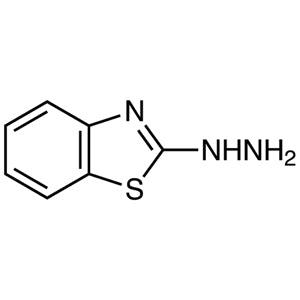
2-Hydrazinobenzothiazole from TCI is a heterocyclic compound that combines a benzothiazole ring with a hydrazine group at the two position, supplied as a solid. In the laboratory this material serves two principal roles: it acts as a heterocyclic building block for constructing fused ring systems, and it acts as a derivatising reagent for carbonyl compounds. The hydrazine group bonded directly to the benzothiazole ring condenses readily with aldehydes and ketones to form hydrazones that carry an aromatic chromophore, so the resulting derivatives are easier to detect by spectrophotometric analysis and by liquid chromatography.
The properties that make this compound a preferred choice begin with the benzothiazole core itself, which is electron rich and absorbs ultraviolet light strongly, so the hydrazones formed from it give a good detection signal. The hydrazine group at the two position is also bifunctional: it can first condense with a carbonyl partner and then close the ring to form fused triazolo systems built on the benzothiazole framework. Being a solid, the material is easy to weigh out and is relatively stable under cool, light-protected storage, although the hydrazine group remains sensitive to oxidation, so containers must always be kept tightly closed.
In Indonesian laboratories this reagent is typically found in synthetic organic chemistry groups building heterocyclic scaffolds, and in analytical laboratories that need to convert carbonyl analytes into more strongly absorbing derivatives before measurement. Because it is a weighable solid rather than a volatile liquid, it suits university teaching and research laboratories as well as industrial quality control benches, where it is generally kept in a cool, dark cabinet and dispensed in small portions as each synthesis or derivatisation run requires.
Related TCI products
- TCI A0277 136-95-8 2-Aminobenzothiazole
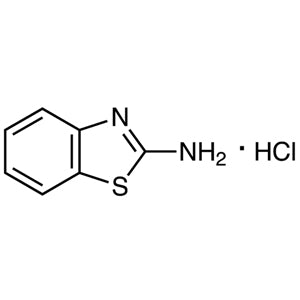
- TCI A1218 94787-08-3 2-Aminobenzothiazole Hydrochloride
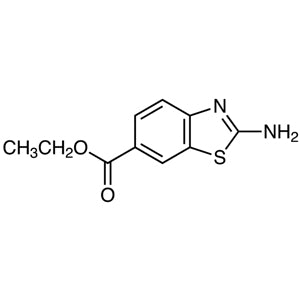
- TCI E0985 50850-93-6 Ethyl 2-Aminobenzothiazole-6-carboxylate
- TCI N0326 4845-58-3 2-Mercapto-6-nitrobenzothiazole
- TCI H1425 2863-98-1 4-Hydrazinobenzonitrile Hydrochloride
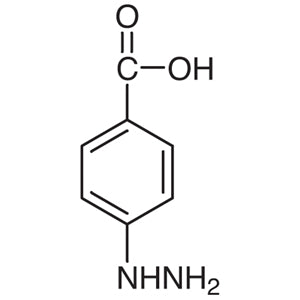
- TCI H0800 619-67-0 4-Hydrazinobenzoic Acid
- Heterocyclic building block synthesis: the bifunctional hydrazine group condenses then cyclises, allowing chemists to build fused triazolo ring systems directly onto the benzothiazole framework.
- Carbonyl derivatisation for analysis: the reagent reacts with aldehydes and ketones to give hydrazones carrying an aromatic chromophore, improving detectability of otherwise weakly absorbing analytes.
- Spectrophotometric determination of carbonyl compounds: the electron-rich benzothiazole core absorbs ultraviolet light strongly, so hydrazone derivatives produce a clear, readable absorbance signal.
- Liquid chromatography sample preparation: converting carbonyl analytes into benzothiazolyl hydrazones before injection gives derivatives that are more readily detected during chromatographic separation and quantification.
- Research-scale organic synthesis of fused ring scaffolds: as a stable weighable solid it is convenient to dispense accurately for small-scale reaction work in academic and industrial laboratories.
| Brand | TCI |
|---|---|
| CAS number | 615-21-4 |
| Molecular formula | — |
| Purity | — |
| Category | Chemistry > Building Blocks > Heterocyclic Building Blocks |
| Pack sizes | available in the pack sizes listed for this catalogue item; please confirm the option you require when ordering |
| Physical form | solid |
| Storage | keep cool and protected from light, in a tightly closed container |
Store 2-Hydrazinobenzothiazole in a cool place, protected from light, and keep the container tightly closed at all times, since the hydrazine group remains sensitive to oxidation even though the solid form is otherwise relatively stable on storage. Use tightly sealing glass or chemically compatible plastic containers, and return material to storage promptly after weighing rather than leaving it open on the bench. Handle the solid in a fume hood or a well-ventilated area to limit dust exposure, and wear gloves, safety glasses and a laboratory coat. Use clean, dry spatulas to avoid introducing moisture or contamination into the bulk, label all secondary containers clearly, and consult the manufacturer safety data sheet before first use and before disposal.
—
Produk Terkait
-
2-Aminobenzothiazole TCI A0277
Regular price From Rp 1.060.500,00Regular price -
2-AminobenzothiazoleHydrochloride TCI A1218
Regular price Rp 2.094.750,00Regular price -
Ethyl2-Aminobenzothiazole-6-carboxylate TCI E0985
Regular price From Rp 769.650,00Regular price -
2-Mercapto-6-nitrobenzothiazole TCI N0326
Regular price From Rp 2.016.000,00Regular price -
4-HydrazinobenzonitrileHydrochloride TCI H1425
Regular price From Rp 1.856.400,00Regular price -
4-HydrazinobenzoicAcid TCI H0800
Regular price Rp 2.094.750,00Regular price -
3-HydrazinobenzoicAcid TCI H0799
Regular price From Rp 1.193.850,00Regular price -
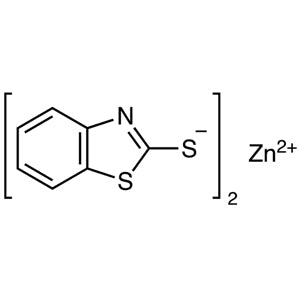
Zinc2-Mercaptobenzothiazole TCI Z0033
Regular price Rp 530.250,00Regular price