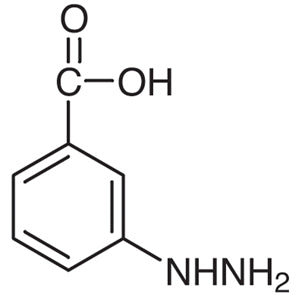
3-Hydrazinobenzoic Acid is a chemical compound widely utilized in laboratory settings for its versatility in chemical reactions. It serves as a key building block in the synthesis of complex molecules, particularly in organic chemistry. This compound combines the functionalities of a hydrazine group and a benzoic acid group, making it essential for substitution reactions and the formation of heterocyclic compounds. Its reactivity allows it to participate in various functional group transformations, making it a valuable reagent in synthetic pathways.
The compound's unique molecular structure contributes to its effectiveness as a preferred choice in chemical synthesis. Its ability to react with a variety of functional groups, such as halogens, hydroxyls, and carboxylates, enhances its utility in modifying molecular frameworks. Additionally, its stability under controlled conditions ensures consistent performance, which is critical for reliable experimental outcomes. These properties make it a reliable and efficient reagent in both academic and industrial research environments.
In Indonesian laboratories, 3-Hydrazinobenzoic Acid is commonly used in pharmacological, organic, and analytical chemistry research. It plays a crucial role in the development of bioactive compounds with potential therapeutic applications. Its broad applicability across different research fields underscores its importance in advancing scientific discovery and innovation within the Indonesian scientific community.
Related TCI products
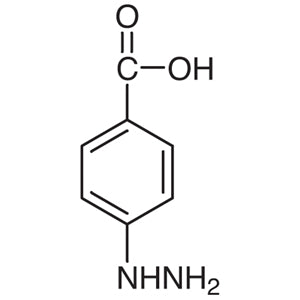
- TCI H0800 619-67-0 4-Hydrazinobenzoic Acid
- TCI H1425 2863-98-1 4-Hydrazinobenzonitrile Hydrochloride
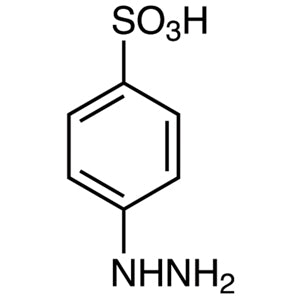
- TCI H1662 98-71-5 4-Hydrazinobenzenesulfonic Acid
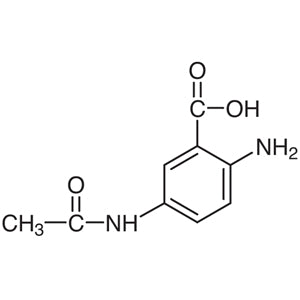
- TCI A1081 50670-83-2 5-Acetamido-2-aminobenzoic Acid
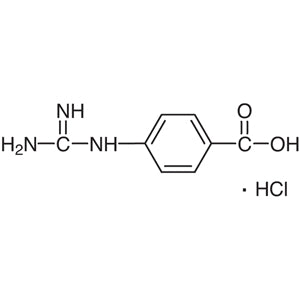
- TCI G0238 42823-46-1 4-Guanidinobenzoic Acid Hydrochloride
- TCI D4551 103956-09-8 3,4-Diaminobenzohydrazide
- Organic synthesis: This compound is ideal for creating complex molecules due to its reactive hydrazine group, enabling efficient coupling reactions and functional group modifications.
- Heterocyclic compound formation: Its structure supports the synthesis of heterocyclic rings, which are essential in pharmaceutical and medicinal chemistry.
- Bioactive compound development: It is frequently used in the synthesis of compounds with potential therapeutic effects, aiding in drug discovery efforts.
- Analytical chemistry: Its chemical properties make it useful in analytical procedures for identifying and quantifying various compounds in samples.
- Research in pharmacology: It supports the development of new drugs by serving as a building block for molecules with biological activity.
| Brand | TCI |
|---|---|
| CAS number | 38235-71-1 |
| Molecular formula | — |
| Purity | — |
| Category | Chemistry > Building Blocks > Non-Heterocyclic Building Blocks |
| Pack sizes | Available in various quantities as per standard laboratory supply |
| Physical form | Solid |
| Storage | Store in a cool, dry place away from moisture and direct sunlight |
3-Hydrazinobenzoic Acid should be stored in a cool, dry environment to maintain its chemical stability. It is recommended to keep it in a sealed container to prevent exposure to moisture, which could affect its reactivity. The compound should be stored away from direct sunlight and sources of heat to avoid degradation. In laboratory settings, it is important to handle the material with appropriate personal protective equipment, such as gloves and safety goggles, to ensure safety during use. Proper ventilation should be maintained when working with this compound to minimize inhalation of any vapors. Its reactivity necessitates careful handling to prevent unintended chemical interactions during experimentation.
—
Produk Terkait
-
4-HydrazinobenzoicAcid TCI H0800
Regular price Rp 2.094.750,00Regular price -
4-HydrazinobenzonitrileHydrochloride TCI H1425
Regular price From Rp 1.856.400,00Regular price -
4-HydrazinobenzenesulfonicAcid TCI H1662
Regular price From Rp 1.008.000,00Regular price -
5-Acetamido-2-aminobenzoicAcid TCI A1081
Regular price Rp 9.328.200,00Regular price -
4-GuanidinobenzoicAcidHydrochloride TCI G0238
Regular price From Rp 875.700,00Regular price -
3,4-Diaminobenzohydrazide TCI D4551
Regular price From Rp 795.900,00Regular price -
3,4-Diaminobenzophenone TCI D1950
Regular price Rp 2.837.100,00Regular price -
2-CyanobenzoicAcid TCI C1976
Regular price From Rp 1.961.400,00Regular price