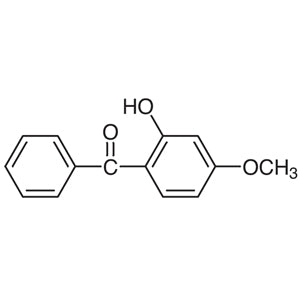
2-Hydroxy-4-methoxybenzophenone is a chemical compound widely used in laboratory settings, particularly in organic synthesis. It serves as a key building block in the development of various organic molecules, including phenolic and phenyl derivatives. Its aromatic structure provides a versatile platform for chemical modifications, making it a valuable resource for researchers. This compound is commonly used in the synthesis of pharmaceuticals, plastics, and industrial chemicals due to its stability and reactivity. Its role in the laboratory is critical for creating complex molecular structures with specific functional groups.
The compound’s stability under certain chemical conditions and its controlled reactivity make it a preferred choice for laboratory applications. It exhibits good solubility in organic solvents, which facilitates its use in a wide range of chemical reactions. Additionally, its photophysical properties are of particular interest in photchemical and optical material research. These characteristics allow it to be used in applications where light-sensitive reactions or optical properties are required. Its versatility and reliability make it a go-to compound for many synthetic processes.
In Indonesian laboratories, 2-Hydroxy-4-methoxybenzophenone is frequently used in academic and industrial research settings. It is commonly found in organic chemistry labs where it is employed for the synthesis of various compounds. Its application extends to pharmaceutical development and polymer science, where it contributes to the creation of new materials and drug formulations. Due to its chemical properties and broad applicability, it remains a staple in the chemical supply chain of Indonesian research institutions.
Related TCI products
- TCI T0118 131-55-5 2,2',4,4'-Tetrahydroxybenzophenone
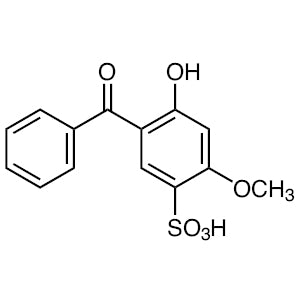
- TCI H0466 4065-45-6 2-Hydroxy-4-methoxybenzophenone-5-sulfonic Acid (contains ca 10% Isopropyl Alcohol)
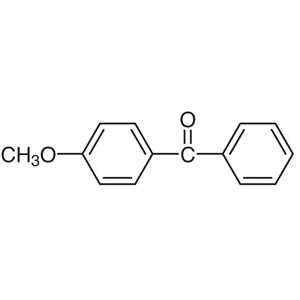
- TCI M0357 611-94-9 4-Methoxybenzophenone
- TCI T2028 33077-87-1 2,2',4-Trimethoxybenzophenone
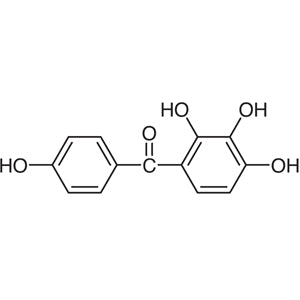
- TCI T1594 31127-54-5 2,3,4,4'-Tetrahydroxybenzophenone
- TCI B4504 54589-41-2 4-Benzyloxybenzophenone
- Organic synthesis is a primary application where this compound is used to build complex molecular structures due to its aromatic structure and reactivity.
- Pharmaceutical development benefits from its use in the synthesis of drug molecules, as it provides a stable and functional starting material.
- Polymer science utilizes this compound for creating functionalized polymers, leveraging its ability to participate in chemical reactions.
- Photocatalytic reactions take advantage of its photophysical properties, making it suitable for light-sensitive chemical processes.
- Optical material research employs this compound for its unique light interaction properties, aiding in the development of advanced optical materials.
| Brand | TCI |
|---|---|
| CAS number | 131-57-7 |
| Molecular formula | — |
| Purity | — |
| Category | Chemistry > Building Blocks > Non-Heterocyclic Building Blocks |
| Pack sizes | Available in various quantities as per supplier specifications |
| Physical form | Solid |
| Storage | Store in a cool, dry place away from light and moisture |
This compound should be stored in a cool, dry environment, away from direct light and moisture to maintain its chemical integrity. It is recommended to use airtight containers made of glass or high-density polyethylene to prevent contamination and degradation. Due to its chemical nature, it should be handled with appropriate personal protective equipment, such as gloves and safety goggles, to ensure laboratory safety. It is important to avoid exposure to incompatible materials and to follow standard chemical handling procedures. Proper storage and handling help preserve the compound’s properties and ensure its effectiveness in laboratory applications.
—
Produk Terkait
-
2,2',4,4'-Tetrahydroxybenzophenone TCI T0118
Regular price Rp 928.200,00Regular price -
2-Hydroxy-4-methoxybenzophenone-5-sulfonicAcid(containsca10%IsopropylAlcohol) TCI H0466
Regular price From Rp 1.644.300,00Regular price -
4-Methoxybenzophenone TCI M0357
Regular price Rp 1.115.100,00Regular price -
2,2',4-Trimethoxybenzophenone TCI T2028
Regular price From Rp 3.312.750,00Regular price -
2,3,4,4'-Tetrahydroxybenzophenone TCI T1594
Regular price Rp 1.035.300,00Regular price -
4-Benzyloxybenzophenone TCI B4504
Regular price From Rp 1.035.300,00Regular price -
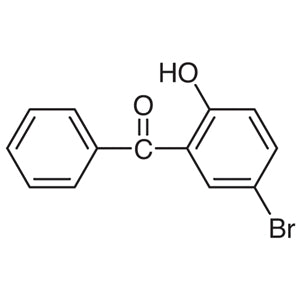
5-Bromo-2-hydroxybenzophenone TCI B2341
Regular price Rp 1.961.400,00Regular price -
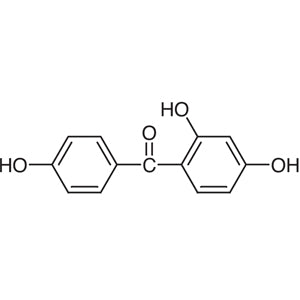
2,4,4'-Trihydroxybenzophenone TCI T0584
Regular price Rp 6.070.050,00Regular price