TCI H0614 5-Hydroxy-1-tetralone is a bicyclic compound that combines a benzene ring with a fused cyclohexanone ring, carrying a phenolic hydroxyl group at the five position. A tetralone framework of this kind is a well-recognised scaffold in synthetic organic chemistry because it serves as a starting point toward a wide range of substituted naphthalene compounds, anthraquinone derivatives, and biologically active molecules. In the laboratory, this material is used as a building block that allows researchers to carry out sequential modifications at either the ketone group or the phenol group in order to assemble more complex target frameworks.
The principal appeal of this compound lies in its two reactivity centres of markedly different character. The carbonyl group on the aliphatic ring is ready to undergo reduction, nucleophilic addition, aldol condensation, and enol or enolate formation reactions, while the aromatic hydroxyl group can be protected, alkylated, or directed as a directing group in electrophilic substitution. The semi-rigid fused framework provides good stereochemical control in several transformations. Its solid form makes purification by recrystallisation or column chromatography straightforward and simplifies weighing on an analytical balance.
In Indonesian laboratories, this building block is typically found in university and institutional organic synthesis groups, in medicinal chemistry research directed at new scaffolds, and in the working stocks of teams developing synthetic routes toward naphthalene and anthraquinone systems. It is generally handled in gram-scale exploratory reactions, where a small, well-defined quantity of a reliable intermediate supports multi-step route development and repeat trials without disproportionate consumption of material.
- Naphthalene derivative synthesis — the fused tetralone framework aromatises and functionalises readily, giving researchers direct access to substituted naphthalene systems from a single, well-defined starting material.
- Anthraquinone derivative preparation — the combination of an activated phenolic ring and a reactive ketone on the same molecule makes this compound a practical precursor when extending toward polycyclic quinone frameworks.
- Medicinal chemistry scaffold development — the two chemically distinct reactive centres allow orthogonal modification, so research teams can generate structural variants around a biologically relevant core efficiently.
- Carbonyl chemistry method work — the aliphatic ketone participates cleanly in reduction, nucleophilic addition, aldol condensation, and enolate chemistry, making it a dependable substrate for reaction development and optimisation.
- Protecting group and selective functionalisation studies — the aromatic hydroxyl can be protected, alkylated, or used to direct electrophilic substitution, supporting teaching and research work on selectivity strategies.
| Brand | TCI (Tokyo Chemical Industry) |
|---|---|
| CAS number | 28315-93-7 |
| Molecular formula | — |
| Purity | — |
| Category | Chemistry > Building Blocks > Non-Heterocyclic Building Blocks |
| Pack sizes | available in standard TCI research-scale packaging; please confirm the currently available pack size when ordering |
| Physical form | solid, suitable for recrystallisation or column chromatography purification |
| Storage | keep in a tightly closed original container, protected from light and moisture |
- Product code: H0614
Store this compound in its tightly closed original container in a cool, dry place away from direct sunlight, heat sources, and strong oxidising agents, since phenolic compounds may darken on prolonged exposure to light and air. Amber glass or the supplier's original bottle is preferred, and containers should be re-sealed promptly after weighing to limit moisture uptake. Handle the solid in a fume hood or well-ventilated area to avoid dust inhalation, and wear safety glasses, gloves, and a laboratory coat. Use clean, dry spatulas to prevent cross-contamination, label all secondary containers clearly, and consult the manufacturer's safety data sheet before first use and before disposal of residues.
—
Produk Terkait
-
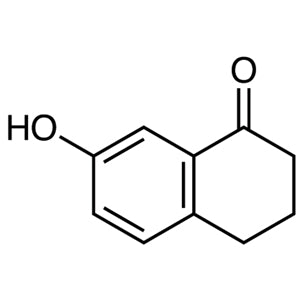
7-Hydroxy-1-tetralone TCI H1650
Regular price Rp 875.700,00Regular price -
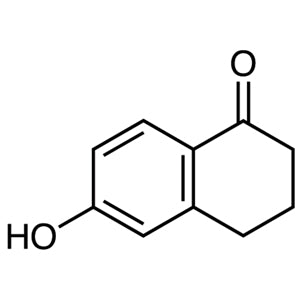
6-Hydroxy-1-tetralone TCI H1335
Regular price From Rp 1.696.800,00Regular price -
6-Bromo-1-tetralone TCI B4841
Regular price From Rp 3.922.800,00Regular price -
7-Bromo-1-tetralone TCI B4545
Regular price From Rp 928.200,00Regular price -
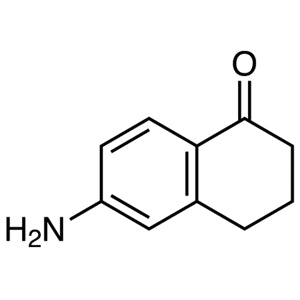
6-Amino-1-tetralone TCI A2642
Regular price From Rp 1.087.800,00Regular price -
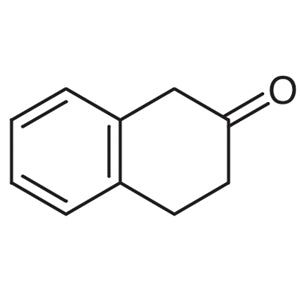
beta-Tetralone TCI T1167
Regular price From Rp 2.862.300,00Regular price -
alpha-Tetralone TCI T0134
Regular price From Rp 769.650,00Regular price -
7-Nitro-1-tetralone TCI N0945
Regular price From Rp 1.115.100,00Regular price