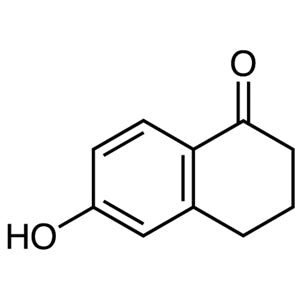
TCI H1335 with CAS number 3470-50-6 is 6-Hydroxy-1-tetralone, a bicyclic ketone built from a benzene ring fused to a cyclohexanone ring and carrying a phenolic hydroxy group at the six position. The tetralone framework is one of the most important structural motifs in organic synthesis because it forms the core skeleton of many bioactive compounds, including synthetic steroids, antidepressant agents, and a range of natural products with polyaromatic cores. In the laboratory this material serves as a versatile building block that can be elaborated into larger ring systems through reactions at either the ketone or the phenol group.
The property that makes this compound so widely chosen is the ease of modification at two sides of the molecule that differ in character. The ketone group on the aliphatic ring can undergo reduction to the alcohol, reductive amination, aldol condensation, enol ether formation, and reaction with organometallic reagents, while the position alpha to the ketone is readily alkylated to construct quaternary centres. The phenolic hydroxy group on the aromatic ring provides an independent point for protection and deprotection and allows selective etherification, for example into methyl ether or triflate derivatives, so that the two reactive sites can be addressed in separate, controlled steps.
In Indonesian laboratories this building block is typically used in university and institutional organic synthesis groups, in medicinal chemistry research directed at bioactive scaffolds, and in method development work where a well-defined bifunctional intermediate is required. It is ordered in research quantities for multi-step route development, for the preparation of analogues around a tetralone core, and for teaching advanced synthesis practicals where students carry out selective transformations on a molecule bearing two distinct functional groups.
- Multi-step organic synthesis: the fused bicyclic skeleton can be elaborated into larger ring systems, giving synthetic chemists a compact starting point for building complex polycyclic targets in sequence.
- Medicinal chemistry scaffold preparation: the tetralone core underlies synthetic steroids and antidepressant compounds, so this material supports analogue programmes aimed at bioactive molecular frameworks.
- Selective functional group chemistry: the ketone and the phenolic hydroxy group differ in reactivity, allowing researchers to protect, deprotect, and transform each site independently in controlled steps.
- Carbonyl transformation studies: the aliphatic ketone readily undergoes reduction, reductive amination, aldol condensation, enol ether formation, and addition of organometallic reagents for route development work.
- Alpha-alkylation and quaternary centre construction: the position alpha to the ketone is easily alkylated, making this compound useful for methodology studies that build sterically demanding carbon centres.
| Brand | TCI |
|---|---|
| CAS number | 3470-50-6 |
| Molecular formula | — |
| Purity | — |
| Category | Chemistry > Building Blocks > Non-Heterocyclic Building Blocks |
| Pack sizes | available in standard TCI research pack sizes; please confirm the packaging option when ordering |
| Physical form | — |
| Storage | keep in the original tightly closed container, protected from light and moisture, in accordance with the manufacturer's label |
- Chemical name: 6-Hydroxy-1-tetralone
Store this reagent in its original tightly closed container in a cool, dry, well-ventilated chemical store, away from light, moisture, and incompatible materials, and follow the storage condition printed on the manufacturer's label. Amber glass or the supplied original packaging is suitable, and containers should be resealed promptly after each withdrawal because the phenolic group makes the material sensitive to prolonged air and light exposure. Handle weighing and transfer operations in a fume hood, wear safety goggles, a laboratory coat, and chemical-resistant gloves, and avoid generating dust. Use clean, dry spatulas to prevent contamination of the stock, label all working solutions clearly, and consult the safety data sheet before first use and before disposal of residues.
—
Produk Terkait
-
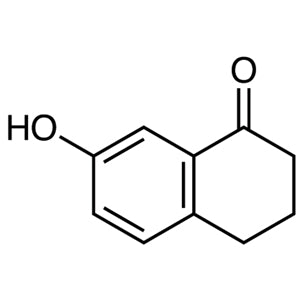
7-Hydroxy-1-tetralone TCI H1650
Regular price Rp 875.700,00Regular price -
5-Hydroxy-1-tetralone TCI H0614
Regular price From Rp 1.220.100,00Regular price -
6-Bromo-1-tetralone TCI B4841
Regular price From Rp 3.922.800,00Regular price -
7-Bromo-1-tetralone TCI B4545
Regular price From Rp 928.200,00Regular price -
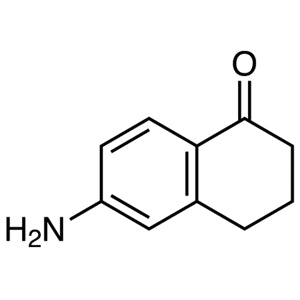
6-Amino-1-tetralone TCI A2642
Regular price From Rp 1.087.800,00Regular price -
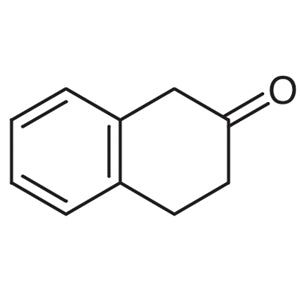
beta-Tetralone TCI T1167
Regular price From Rp 2.862.300,00Regular price -
alpha-Tetralone TCI T0134
Regular price From Rp 769.650,00Regular price -
7-Nitro-1-tetralone TCI N0945
Regular price From Rp 1.115.100,00Regular price