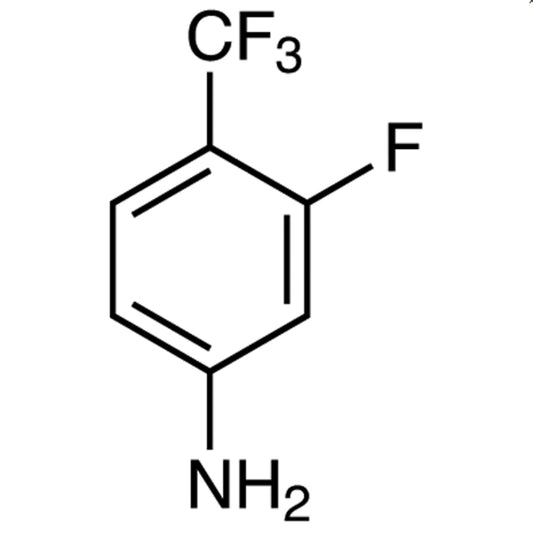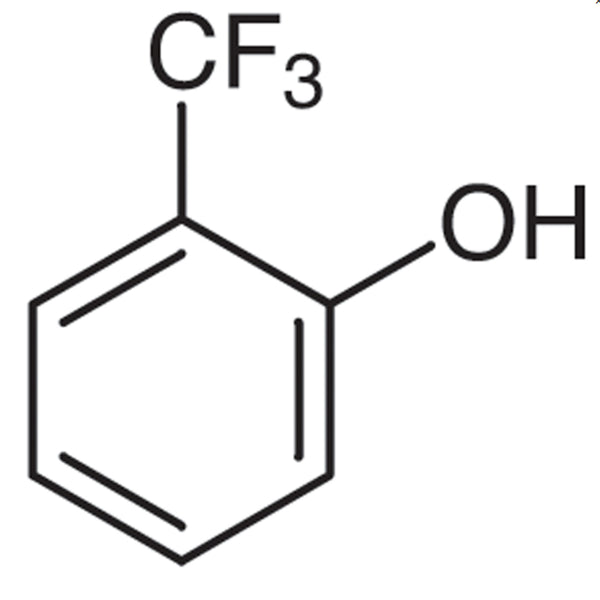
2-Hydroxybenzotrifluoride is a chemical compound widely used as a building block in the synthesis of complex organic molecules. It plays a crucial role in laboratory settings, particularly in the development of new compounds within pharmaceutical and materials science research. This compound is essential for creating structures with high reactivity and functional versatility, making it a key component in advanced chemical synthesis. Its unique molecular structure allows for effective substitution and electrophilic reactions, which are vital in the design of aromatic and heterocyclic compounds.
The compound's reactivity and chemical stability make it a preferred choice for researchers seeking to manipulate molecular structures with precision. The presence of highly reactive fluorine atoms enables it to participate in various chemical reactions, offering flexibility in synthetic pathways. Its ability to form stable bonds with different functional groups enhances its utility across multiple experimental applications. These properties make it an invaluable tool for scientists working in both academic and industrial research environments.
In Indonesian laboratories, 2-Hydroxybenzotrifluoride is commonly used in scientific research and educational institutions. It is frequently employed in studies related to drug development, material synthesis, and chemical innovation. Its availability through reliable suppliers like AMI Scientific ensures that researchers have access to this essential compound for their experiments and projects.
TCI brochures (PDF)
- Fluorination Reagents, Fluorinated Building Blocks 2026-03-18 · p. 37
Related TCI products
- Organic synthesis applications benefit from its reactivity and ability to form complex molecular structures.
- Pharmaceutical research utilizes it for the development of new drug compounds and therapeutic agents.
- Material science experiments leverage its unique fluorinated structure for creating advanced polymers and coatings.
- Academic research in chemistry and biochemistry uses it for teaching and experimental purposes.
- Industrial chemical processes incorporate it for the production of specialty chemicals and intermediates.
| Brand | TCI |
|---|---|
| CAS number | 444-30-4 |
| Molecular formula | — |
| Purity | — |
| Category | Chemistry > Building Blocks > Fluorinated Building Blocks |
| Pack sizes | Available in various quantities as per supplier specifications |
| Physical form | Solid (exact form may vary based on supplier) |
| Storage | Store in a cool, dry place away from light and moisture |
This compound should be stored in a cool, dry place, away from direct light and moisture. It is recommended to use airtight containers to prevent exposure to air and humidity. Due to its reactivity, it should be handled with care in a well-ventilated laboratory environment. Always wear appropriate personal protective equipment, such as gloves and safety goggles, when working with this material. Ensure that storage areas are secure and inaccessible to unauthorized personnel. Regular monitoring of storage conditions is essential to maintain the compound's integrity and ensure safe handling in laboratory settings.
—
Produk Terkait
-
3-Hydroxybenzotrifluoride TCI T0436
Regular price From Rp 1.008.000,00Regular price -
4-Hydroxybenzotrifluoride TCI H0644
Regular price From Rp 2.016.000,00Regular price -
2-Chloro-5-hydroxybenzotrifluoride TCI C1516
Regular price From Rp 530.250,00Regular price -
3-Methoxybenzotrifluoride TCI M2243
Regular price From Rp 903.000,00Regular price -
3-Aminobenzotrifluoride TCI A0434
Regular price From Rp 689.850,00Regular price -
2,3,5,6-Tetrafluoro-4-aminobenzotrifluoride TCI T1529
Regular price From Rp 1.167.600,00Regular price -
3-Bromo-5-nitrobenzotrifluoride TCI B5333
Regular price From Rp 584.850,00Regular price -
4-Amino-2-fluorobenzotrifluoride TCI A2469
Regular price From Rp 1.856.400,00Regular price