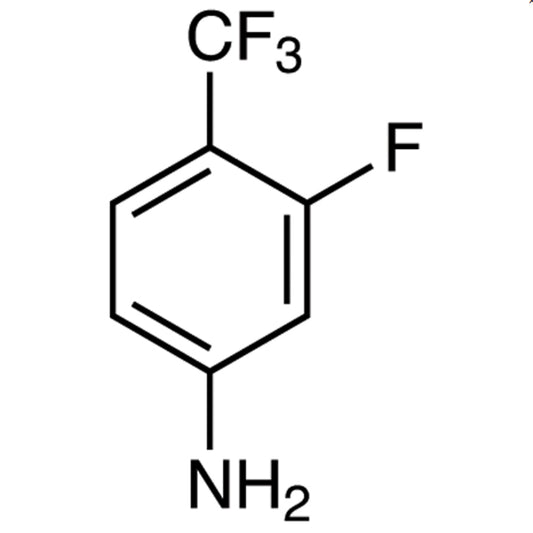
3-Hydroxybenzotrifluoride is a chemical compound widely used in organic laboratory reactions. It serves as a crucial building block in the synthesis of fluorinated compounds, offering versatility in chemical reactions due to its unique molecular structure. This compound contains a hydroxyl group and three fluorine atoms, making it a valuable reagent for creating complex molecules. Its presence in laboratory research supports the development of new compounds, particularly in the fields of organic chemistry and pharmaceutical sciences.
The compound is known for its good chemical stability and controlled reactivity, which allows it to be used in a variety of synthetic pathways. Its high polarity, attributed to the hydroxyl group, facilitates reactions with polar solvents, enhancing its utility in laboratory settings. These characteristics make it a preferred choice for substitution and oxidation reactions, where precise control over reactivity is essential. Its ability to participate in multiple reaction types makes it an indispensable tool for researchers.
In Indonesian laboratories, 3-Hydroxybenzotrifluoride is commonly used in scientific research and the development of new compounds. It plays a key role in projects requiring fluorinated compounds for the synthesis of bioactive substances. Its application is widespread in both academic and industrial research, contributing to advancements in organic chemistry and pharmaceutical development.
TCI brochures (PDF)
- Fluorination Reagents, Fluorinated Building Blocks 2026-03-18 · p. 38
Related TCI products
- Fluorinated Compound Synthesis: This compound is ideal for creating fluorinated molecules due to its stable fluorine atoms and hydroxyl group, enabling controlled chemical reactions in organic synthesis.
- Pharmaceutical Research: Its use in synthesizing bioactive compounds makes it a valuable tool for drug development and medicinal chemistry studies.
- Organic Chemistry Experiments: The compound's reactivity and polarity make it suitable for substitution and oxidation reactions, supporting a wide range of chemical investigations.
- Bioactive Substance Development: It is frequently used in projects aimed at producing compounds with biological activity, particularly in pharmaceutical and biochemical research.
- Research and Development Projects: Its versatility and chemical stability make it a preferred choice for various R&D initiatives in both academic and industrial laboratories.
| Brand | TCI |
|---|---|
| CAS number | 98-17-9 |
| Molecular formula | — |
| Purity | — |
| Category | Chemistry > Building Blocks > Fluorinated Building Blocks |
| Pack sizes | — |
| Physical form | — |
| Storage | Store in a cool, dry place away from moisture and direct sunlight |
This compound should be stored in a cool, dry environment, away from moisture and direct sunlight to maintain its chemical stability. It is recommended to use airtight containers to prevent exposure to air and potential degradation. Due to its polarity, it is advisable to handle it with appropriate personal protective equipment, such as gloves and safety goggles, to ensure laboratory safety. While specific handling instructions may vary depending on the laboratory's protocols, general precautions include avoiding contact with skin and eyes, and ensuring proper ventilation when working with the compound. Proper storage and handling practices help preserve the compound's integrity and ensure safe usage in laboratory settings.
—
Produk Terkait
-
2-Hydroxybenzotrifluoride TCI H0647
Regular price From Rp 1.431.150,00Regular priceRp 1.000.650,00Sale price From Rp 1.431.150,00 -
4-Hydroxybenzotrifluoride TCI H0644
Regular price From Rp 2.016.000,00Regular priceRp 1.409.100,00Sale price From Rp 2.016.000,00 -
2-Chloro-5-hydroxybenzotrifluoride TCI C1516
Regular price From Rp 530.250,00Regular priceRp 370.650,00Sale price From Rp 530.250,00 -
3-Methoxybenzotrifluoride TCI M2243
Regular price From Rp 903.000,00Regular priceRp 631.050,00Sale price From Rp 903.000,00 -
3-Aminobenzotrifluoride TCI A0434
Regular price From Rp 689.850,00Regular priceRp 481.950,00Sale price From Rp 689.850,00 -
2,3,5,6-Tetrafluoro-4-aminobenzotrifluoride TCI T1529
Regular price From Rp 1.167.600,00Regular priceRp 815.850,00Sale price From Rp 1.167.600,00 -
3-Bromo-5-nitrobenzotrifluoride TCI B5333
Regular price From Rp 584.850,00Regular priceRp 408.450,00Sale price From Rp 584.850,00 -
4-Amino-2-fluorobenzotrifluoride TCI A2469
Regular price From Rp 1.856.400,00Regular priceRp 1.297.800,00Sale price From Rp 1.856.400,00