

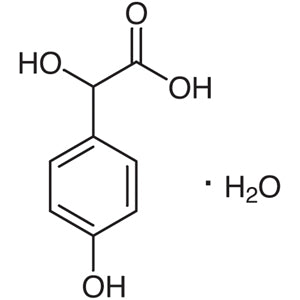
DL-4-Hydroxymandelic Acid Monohydrate is a chemical compound widely used in laboratory settings for its versatility in chemical experiments and organic synthesis. As a building block in organic chemistry, it serves as a foundational material for the development of more complex compounds. This compound is commonly utilized in pharmaceutical research and organic synthesis due to its structural simplicity and reactivity. Its role in creating compounds with specific biological activities makes it an essential tool for researchers aiming to explore new chemical pathways.
DL-4-Hydroxymandelic Acid Monohydrate is valued for its stability and solubility in various organic solvents, such as ethyl acetate and ethanol. These properties make it easy to handle and process in laboratory conditions, facilitating efficient synthesis and purification techniques. Its chemical structure, featuring a hydroxyl group, allows for a wide range of chemical reactions, making it adaptable to different synthetic strategies. The compound's consistent quality and availability further enhance its appeal among researchers.
In Indonesian laboratories, DL-4-Hydroxymandelic Acid Monohydrate is frequently used in pharmaceutical and organic chemistry research. It is a key component in the development of new drugs and industrial chemicals. Many research institutions and universities rely on this compound to advance their studies in medicinal chemistry and chemical synthesis. Its presence in these laboratories underscores its importance in scientific innovation and discovery.
- Organic synthesis where DL-4-Hydroxymandelic Acid Monohydrate serves as a versatile building block for creating complex molecules with specific biological activities.
- Pharmaceutical research as it is used in the development of new drug compounds due to its reactivity and structural adaptability.
- Chemical analysis applications where its solubility in organic solvents allows for efficient extraction and purification processes.
- Teaching laboratories for educational purposes, providing students with a fundamental compound to understand organic chemistry principles.
- Industrial chemistry applications where it is used as a starting material for the production of various chemical products.
| Brand | TCI |
|---|---|
| CAS number | 184901-84-6 |
| Molecular formula | — |
| Purity | — |
| Category | Chemistry > Building Blocks > Non-Heterocyclic Building Blocks |
| Pack sizes | Available in various quantities as per standard laboratory supply |
| Physical form | Solid in crystalline form |
| Storage | Store in a cool, dry place away from moisture and direct sunlight |
DL-4-Hydroxymandelic Acid Monohydrate should be stored in a cool, dry environment to maintain its chemical stability. It is recommended to keep the compound in a sealed container to prevent moisture absorption, which could affect its quality. The material is typically stored in glass or plastic containers that are resistant to chemical reactions. Due to its organic nature, it should be kept away from strong oxidizing agents to avoid potential chemical interactions. Regular inspection of storage conditions is advised to ensure long-term integrity. In laboratory settings, proper labeling and safe handling practices are essential to prevent accidental exposure and ensure compliance with safety protocols.
—
Produk Terkait
-
DL-3,4-DihydroxymandelicAcid TCI D0582
Regular price Rp 3.392.550,00Regular price -
DL-4-Hydroxymandelonitrile TCI H0563
Regular price Rp 4.213.650,00Regular price -
DL-4-MethoxymandelicAcid TCI M2278
Regular price From Rp 2.041.200,00Regular price -
DL-4-Hydroxy-3-methoxymandelicAcid TCI H0268
Regular price From Rp 1.829.100,00Regular price


