

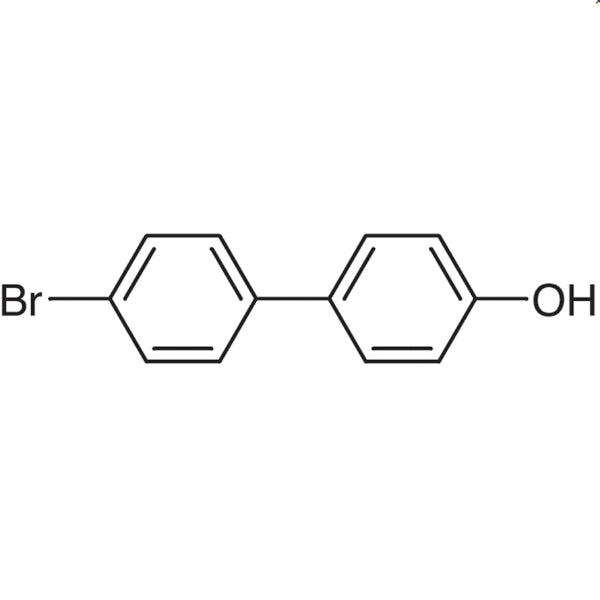
4-Bromo-4'-hydroxybiphenyl is a chemical compound widely used in scientific research, particularly in the field of materials science. This compound is a key building block in the study of liquid crystals and complex molecular structures. As a fundamental component in the development of new materials, it plays a crucial role in investigations related to the optical and electronic properties of advanced materials. In laboratory settings, it serves as a precursor for the synthesis of various compounds with applications in display technologies, sensors, and conductive materials.
The compound's unique chemical properties make it a preferred choice for researchers. Its molecular structure features both bromo and hydroxyl groups, which contribute to its high reactivity and versatility in chemical reactions. These functional groups allow for a wide range of modifications, making it ideal for studies requiring molecular structure manipulation or the creation of compounds with specific properties. Additionally, its chemical stability under certain conditions ensures reliable performance during experimental processes.
In Indonesian laboratories, 4-Bromo-4'-hydroxybiphenyl is commonly used in academic and industrial research projects. It is a staple in material science laboratories where scientists work on developing new materials with enhanced optical and electronic properties. Its availability and well-documented chemical behavior make it a go-to compound for researchers aiming to explore advanced material synthesis and functional chemistry.
Related TCI products
- Liquid Crystal Research - This compound is used to study the molecular structure and behavior of liquid crystals, which are essential in display technologies and optical devices.
- Organic Synthesis - Its reactive functional groups make it a valuable starting material for synthesizing complex organic compounds with tailored properties.
- Material Development - It is employed in the creation of advanced materials with specific optical and electronic characteristics, such as conductive polymers and sensors.
- Structural Chemistry Studies - The compound's unique molecular structure is ideal for investigating molecular interactions and conformational changes in complex systems.
- Sensor Fabrication - Its chemical reactivity and molecular structure make it suitable for the development of sensitive and selective chemical sensors.
| Brand | TCI |
|---|---|
| CAS number | 29558-77-8 |
| Molecular formula | — |
| Purity | — |
| Category | Materials Science > Material Building Blocks > Liquid Crystal (LC) Building Blocks |
| Pack sizes | Available in various quantities as per standard laboratory supply |
| Physical form | Solid |
| Storage | Store in a cool, dry place away from light and moisture |
This compound should be stored in a cool, dry place, away from direct light and moisture to maintain its chemical stability. It is recommended to use airtight containers made of glass or high-density polyethylene to prevent contamination and degradation. Due to its reactivity, it should be handled with appropriate personal protective equipment, including gloves and safety goggles. In laboratory settings, it should be stored separately from incompatible substances such as strong oxidizers to ensure safety. Proper ventilation is essential when working with this compound to minimize exposure risks. Always follow standard laboratory safety protocols when handling and storing reactive chemicals.
—
Produk Terkait
-
4-Cyano-4'-hydroxybiphenyl TCI H0523
Regular price From Rp 1.193.850,00Regular price -
4-Fluoro-4'-hydroxybiphenyl TCI F0704
Regular price Rp 1.167.600,00Regular price -
4-Chloro-4'-hydroxybiphenyl TCI C1239
Regular price From Rp 3.525.900,00Regular price -
4-Octadecyloxybiphenyl TCI B1924
Regular price From Rp 1.326.150,00Regular price -
4-Hydroxy-4'-methoxybiphenyl TCI H0819
Regular price From Rp 1.881.600,00Regular price -
4-(6-Hydroxyhexyloxy)-4'-methoxybiphenyl TCI H0767
Regular price Rp 1.405.950,00Regular price -
4'-Decyloxybiphenyl-4-carboxylicAcid TCI D2041
Regular price Rp 3.446.100,00Regular price -
4,4'-Diethoxybiphenyl TCI D1127
Regular price Rp 2.650.200,00Regular price


