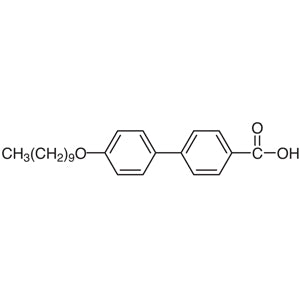
TCI D2041 4'-Decyloxybiphenyl-4-carboxylic Acid is a non-heterocyclic building block whose structure is characteristic of mesogenic materials: a rigid biphenyl core, a long alkoxy chain in the form of a decyloxy group at one end, and a carboxylic acid group at the other. This arrangement of a polar head and a hydrophobic tail is widely used in liquid crystal research, supramolecular materials, and organized thin films. In the laboratory, the material is typically employed either as a precursor or as a direct component in studies of phase behavior and the formation of ordered structures.
The property that makes this compound a preferred choice is the ability of its molecules to self-organize. The biphenyl core provides the shape anisotropy required for liquid crystalline phases to emerge, while the decyloxy chain contributes flexibility and governs intermolecular spacing. The carboxylic acid group allows the formation of paired hydrogen bonds that effectively extend the molecule, and this same group also serves as a reaction site for esterification, amidation, or complex formation with metals. This combination means a single material can support physical characterization studies as well as serve as a starting material for further synthesis.
In Indonesia, this material is generally used in university and institutional research laboratories working on functional organic materials, where a well-defined mesogenic building block is needed for reproducible experimental work. It is ordered in research-scale quantities for phase behavior studies, thin film preparation, and derivative synthesis, and is normally handled as part of a small inventory of specialty organic intermediates rather than a routine bulk reagent, so careful storage and documented handling are important.
- Liquid crystal phase studies: the rigid biphenyl core combined with a long decyloxy tail gives the shape anisotropy needed for mesophases to form and be characterized.
- Supramolecular assembly research: the terminal carboxylic acid forms paired hydrogen bonds that effectively lengthen the molecule, making it useful for hydrogen-bonded dimer and complex studies.
- Organized thin film preparation: the polar head and hydrophobic tail arrangement promotes ordered molecular layers, which suits work on structured surfaces and film alignment experiments.
- Synthesis of derivatives: the carboxylic acid group is a reactive handle for esterification and amidation, allowing researchers to build extended mesogenic structures from a single starting material.
- Metal complex formation: the acid functionality can coordinate to metal centers, supporting studies of metal-containing organic materials and their ordering behavior in the solid or mesophase state.
| Brand | TCI (Tokyo Chemical Industry) |
|---|---|
| CAS number | 69367-32-4 |
| Molecular formula | — |
| Purity | — |
| Category | Chemistry > Building Blocks > Non-Heterocyclic Building Blocks |
| Pack sizes | available in research-scale pack sizes; please confirm the currently offered packaging when ordering |
| Physical form | — |
| Storage | store in a closed original container in a cool, dry place away from light and moisture, following the manufacturer's instructions on the label |
- Product code: D2041
Store the product in its original tightly closed container in a cool, dry, and well-ventilated area, protected from direct sunlight, moisture, and sources of ignition. Amber glass or the supplied original packaging is suitable, and containers should be resealed promptly after weighing to limit moisture uptake. Handle the solid in a fume hood or a well-ventilated workspace and use standard personal protective equipment: safety glasses, chemical-resistant gloves, and a laboratory coat. Avoid generating dust, avoid contact with skin and eyes, and wash hands after handling. Keep away from strong bases and strong oxidizing agents, label all secondary containers clearly, and consult the manufacturer's safety data sheet before use and for waste disposal.
—
Produk Terkait
-
4-Octadecyloxybiphenyl TCI B1924
Regular price From Rp 1.326.150,00Regular price -
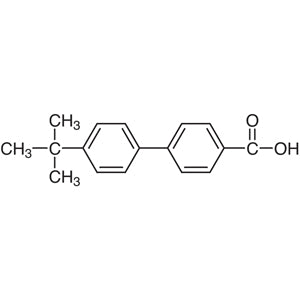
4-(4-tert-Butylphenyl)benzoicAcid TCI B1986
Regular price From Rp 2.677.500,00Regular price -
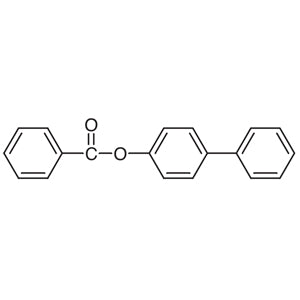
4-BiphenylBenzoate TCI B1866
Regular price From Rp 1.220.100,00Regular price -
4-Acetyl-4'-bromobiphenyl TCI A1410
Regular price Rp 2.571.450,00Regular price -
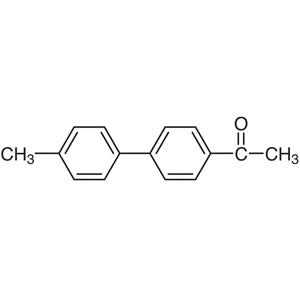
4-Acetyl-4'-methylbiphenyl TCI A1322
Regular price From Rp 1.035.300,00Regular price -
4-(4-Propylphenyl)benzoicAcid TCI P1037
Regular price Rp 2.411.850,00Regular price -
4-Hydroxy-4'-methoxybiphenyl TCI H0819
Regular price From Rp 1.881.600,00Regular price -
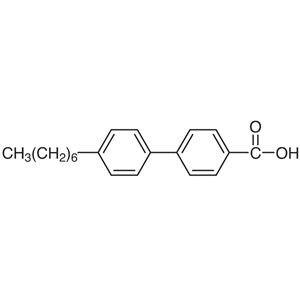
4-(4-Heptylphenyl)benzoicAcid TCI H0709
Regular price Rp 2.147.250,00Regular price