

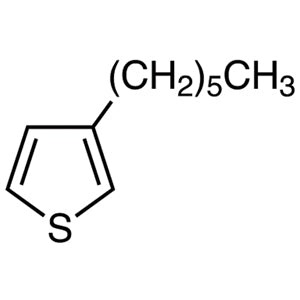
3-Hexylthiophene is a chemical compound widely used as a building block in the synthesis of heterocyclic compounds. It plays a crucial role in laboratory settings, particularly in organic chemistry and material research, where its unique structure enables the creation of complex molecular frameworks. This compound contains both sulfur and a six-carbon chain, making it highly versatile for chemical reactions that require functional group modifications. Its presence in heterocyclic synthesis allows researchers to design and develop new materials with tailored properties, expanding the possibilities in chemical innovation.
The reactivity and flexibility of 3-Hexylthiophene make it a preferred choice for chemists working on advanced synthetic routes. Its ability to participate in substitution, covalent bonding, and polymerization reactions enhances its utility in various experimental setups. The compound’s stability in molecular structure ensures consistent performance across different reaction conditions, while its solubility in organic solvents facilitates ease of handling and integration into laboratory workflows. These properties contribute to its widespread use in both academic and industrial research environments.
In Indonesian laboratories, 3-Hexylthiophene is commonly utilized in chemical research, particularly in the development of new materials and pharmaceutical compounds. Its role in creating complex molecular structures makes it an essential component in the work of researchers focused on organic synthesis and heterocyclic chemistry. The compound’s availability and performance make it a reliable choice for laboratories aiming to advance their research in chemical innovation and material science.
- Organic synthesis of heterocyclic compounds due to its sulfur-containing structure and carbon chain, enabling the creation of complex molecular frameworks.
- Development of advanced materials through polymerization reactions, where its reactivity allows for the formation of functional polymers with tailored properties.
- Research in pharmaceutical chemistry for the synthesis of drug molecules, as its structure can be modified to target specific biological activities.
- Functional group modification in chemical reactions, where its ability to participate in substitution and covalent bonding is essential for structural diversification.
- Investigation of molecular interactions in material science, as its stability and reactivity make it suitable for studying molecular behavior in different environments.
| Brand | TCI |
|---|---|
| CAS number | 1693-86-3 |
| Molecular formula | — |
| Purity | — |
| Category | Chemistry > Building Blocks > Heterocyclic Building Blocks |
| Pack sizes | As available from supplier |
| Physical form | Solid or liquid, depending on supplier packaging |
| Storage | Store in a cool, dry place away from light and incompatible substances |
3-Hexylthiophene should be stored in a cool, dry environment, away from direct sunlight and sources of heat. It is recommended to keep the compound in a sealed container to prevent exposure to air and moisture. Due to its reactivity, it should be stored separately from strong oxidizing agents and incompatible chemicals. Appropriate personal protective equipment, such as gloves and safety goggles, should be used when handling this material to ensure laboratory safety. Regular monitoring of storage conditions is advised to maintain the compound’s stability and effectiveness in research applications.
—
Produk Terkait
-
2-Hexylthiophene TCI H1350
Regular price From Rp 1.326.150,00Regular price -
3,4-Dihexylthiophene TCI D4202
Regular price From Rp 1.829.100,00Regular price -
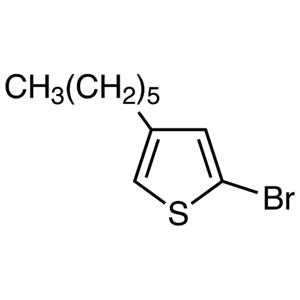
2-Bromo-4-hexylthiophene TCI B3985
Regular price Rp 4.240.950,00Regular price -
2-Bromo-5-hexylthiophene TCI B3812
Regular price Rp 4.028.850,00Regular price -
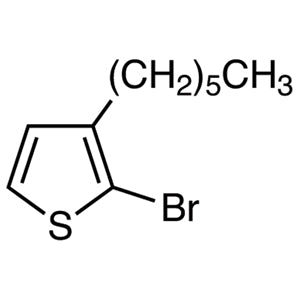
2-Bromo-3-hexylthiophene TCI B3507
Regular price From Rp 2.704.800,00Regular price -
2-Bromo-3-cyclohexylthiophene TCI B5420
Regular price From Rp 3.763.200,00Regular price -
Poly(3-hexylthiophene-2,5-diyl)(regioregular)[fororganicelectronics] TCI P2513
Regular price From Rp 4.056.150,00Regular price -
4-Hexylthiophene-2-carboxaldehyde TCI H1499
Regular price Rp 3.498.600,00Regular price




![110134-47-9 Poly(3-hexylthiophene-2,5-diyl) (regioregular) [for organic electronics] - AMI Scientific](http://amiscientific.com/cdn/shop/files/TCI2510P2513.jpg?v=1767136282&width=533)
