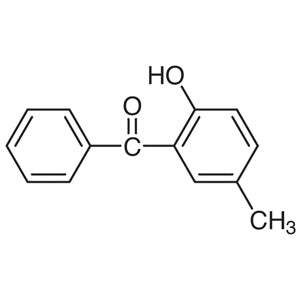
2-Hydroxy-5-methylbenzophenone is a versatile chemical compound widely used in laboratory settings for various chemical reactions and organic synthesis. It belongs to the class of non-heterocyclic building blocks and is recognized for its aromatic structure, which includes hydroxyl and methyl groups. These functional groups contribute to its reactivity and stability, making it a valuable component in synthetic processes. The compound is commonly used as a precursor in the development of complex molecules, especially in pharmaceutical and industrial chemical applications. Its ability to participate in diverse chemical transformations enhances its utility in both academic and industrial research environments.
The compound exhibits specific chemical properties that make it a preferred choice in laboratory applications. It is known for its reactivity under UV light and in radical reactions, which makes it suitable for photchemical and free radical processes. Despite its reactivity, it maintains chemical stability under certain conditions, which is essential for controlled synthetic pathways. Its relatively high melting point ensures it remains in solid form, facilitating ease of handling and storage. These characteristics make it a reliable and effective reagent in organic synthesis and chemical research.
In Indonesian laboratories, 2-Hydroxy-5-methylbenzophenone is frequently used in both fundamental and applied chemical research. It is a key component in the synthesis of complex organic compounds, including pharmaceuticals and industrial materials. Many educational and research institutions rely on this compound for experimental work, particularly in the development of new chemical products and processes. Its availability and chemical properties make it a popular choice among chemists and researchers in Indonesia.
- Organic synthesis applications benefit from the compound's reactivity and aromatic structure, enabling the creation of complex molecules in pharmaceutical and industrial contexts.
- Photocatalytic reactions utilize its sensitivity to UV light, making it ideal for light-induced chemical transformations in advanced research settings.
- Radical reaction studies leverage its ability to participate in free radical processes, supporting investigations into reaction mechanisms and pathways.
- Industrial chemical production relies on its stability and reactivity to synthesize a wide range of materials, including polymers and coatings.
- Educational research in chemical synthesis uses the compound to teach fundamental concepts in organic chemistry and synthetic methodology.
| Brand | TCI |
|---|---|
| CAS number | 1470-57-1 |
| Molecular formula | — |
| Purity | — |
| Category | Chemistry > Building Blocks > Non-Heterocyclic Building Blocks |
| Pack sizes | Available in various quantities as per supplier specifications |
| Physical form | Solid |
| Storage | Store in a cool, dry place away from direct sunlight and oxidizing agents |
The compound should be stored in a cool, dry environment to maintain its chemical stability. It is recommended to keep it in airtight containers to prevent exposure to moisture and air, which can affect its reactivity. Due to its sensitivity to UV light, it should be stored away from direct sunlight and strong light sources. Proper labeling of containers is essential for safe handling and to prevent accidental exposure. Laboratory personnel should wear appropriate personal protective equipment when handling the compound to ensure safety during experiments and storage. Regular monitoring of storage conditions is advised to maintain the compound's integrity and effectiveness in research applications.
—
Produk Terkait
-
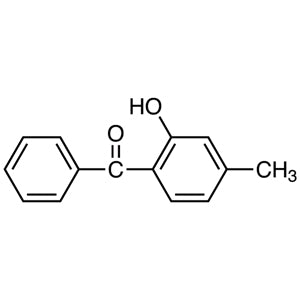
2-Hydroxy-4-methylbenzophenone TCI H1575
Regular price From Rp 1.115.100,00Regular price -
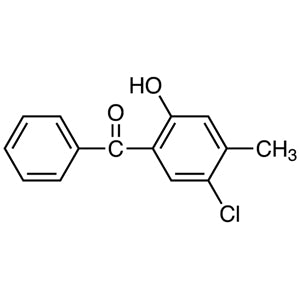
5-Chloro-2-hydroxy-4-methylbenzophenone TCI C3260
Regular price From Rp 1.220.100,00Regular price -
4-Methylbenzophenone TCI M1248
Regular price From Rp 1.140.300,00Regular price -
3-Methylbenzophenone TCI M1247
Regular price From Rp 1.167.600,00Regular price -
2-Methylbenzophenone TCI M0903
Regular price Rp 1.565.550,00Regular price -
2,4,5-Trimethylbenzophenone TCI T2062
Regular price Rp 1.140.300,00Regular price -
2,2',4,4'-Tetramethylbenzophenone TCI T1232
Regular price From Rp 2.809.800,00Regular price -
4-Phenylbenzophenone TCI P1116
Regular price Rp 1.776.600,00Regular price