

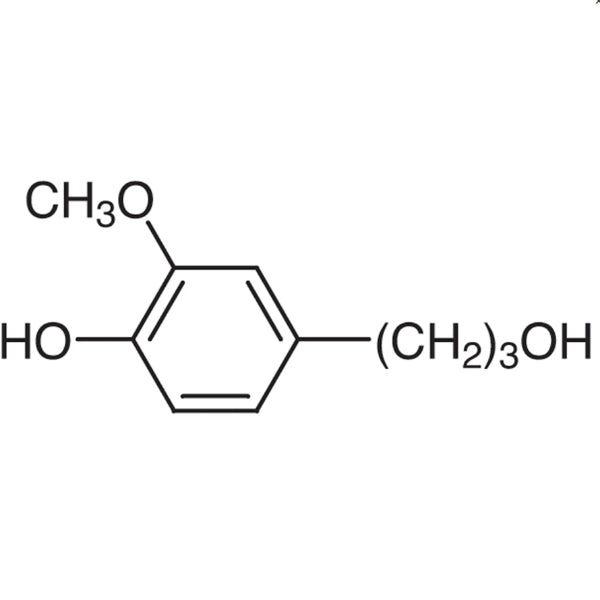
3-(4-Hydroxy-3-methoxyphenyl)-1-propanol is a chemical compound widely used in organic synthesis reactions within laboratory settings. It serves as a versatile building block for the creation of complex molecules with aromatic structures and alkyl chains. This compound is particularly valuable for researchers aiming to develop compounds with specific functional groups, such as hydroxyl and methoxy groups, which are essential in many synthetic pathways. Its chemical structure allows for a range of substitution and reaction possibilities under controlled conditions, making it a key component in various synthetic strategies.
The compound’s unique molecular structure, featuring hydroxyl and methoxy groups, contributes to its reactivity and functional versatility. These groups enhance its ability to participate in a variety of chemical transformations, including esterification, etherification, and oxidation reactions. Its chemical stability under certain conditions, combined with its sensitivity to oxidation and heavy metal interactions, makes it a compound that requires careful handling. This balance of stability and reactivity makes it a preferred choice for synthetic chemists seeking controlled and predictable outcomes in their experiments.
In Indonesian laboratories, 3-(4-Hydroxy-3-methoxyphenyl)-1-propanol is commonly used in organic chemistry research, particularly in the study of phenolic compounds and those with antioxidant properties. It is also found in pharmaceutical and food chemistry research, where its ability to participate in molecular interactions is highly valued. Its role in these fields highlights its importance as a fundamental reagent in both academic and industrial research settings.
Related TCI products
- TCI H1946 6100-74-9 1-(3-Hydroxy-4-methoxyphenyl)ethan-1-one
- TCI H1578 39604-68-7 2'-Hydroxy-4',6'-dimethoxy-2-(4-methoxyphenyl)acetophenone
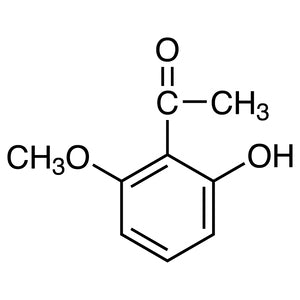
- TCI H1529 703-23-1 1-(2-Hydroxy-6-methoxyphenyl)ethanone
- TCI H0538 77305-02-3 Sodium 3-(4-Hydroxy-3-methoxyphenyl)lactate
- TCI B5274 2077-19-2 2-(4-Bromophenyl)-2-propanol
- TCI B4657 25574-11-2 3-(4-Bromophenyl)-1-propanol
- Organic synthesis of phenolic compounds due to its hydroxyl and methoxy functional groups enabling diverse chemical transformations.
- Development of bioactive molecules as it can be modified to create compounds with antioxidant and pharmacological properties.
- Research in food chemistry for its potential role in flavor and aroma compound synthesis due to its aromatic structure.
- Pharmaceutical research for the synthesis of drug intermediates that require controlled reactivity and functional group versatility.
- Study of reaction mechanisms in controlled environments where its reactivity and stability under specific conditions are crucial.
| Brand | TCI |
|---|---|
| CAS number | 2305-13-7 |
| Molecular formula | — |
| Purity | — |
| Category | Chemistry > Building Blocks > Non-Heterocyclic Building Blocks |
| Pack sizes | Available in various quantities as per standard supplier offerings |
| Physical form | Solid or liquid, depending on the specific product formulation |
| Storage | Store in a cool, dry place away from light and potential oxidizing agents |
This compound should be stored in a cool, dry environment, away from direct light and sources of heat. It is recommended to use airtight containers made of materials that do not react with the compound, such as glass or high-density polyethylene. Due to its sensitivity to oxidation and heavy metal interactions, it should be kept away from strong oxidizing agents and metallic surfaces. In laboratory settings, it is important to handle the compound with appropriate personal protective equipment, including gloves and safety goggles, to prevent skin or eye contact. Regular monitoring of storage conditions is advised to ensure the compound remains stable and suitable for use in chemical reactions.
—
Produk Terkait
-
1-(3-Hydroxy-4-methoxyphenyl)ethan-1-one TCI H1946
Regular price From Rp 1.115.100,00Regular price -
2'-Hydroxy-4',6'-dimethoxy-2-(4-methoxyphenyl)acetophenone TCI H1578
Regular price From Rp 1.776.600,00Regular price -
1-(2-Hydroxy-6-methoxyphenyl)ethanone TCI H1529
Regular price From Rp 1.087.800,00Regular price -
Sodium3-(4-Hydroxy-3-methoxyphenyl)lactate TCI H0538
Regular price From Rp 3.392.550,00Regular price -
2-(4-Bromophenyl)-2-propanol TCI B5274
Regular price From Rp 1.353.450,00Regular price -
3-(4-Bromophenyl)-1-propanol TCI B4657
Regular price From Rp 848.400,00Regular price -
1,3-Bis[(2,2-dimethyl-1,3-dioxan-5-yl)oxy]-2-propanol TCI B3905
Regular price Rp 3.340.050,00Regular price -
3-(Benzyloxy)-1-propanol TCI B3277
Regular price Rp 1.881.600,00Regular price




![847682-00-2 1,3-Bis[(2,2-dimethyl-1,3-dioxan-5-yl)oxy]-2-propanol - AMI Scientific](http://amiscientific.com/cdn/shop/files/TCI2510B3905.jpg?v=1768815545&width=533)
