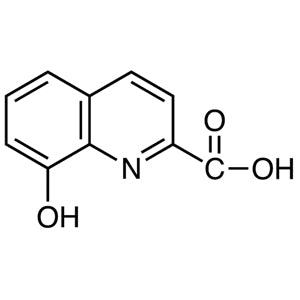
2-Hydroxyquinoline-4-carboxylic Acid is a versatile organic compound widely used in laboratory settings for its unique chemical structure and reactivity. This heterocyclic building block is essential in the synthesis of complex organic molecules, offering researchers the ability to create a wide range of functional groups. Its presence in various chemical reactions makes it a valuable tool for those working in synthetic chemistry, especially in the development of pharmaceuticals and advanced materials. The compound’s molecular framework allows for multiple functional group modifications, enhancing its utility in diverse chemical applications.
The compound is known for its high reactivity and solubility in common organic solvents such as ethyl acetate and ethanol. These properties make it suitable for use in both acidic and basic environments, expanding its application range. Its ability to form complexes with transition metals further enhances its role in catalytic processes and molecular modifications. This reactivity, combined with its structural versatility, makes it a preferred choice for researchers aiming to explore new chemical pathways and synthesize novel compounds.
In Indonesian laboratories, 2-Hydroxyquinoline-4-carboxylic Acid is commonly used in pharmacological and organic chemistry research. It is frequently employed in the development of new drug molecules and in the study of material properties. Its availability through suppliers like AMI Scientific ensures that researchers have access to this essential compound for their experimental needs. The compound's reliability and performance in various chemical processes make it a staple in many research laboratories across Indonesia.
Related TCI products
- TCI H1658 1571-30-8 8-Hydroxyquinoline-2-carboxylic Acid
- TCI H0877 19829-79-9 8-Hydroxyquinoline-7-carboxylic Acid
- TCI A1005 21302-43-2 5-Amino-8-hydroxyquinoline Dihydrochloride
- TCI H1713 14510-06-6 8-Hydroxyquinoline-2-carbaldehyde
- TCI H1272 1127-45-3 8-Hydroxyquinoline N-Oxide
- TCI H0306 283158-18-9 8-Hydroxyquinoline-5-sulfonic Acid Monohydrate
- Organic synthesis is a primary application where this compound serves as a key building block for creating complex molecules with diverse functionalities.
- Pharmaceutical research benefits from its ability to participate in reactions that lead to the development of new drug candidates with targeted biological activities.
- Material science applications leverage its reactivity to synthesize advanced polymers and functional materials with specific properties.
- Catalytic processes often use this compound due to its capacity to form complexes with transition metals, enhancing reaction efficiency and selectivity.
- Analytical chemistry utilizes its unique chemical properties for the identification and quantification of related compounds in complex mixtures.
| Brand | TCI |
|---|---|
| CAS number | 15733-89-8 |
| Molecular formula | — |
| Purity | — |
| Category | Chemistry > Building Blocks > Heterocyclic Building Blocks |
| Pack sizes | Available in various quantities as per supplier specifications |
| Physical form | Solid (as per standard product description) |
| Storage | Store in a cool, dry place away from moisture and direct sunlight |
This compound should be stored in a cool, dry environment to maintain its chemical integrity and prevent degradation. It is recommended to use airtight containers to minimize exposure to moisture and air, which can affect its stability. Due to its reactivity, it should be handled with care in a well-ventilated laboratory setting. Proper personal protective equipment, including gloves and safety goggles, should be worn when handling the compound to ensure safety. It is also important to store it away from incompatible substances to prevent unwanted chemical reactions. Regular monitoring of storage conditions ensures that the compound remains in optimal condition for use in laboratory applications.
—
Produk Terkait
-
8-Hydroxyquinoline-2-carboxylicAcid TCI H1658
Regular price From Rp 2.439.150,00Regular price -
8-Hydroxyquinoline-7-carboxylicAcid TCI H0877
Regular price From Rp 4.982.250,00Regular price -
5-Amino-8-hydroxyquinolineDihydrochloride TCI A1005
Regular price From Rp 3.312.750,00Regular price -
8-Hydroxyquinoline-2-carbaldehyde TCI H1713
Regular price From Rp 848.400,00Regular price -
8-HydroxyquinolineN-Oxide TCI H1272
Regular price From Rp 1.353.450,00Regular price -
8-Hydroxyquinoline-5-sulfonicAcidMonohydrate TCI H0306
Regular price From Rp 1.696.800,00Regular price -
Ethyl4-Hydroxyquinoline-3-carboxylate TCI E1142
Regular price From Rp 795.900,00Regular price -
6,7-Dimethoxy-4-hydroxyquinoline TCI D4695
Regular price From Rp 4.240.950,00Regular price