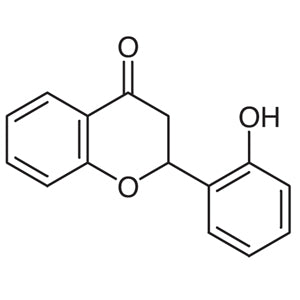
2'-Hydroxyflavanone is a chemical compound widely used in laboratory settings for its unique molecular structure and versatility in chemical reactions. As a heterocyclic building block, it plays a crucial role in organic synthesis, particularly in the development of compounds with specific biological activities. This compound is commonly utilized in research areas such as pharmacology and biochemistry due to its ability to participate in complex chemical transformations. Its presence in laboratory experiments helps scientists design and test new synthetic pathways for drug development and other advanced chemical applications.
The compound's stability and reactivity make it a preferred choice for researchers working with flavonoid-based structures. Its solubility in organic solvents simplifies the process of isolation and purification, which is essential for maintaining the integrity of experimental results. Additionally, its chemical resistance ensures that it remains effective even under prolonged exposure to various reaction conditions. These properties contribute to its reliability and consistency in laboratory environments, making it a valuable resource for scientific investigations.
In Indonesian laboratories, 2'-Hydroxyflavanone is frequently used in chemical research, pharmaceutical development, and biotechnology applications. Its role in creating compounds with biological activity supports advancements in drug discovery and functional material synthesis. The compound's predictable behavior and compatibility with various experimental setups make it a staple in academic and industrial research settings across Indonesia.
TCI brochures (PDF)
- Polyphenols 2024-12-05 · p. 1
- Phytochemicals 2025-12-17 · p. 10
- Organic synthesis experiments benefit from 2'-Hydroxyflavanone due to its ability to participate in complex chemical reactions and form stable intermediates.
- Pharmacological research utilizes this compound to develop new drugs with targeted biological activities, leveraging its flavonoid structure.
- Biochemical studies employ 2'-Hydroxyflavanone to investigate its interactions with enzymes and biological systems, contributing to understanding metabolic pathways.
- Analytical chemistry applications use the compound as a standard for chromatographic and spectroscopic analyses due to its well-defined molecular properties.
- Biotransformation studies incorporate 2'-Hydroxyflavanone to study its metabolic fate in living systems, aiding in drug metabolism research.
| Brand | TCI |
|---|---|
| CAS number | 17348-76-4 |
| Molecular formula | — |
| Purity | — |
| Category | Chemistry > Building Blocks > Heterocyclic Building Blocks |
| Pack sizes | Available in various quantities as per supplier specifications |
| Physical form | Solid or crystalline, depending on the batch |
| Storage | Store in a cool, dry place away from light and moisture |
2'-Hydroxyflavanone should be stored in a cool, dry environment to maintain its chemical stability and prevent degradation. It is recommended to keep the compound in a sealed container to minimize exposure to moisture and air, which could affect its reactivity. Suitable storage conditions include a controlled temperature range between 15°C and 25°C, with low humidity levels to avoid any unwanted chemical interactions. In laboratory settings, it is important to handle the compound with care, using appropriate personal protective equipment such as gloves and safety goggles. Proper labeling of storage containers ensures safe handling and easy identification, reducing the risk of accidental exposure or misuse. Regular monitoring of storage conditions helps maintain the compound's integrity and ensures its effectiveness in experimental applications.
—
Produk Terkait
-
6-Hydroxyflavanone TCI H1027
Regular price From Rp 1.351.350,00Regular priceRp 960.750,00Sale price From Rp 1.351.350,00 -
7-Hydroxyflavanone TCI H1006
Regular price Rp 1.829.100,00Regular priceRp 1.294.650,00Sale price Rp 1.829.100,00 -
5-Hydroxyflavone TCI H1238
Regular price Rp 5.141.850,00Regular priceRp 3.610.950,00Sale price Rp 5.141.850,00 -
7-Hydroxyflavone TCI H0852
Regular price From Rp 955.500,00Regular priceRp 683.550,00Sale price From Rp 955.500,00 -
6-Hydroxyflavone TCI H0851
Regular price From Rp 557.550,00Regular priceRp 405.300,00Sale price From Rp 557.550,00 -
3-Hydroxyflavone TCI H0379
Regular price From Rp 1.192.800,00Regular priceRp 849.450,00Sale price From Rp 1.192.800,00 -
4'-Hydroxyflavanone TCI H1026
Regular price Rp 3.630.900,00Regular priceRp 2.554.650,00Sale price Rp 3.630.900,00 -
3'-Hydroxyflavanone TCI H1025
Regular price Rp 3.207.750,00Regular priceRp 2.258.550,00Sale price Rp 3.207.750,00