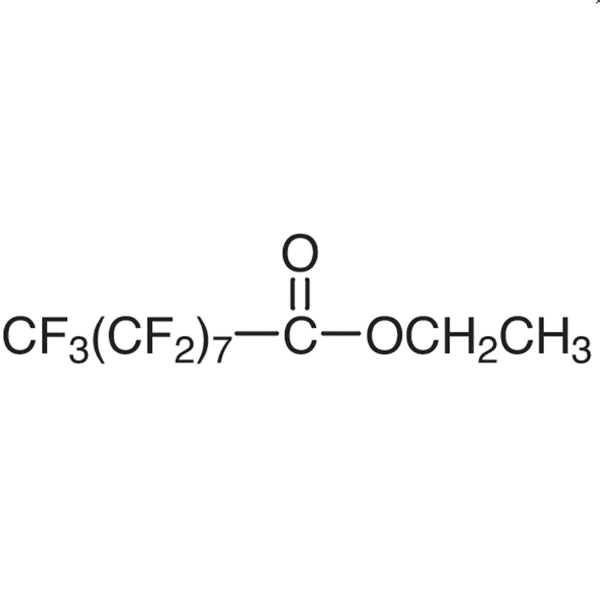
Ethyl Heptadecafluorononanoate is a fluorinated chemical compound widely used in scientific and industrial applications. As a fluorinated building block, it plays a crucial role in the synthesis of organofluorine compounds, which are essential in pharmaceutical, material science, and technological research. Its complex structure and unique chemical properties make it a valuable tool for chemists seeking to develop new materials or compounds with specific functional characteristics. This compound is particularly favored for its ability to provide stability and controlled reactivity in various chemical processes.
The compound's long fluorinated chain contributes to its non-polar nature and chemical inertness, making it ideal for applications that require high stability under harsh conditions. Its high boiling point and limited solubility also facilitate efficient separation and isolation during laboratory procedures. These properties ensure that it remains a reliable choice for researchers who need a compound that can withstand rigorous chemical environments without undergoing unwanted reactions.
In Indonesian laboratories, Ethyl Heptadecafluorononanoate is commonly used in research focused on advanced chemical synthesis and material development. Its application is particularly relevant in academic and industrial settings where precision and control over chemical reactions are paramount. Due to its stability and predictable behavior, it is often selected for experiments requiring a high degree of reproducibility and reliability.
TCI brochures (PDF)
- Fluorous Chemistry 2025-01-21 · p. 7
- Fluorination Reagents, Fluorinated Building Blocks 2026-03-18 · p. 53
Related TCI products
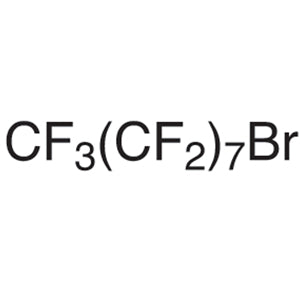
- TCI H0946 423-55-2 Heptadecafluoro-n-octyl Bromide
- TCI M2030 26131-32-8 Methyl 2,5-Bis(trifluoromethyl)-3,6-dioxaundecafluorononanoate (mixture of isomers)
- TCI U0074 423-46-1 1H,1H-Undecafluoro-1-hexanol
- TCI D1631 853-39-4 Decafluorobenzophenone
- TCI D1101 335-99-9 1H,1H,7H-Dodecafluoro-1-heptanol
- TCI H1233 754-96-1 1H,1H,10H,10H-Hexadecafluoro-1,10-decanediol
- Fluorinated Compound Synthesis: Ethyl Heptadecafluorononanoate is ideal for synthesizing complex organofluorine compounds due to its stable fluorinated chain and controlled reactivity.
- Pharmaceutical Research: Its non-polar nature and chemical inertness make it suitable for developing new drug molecules with enhanced stability and bioavailability.
- Material Science Development: The compound is used in creating advanced materials with specific chemical and physical properties, such as high thermal resistance and low surface energy.
- Analytical Chemistry Applications: Its distinct physical properties aid in analytical procedures requiring precise separation and identification of chemical components.
- Industrial Chemical Processes: It is applied in industrial settings where chemical stability and controlled reactivity are essential for producing high-quality chemical products.
| Brand | TCI |
|---|---|
| CAS number | 30377-52-7 |
| Molecular formula | — |
| Purity | — |
| Category | Chemistry > Building Blocks > Fluorinated Building Blocks |
| Pack sizes | Available in standard laboratory quantities |
| Physical form | Liquid |
| Storage | Store in a cool, dry place away from direct sunlight |
Ethyl Heptadecafluorononanoate should be stored in a cool, dry environment, away from direct sunlight and sources of heat. It is recommended to keep the compound in a tightly sealed container to prevent evaporation and contamination. Due to its limited solubility, it is advisable to store it in a container that minimizes exposure to moisture. Laboratory personnel should handle the compound with care, using appropriate personal protective equipment such as gloves and safety goggles. It is important to ensure that the storage area is well-ventilated to reduce the risk of inhaling vapors. Proper labeling of containers is essential to maintain safety and prevent accidental misuse.
—
Produk Terkait
-
Heptadecafluoro-n-octylBromide TCI H0946
Regular price From Rp 980.700,00Regular price -
Methyl2,5-Bis(trifluoromethyl)-3,6-dioxaundecafluorononanoate(mixtureofisomers) TCI M2030
Regular price Rp 3.551.100,00Regular price -
1H,1H-Undecafluoro-1-hexanol TCI U0074
Regular price Rp 3.207.750,00Regular price -
Decafluorobenzophenone TCI D1631
Regular price From Rp 1.246.350,00Regular price -
1H,1H,7H-Dodecafluoro-1-heptanol TCI D1101
Regular price From Rp 1.167.600,00Regular price -
1H,1H,10H,10H-Hexadecafluoro-1,10-decanediol TCI H1233
Regular price From Rp 610.050,00Regular price -
Octadecafluorooctane TCI O0268
Regular price Rp 1.326.150,00Regular price -
MethylUndecafluoroamylKetone TCI U0071
Regular price Rp 6.070.050,00Regular price