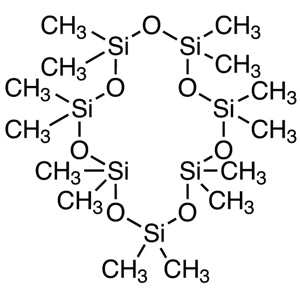
Hexadecamethylcyclooctasiloxane is a cyclic siloxane built from eight dimethylsiloxane units joined into a closed ring, which is why it is commonly abbreviated as D8 in the shorthand nomenclature of silicone chemistry. As a member of the cyclic siloxane family larger than D4, D5, and D6, this compound serves as an organosilicon reagent and as a monomer for ring-opening reactions that build long-chain polysiloxanes. In the laboratory it is also used as a reference standard in siloxane analysis and as a medium with distinctive interfacial properties.
The properties that make it a preferred choice are its highly flexible Si–O–Si backbone and its low surface energy. The silicon–oxygen bond combines a high bond energy with bond angles that deform easily, so siloxanes are thermally stable, resistant to oxidation, unreactive toward most chemicals, and show only small changes in viscosity across a range of temperatures. The eight-membered ring carries low ring strain yet can still be opened by acidic or basic catalysts to initiate polymerization. Its hydrophobic character and insolubility in water make it suitable as a lubricant and as a mold release material.
In Indonesian laboratories this material is typically handled in research groups and analytical units working on silicone chemistry, polymer synthesis, and surface treatment. It appears in university research laboratories, polymer and materials development units, and analytical laboratories that need a defined cyclic siloxane for method work. Because it is supplied as a TCI catalogue reagent, it is usually ordered in laboratory-scale quantities alongside other organosilicon reagents rather than in bulk industrial volumes.
TCI brochures (PDF)
Related TCI products
- TCI T2678 107-50-6 Tetradecamethylcycloheptasiloxane
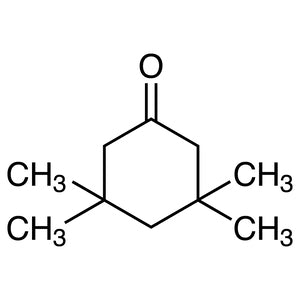
- TCI T2282 14376-79-5 3,3,5,5-Tetramethylcyclohexan-1-one
- TCI T1717 4306-65-4 1,1,3,5-Tetramethylcyclohexane
- TCI O0425 556-71-8 Octadecamethylcyclononasiloxane
- TCI T3745 3901-77-7 2,4,6-Trimethyl-2,4,6-trivinylcyclotrisiloxane
- TCI O0351 125756-69-6 Octakis(dimethylsilyloxy)octasilsesquioxane
- Ring-opening polymerization studies: the eight-membered ring can be opened by acidic or basic catalysts, allowing controlled synthesis of long-chain polysiloxanes from a well-defined cyclic monomer.
- Reference standard for siloxane analysis: as a discrete cyclic siloxane of known identity, it supports peak identification and method development in laboratories that analyse siloxane mixtures.
- Organosilicon reagent work: it functions as a starting material in synthetic routes where a flexible Si–O–Si framework must be introduced into a target structure or intermediate.
- Surface and interfacial studies: its low surface energy and hydrophobic, water-insoluble character make it useful as a medium for examining wetting behaviour and interfacial phenomena.
- Lubricant and mold release evaluation: thermal stability, oxidation resistance, and small viscosity change with temperature suit it to bench-scale testing of release and lubrication performance.
| Brand | TCI |
|---|---|
| CAS number | 556-68-3 |
| Molecular formula | — |
| Purity | — |
| Category | Chemistry > Organometallic Reagents > Organosilicon [Organometallic Reagents] |
| Pack sizes | available in standard TCI laboratory pack sizes; please confirm the packaging option when ordering. |
| Physical form | — |
| Storage | keep in a tightly closed original container in a cool, dry, well-ventilated place away from incompatible materials. |
- Catalogue code: H1288
Store the container tightly closed in a cool, dry, and well-ventilated area, protected from direct sunlight and from sources of heat or ignition. The original manufacturer packaging is the most suitable container; if transfer is necessary, use clean, dry glass or another chemically compatible vessel and label it clearly. Handle the material in a fume hood or a well-ventilated working area, and wear standard laboratory personal protective equipment including safety glasses, gloves, and a laboratory coat. Avoid contact with skin and eyes and avoid breathing vapour or mist. Because the compound is hydrophobic and water-insoluble, keep it away from drains and collect residues as chemical waste in accordance with local laboratory waste procedures. Always consult the manufacturer's safety data sheet before use.
—
Produk Terkait
-
Tetradecamethylcycloheptasiloxane TCI T2678
Regular price Rp 7.366.800,00Regular price -
3,3,5,5-Tetramethylcyclohexan-1-one TCI T2282
Regular price From Rp 1.326.150,00Regular price -
1,1,3,5-Tetramethylcyclohexane TCI T1717
Regular price Rp 6.148.800,00Regular price -
Octadecamethylcyclononasiloxane TCI O0425
Regular price From Rp 5.034.750,00Regular price -
2,4,6-Trimethyl-2,4,6-trivinylcyclotrisiloxane TCI T3745
Regular price From Rp 637.350,00Regular price -
Octakis(dimethylsilyloxy)octasilsesquioxane TCI O0351
Regular price From Rp 2.199.750,00Regular price -
Octaphenyloctasilsesquioxane TCI O0349
Regular price From Rp 1.776.600,00Regular price -
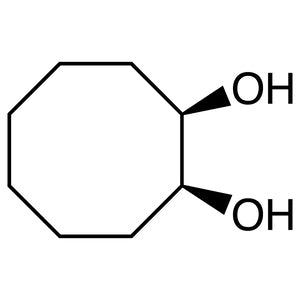
cis-Cyclooctane-1,2-diol TCI C4056
Regular price From Rp 928.200,00Regular price