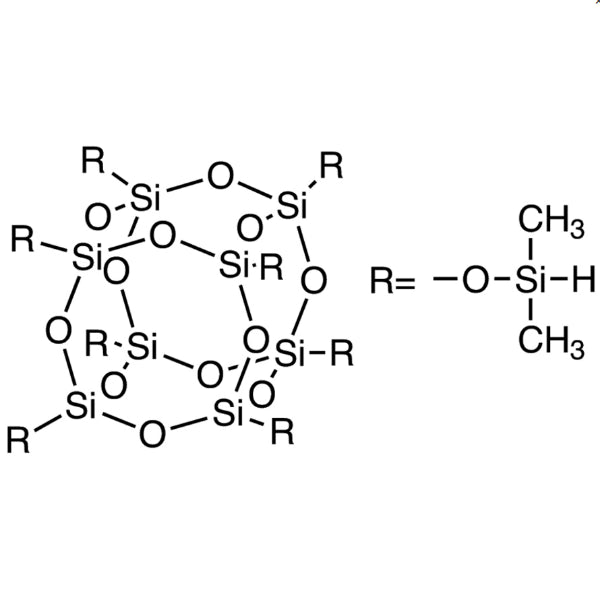
Octakis(dimethylsilyloxy)octasilsesquioxane is a complex organosilicon compound widely used in chemical reactions, especially in the synthesis of complex molecules and surface modification processes. This material plays a crucial role in laboratory settings where advanced chemical transformations are required. Its unique structure, composed of silicon atoms bonded with dimethylsilyloxy groups, provides both stability and reactivity, making it a versatile reagent in various chemical applications. Due to its molecular complexity and stable substituents, it is particularly valuable in research involving organosilicon chemistry.
The compound’s controlled reactivity and resistance to extreme chemical conditions make it a preferred choice for applications requiring high chemical stability. Its ability to maintain structural integrity under harsh conditions ensures reliable performance in demanding laboratory environments. Additionally, its solubility in organic solvents enhances its usability across a wide range of experimental procedures. These properties contribute to its popularity among researchers working with advanced materials and surface engineering.
In Indonesian laboratories, this compound is commonly used in chemical research, especially in academic and research institutions. It is frequently employed in projects related to material development and surface modification. Its presence in these settings highlights its importance in advancing scientific knowledge and technological innovation in the field of organosilicon chemistry.
TCI brochures (PDF)
Related TCI products
- TCI O0349 5256-79-1 Octaphenyloctasilsesquioxane
- TCI T3597 289706-46-3 4-[2,2,2-Trifluoro-1-[(trimethylsilyl)oxy]ethyl]morpholine
- TCI T2544 1001067-09-9 2-(Trimethylsilyl)ethyl 3-Nitro-1H-1,2,4-triazole-1-carboxylate
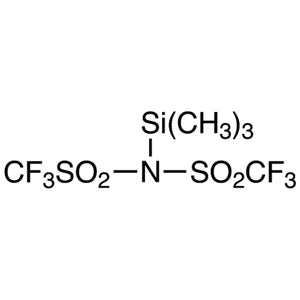
- TCI T2392 82113-66-4 N-(Trimethylsilyl)bis(trifluoromethanesulfonyl)imide
- TCI T1514 13411-42-2 2-Trimethylsilyl-1,3-dithiane
- TCI T1277 13368-42-8 N-(Trimethylsilyl)morpholine
- Surface modification projects benefit from its stable dimethylsilyloxy groups, enabling controlled functionalization of materials.
- Polymer synthesis applications utilize its reactivity to form complex organic-inorganic hybrid structures.
- Catalytic processes leverage its unique structure to enhance reaction efficiency and selectivity in organic transformations.
- Advanced material development relies on its ability to create durable and chemically stable coatings on various substrates.
- Research in nanotechnology incorporates it for creating silica-based nanomaterials with tailored surface properties.
| Brand | TCI |
|---|---|
| CAS number | 125756-69-6 |
| Molecular formula | — |
| Purity | — |
| Category | Chemistry > Organometallic Reagents > Organosilicon |
| Pack sizes | Available in various quantities as per supplier specifications |
| Physical form | Solid or liquid, depending on the specific product variant |
| Storage | Store in a cool, dry place away from moisture and direct sunlight |
This compound should be stored in a cool, dry environment to maintain its chemical stability. It is recommended to use sealed containers to prevent exposure to moisture and air, which could affect its reactivity. Due to its potential reactivity, it should be handled in a well-ventilated laboratory setting, with appropriate personal protective equipment. Avoid contact with incompatible materials, and ensure proper disposal in accordance with local regulations. Regular inspection of storage conditions is essential to ensure the integrity of the material remains unaffected over time.
—
Produk Terkait
-
Octaphenyloctasilsesquioxane TCI O0349
Regular price From Rp 1.776.600,00Regular price -
4-[2,2,2-Trifluoro-1-[(trimethylsilyl)oxy]ethyl]morpholine TCI T3597
Regular price From Rp 2.016.000,00Regular price -
2-(Trimethylsilyl)ethyl3-Nitro-1H-1,2,4-triazole-1-carboxylate TCI T2544
Regular price From Rp 3.763.200,00Regular price -
N-(Trimethylsilyl)bis(trifluoromethanesulfonyl)imide TCI T2392
Regular price From Rp 2.889.600,00Regular price -
2-Trimethylsilyl-1,3-dithiane TCI T1514
Regular price From Rp 4.081.350,00Regular price -
N-(Trimethylsilyl)morpholine TCI T1277
Regular price From Rp 1.431.150,00Regular price -
2,5-Bis[(trimethylsilyl)ethynyl]thieno[3,2-b]thiophene TCI B5196
Regular price From Rp 3.446.100,00Regular price -
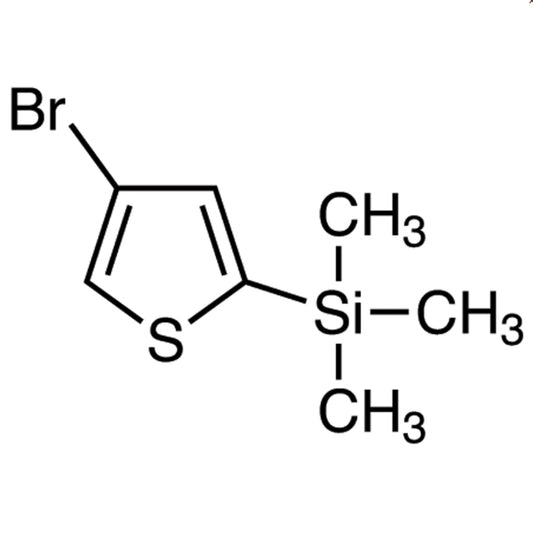
4-Bromo-2-(trimethylsilyl)thiophene TCI B4856
Regular price From Rp 2.518.950,00Regular price


![289706-46-3 4-[2,2,2-Trifluoro-1-[(trimethylsilyl)oxy]ethyl]morpholine - AMI Scientific](http://amiscientific.com/cdn/shop/files/TCI2510T3597.jpg?v=1769058256&width=533)



![139896-65-4 2,5-Bis[(trimethylsilyl)ethynyl]thieno[3,2-b]thiophene - AMI Scientific](http://amiscientific.com/cdn/shop/files/TCI2510B5196.jpg?v=1769055884&width=533)
![139896-65-4 2,5-Bis[(trimethylsilyl)ethynyl]thieno[3,2-b]thiophene - AMI Scientific](http://amiscientific.com/cdn/shop/files/TCI2510B5196_449fea7b-875a-48d6-a10c-58ae4c828801.jpg?v=1769145402&width=533)