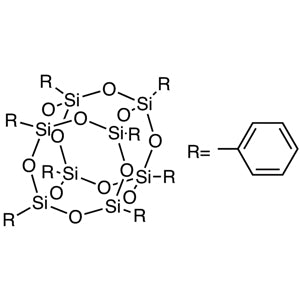
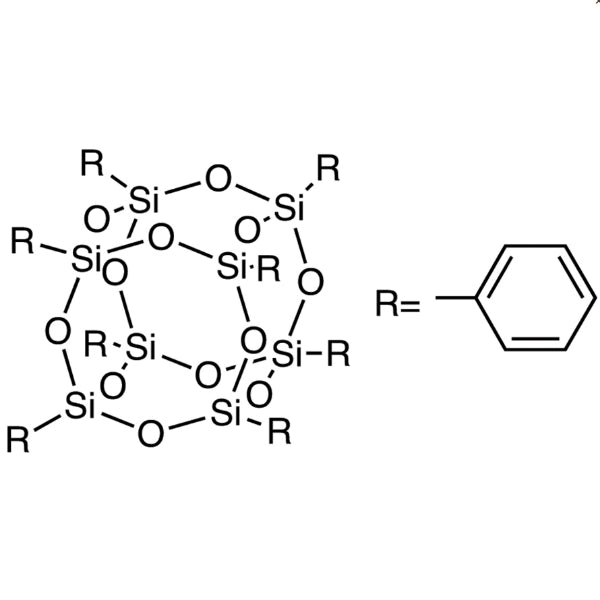
Octaphenyloctasilsesquioxane is a complex organosilicon compound known for its exceptional stability and unique chemical properties. As an organometallic reagent, it plays a crucial role in various chemical reactions where controlled reactivity and solubility are essential. This compound is widely used in both organic and inorganic synthesis due to its ability to interact with a variety of ligands and form stable structures. Its versatility makes it a valuable asset in laboratories that require precise chemical manipulation and high-performance reagents.
The compound's high stability and compatibility with organic solvents make it a preferred choice for researchers working on advanced chemical processes. Its ability to maintain structural integrity under various reaction conditions ensures consistent results in experimental setups. Additionally, its solubility in common organic solvents simplifies handling and integration into complex synthetic pathways. These characteristics are particularly beneficial in applications that demand precision and reproducibility.
In Indonesian laboratories, Octaphenyloctasilsesquioxane is commonly used in scientific research and material development projects. It is a key component in experiments involving the synthesis of complex compounds and the creation of silicon-based materials. Its unique properties make it an ideal choice for academic and industrial research focused on chemical innovation and advanced material science.
TCI brochures (PDF)
Related TCI products
- Organic synthesis experiments benefit from its high stability and reactivity, enabling the formation of complex molecular structures with precision.
- Inorganic material development utilizes its unique bonding properties to create advanced silicon-based compounds with tailored characteristics.
- Research on organosilicon chemistry leverages its ability to interact with various ligands, supporting the study of coordination and reaction mechanisms.
- Advanced polymer synthesis relies on its compatibility with organic solvents, facilitating the creation of high-performance materials.
- Nanomaterial fabrication benefits from its structural stability, allowing for the controlled synthesis of silicon-based nanoscale components.
| Brand | TCI |
|---|---|
| CAS number | 5256-79-1 |
| Molecular formula | — |
| Purity | — |
| Category | Chemistry > Organometallic Reagents > Organosilicon |
| Pack sizes | Available in standard laboratory quantities |
| Physical form | Solid |
| Storage | Store in a cool, dry place away from moisture and direct sunlight |
Octaphenyloctasquioxane should be stored in a cool, dry environment to maintain its chemical stability. It is recommended to keep the compound in a tightly sealed container to prevent exposure to moisture and air. Due to its organic nature, it is best stored in glass or high-density polyethylene containers to ensure compatibility and prevent degradation. Laboratory personnel should handle the compound with care, using appropriate personal protective equipment when necessary. Avoid prolonged exposure to heat or light, as these conditions may affect its performance in chemical reactions. Proper storage ensures the compound remains effective for use in research and development applications.
—
Produk Terkait
-
Octakis(dimethylsilyloxy)octasilsesquioxane TCI O0351
Regular price From Rp 2.199.750,00Regular price -
2,4,6-Trimethyl-2,4,6-trivinylcyclotrisiloxane TCI T3745
Regular price From Rp 637.350,00Regular price -
Tetradecamethylcycloheptasiloxane TCI T2678
Regular price Rp 7.366.800,00Regular price -
Octadecamethylcyclononasiloxane TCI O0425
Regular price From Rp 5.034.750,00Regular price -
Hexadecamethylcyclooctasiloxane TCI H1288
Regular price From Rp 6.386.100,00Regular price