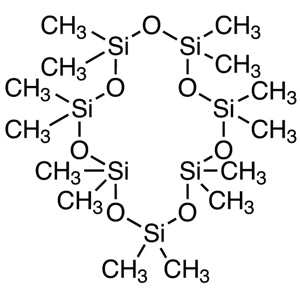
Octadecamethylcyclononasiloxane is an organosilicon compound widely used in chemical reactions and organic synthesis. It is a complex molecule with a cyclic siloxane structure featuring a long chain of methyl groups. This compound plays a crucial role in laboratory settings as a solvent or reactive agent, aiding in the synthesis of other organosilicon compounds. Its unique molecular structure allows it to function effectively in both polar and non-polar environments, making it a versatile tool for chemists. Its stability and inertness make it ideal for use in environments where chemical reactions need to be controlled precisely.
The compound is chemically stable and resistant to common chemical reagents, which enhances its reliability in laboratory applications. Its high viscosity enables it to act as a solvent for substances that are difficult to dissolve in conventional solvents. This property is particularly useful in organic chemistry where solubility is a key factor in reaction success. Additionally, its non-reactive nature ensures that it does not interfere with the intended chemical processes, providing consistent and predictable results in experimental settings.
In Indonesian laboratories, Octadecamethylcyclononasiloxane is commonly used in organic chemistry research, especially in the synthesis of silicon-based compounds and industrial chemical applications. Its stability and solubility characteristics make it a preferred choice for researchers working on complex chemical processes. The compound is also valued for its role in stabilizing molecules during synthesis, contributing to the efficiency and accuracy of chemical experiments.
TCI brochures (PDF)
Related TCI products
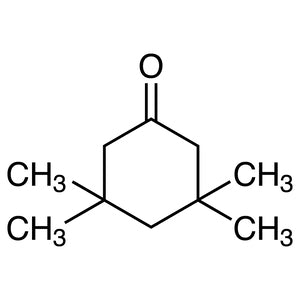
- TCI T2282 14376-79-5 3,3,5,5-Tetramethylcyclohexan-1-one
- TCI T1717 4306-65-4 1,1,3,5-Tetramethylcyclohexane
- TCI T2678 107-50-6 Tetradecamethylcycloheptasiloxane
- TCI H1288 556-68-3 Hexadecamethylcyclooctasiloxane
- TCI T3745 3901-77-7 2,4,6-Trimethyl-2,4,6-trivinylcyclotrisiloxane
- TCI O0351 125756-69-6 Octakis(dimethylsilyloxy)octasilsesquioxane
- Organic synthesis where non-polar solvents are required due to its high viscosity and inert chemical properties.
- Preparation of silicon-based compounds as it provides a stable environment for chemical reactions.
- Stabilization of molecules during synthesis to prevent unwanted side reactions and ensure product purity.
- Use in industrial chemical applications where chemical stability and solubility are critical factors.
- Research in polymer science for its ability to dissolve and process complex organic materials effectively.
| Brand | TCI |
|---|---|
| CAS number | 556-71-8 |
| Molecular formula | — |
| Purity | — |
| Category | Chemistry > Organometallic Reagents > Organosilicon [Organometallic Reagents] |
| Pack sizes | Available in various sizes as per standard laboratory supply |
| Physical form | Liquid |
| Storage | Store in a cool, dry place away from direct sunlight and incompatible materials |
Octadecamethylcyclononasiloxane should be stored in a cool, dry place, away from direct sunlight and sources of heat. It is recommended to use sealed containers made of materials compatible with organosilicon compounds, such as glass or high-density polyethylene. Due to its high viscosity, it is important to ensure proper ventilation in the laboratory to avoid any potential inhalation risks. The compound is chemically inert and non-reactive, but standard laboratory safety protocols should still be followed when handling it. Avoid contact with incompatible substances and ensure that storage areas are secure to prevent accidental spills or exposure.
—
Produk Terkait
-
3,3,5,5-Tetramethylcyclohexan-1-one TCI T2282
Regular price From Rp 1.326.150,00Regular price -
1,1,3,5-Tetramethylcyclohexane TCI T1717
Regular price Rp 6.148.800,00Regular price -
Tetradecamethylcycloheptasiloxane TCI T2678
Regular price Rp 7.366.800,00Regular price -
Hexadecamethylcyclooctasiloxane TCI H1288
Regular price From Rp 6.386.100,00Regular price -
2,4,6-Trimethyl-2,4,6-trivinylcyclotrisiloxane TCI T3745
Regular price From Rp 637.350,00Regular price -
Octakis(dimethylsilyloxy)octasilsesquioxane TCI O0351
Regular price From Rp 2.199.750,00Regular price -
Octaphenyloctasilsesquioxane TCI O0349
Regular price From Rp 1.776.600,00Regular price