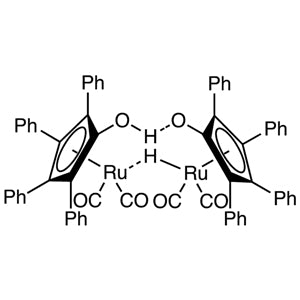
TCI H1322, bearing CAS number 104439-77-2, is a binuclear diruthenium(II) complex known widely among chemists as the Shvo catalyst. This organometallic compound combines a tetraphenylcyclopentadienone ligand and a hydroxy-tetraphenylcyclopentadienyl group, bridged by a hydride atom together with four carbonyl groups. In the laboratory its role is highly specific: it serves as a homogeneous catalyst for transfer hydrogenation, hydrogenation, and dehydrogenation of organic compounds. Its presence allows researchers to reduce ketones, aldehydes, and imines without depending on high-pressure hydrogen gas, making experimental work considerably simpler and safer at research scale.
The characteristic that makes this catalyst a preferred choice lies in its unusual working mechanism, namely an outer-sphere bifunctional mechanism. The catalyst is able to transfer a proton and a hydride simultaneously without the substrate needing to bind directly to the metal centre, which gives it excellent tolerance toward a wide range of functional groups. This same property also makes it air-stable in the solid state, so handling is far easier than with many other transition metal catalysts that demand strictly inert conditions throughout every stage of an experiment.
In Indonesian laboratories, this material is typically encountered in university research groups, organic and organometallic synthesis laboratories, and institutional research centres working on catalysis. It is generally used at small research scale, where the ability to run reductions without a high-pressure hydrogen line is a practical advantage for facilities that do not maintain dedicated high-pressure infrastructure. Its air stability as a solid also suits laboratories where glovebox access is shared or limited.
Advantages (TCI brochure)
- Ruthenium binuclear complex that hydrogenates carbonyl groups and olefin moieties.
- Uses formic acid as hydrogen source.
TCI brochures (PDF)
- Hydrogenation Catalysts 2025-11-10 · p. 2
- Transition Metal Catalysts 2026-04-10 · p. 8
Related TCI products
- TCI R0322 7440-18-8 Ruthenium 5% on Carbon, SD type (wetted with ca 55% Water)
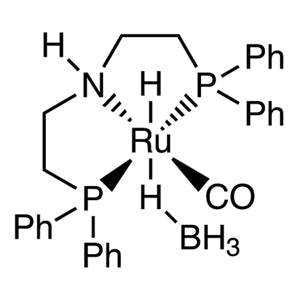
- TCI R0137 1295649-41-0 Ru-MACHO(regR)-BH
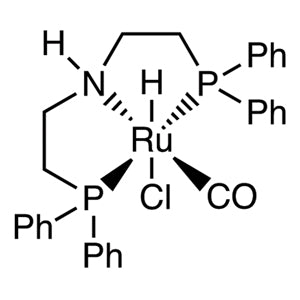
- TCI R0136 1295649-40-9 Ru-MACHO(regR) (contains 5% Toluene at maximum)
- TCI R0076 7440-18-8 Ruthenium 5% on Carbon (wetted with ca 50% Water)
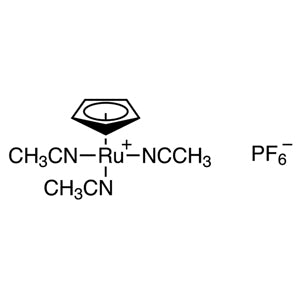
- TCI T3079 80049-61-2 Tris(acetonitrile)cyclopentadienylruthenium(II) Hexafluorophosphate
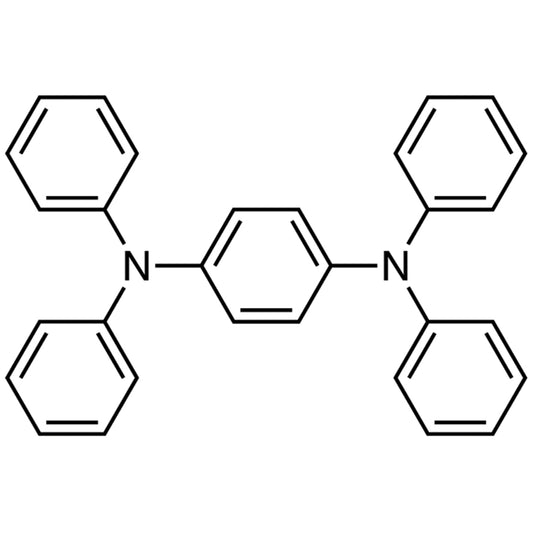
- TCI T3309 14118-16-2 N,N,N',N'-Tetraphenyl-1,4-phenylenediamine
- Transfer hydrogenation of ketones and aldehydes — the catalyst delivers proton and hydride together, so carbonyl substrates are reduced efficiently without requiring pressurised hydrogen gas equipment.
- Reduction of imines — the outer-sphere mechanism allows the C=N bond to be reduced without direct coordination to the metal centre, preserving other sensitive functional groups present.
- Catalytic hydrogenation of organic compounds — as a homogeneous catalyst it disperses fully in the reaction medium, giving consistent access to substrate throughout the mixture.
- Dehydrogenation reactions — the same bifunctional pathway operates in reverse, letting researchers remove hydrogen from suitable substrates under controlled homogeneous catalytic conditions.
- Methodology development in organometallic chemistry — its well-defined binuclear structure and documented mechanism make it a reliable reference catalyst for comparative studies of reduction routes.
From the TCI brochure
- Reduction of a cyclic ketone to the secondary alcohol (HCOOH, toluene).
- Selective hydrogenation of the olefin in an α,β-unsaturated ketone (HCOOH, toluene).
| Brand | TCI |
|---|---|
| CAS number | 104439-77-2 |
| Molecular formula | — |
| Purity | — |
| Category | Chemistry > Catalysis and Inorganic Chemistry > Hydrogenation [Catalysis] |
| Pack sizes | — |
| Physical form | solid, air-stable under ambient handling |
| Storage | store in a closed container in a cool, dry place away from light and moisture |
- Product Code: H1322
Data from the TCI brochure
| Hydrogen source | HCOOH (toluene, cat. H1322) |
|---|
Source: TCI brochure R5115 (2025-11-10)
Store the material in its original tightly closed container, kept in a cool, dry, and well-ventilated place away from direct sunlight, heat sources, and moisture. Amber glass or the supplier's original packaging is suitable for keeping the solid protected from light. Although the compound is air-stable in the solid state, keeping the container sealed between uses helps preserve catalytic activity. Handle in a fume hood using standard personal protective equipment, including safety goggles, gloves, and a laboratory coat, and weigh out portions promptly to limit exposure to ambient air. Keep the container clearly labelled, away from incompatible chemicals, and dispose of residues according to institutional chemical waste procedures.
—
Produk Terkait
-
Ruthenium5%onCarbon,SDtype(wettedwithca55%Water) TCI R0322
Regular price From Rp 823.200,00Regular price -
Ru-MACHO(regR)-BH TCI R0137
Regular price From Rp 1.246.350,00Regular price -
Ru-MACHO(regR)(contains5%Tolueneatmaximum) TCI R0136
Regular price From Rp 1.246.350,00Regular price -
Ruthenium5%onCarbon(wettedwithca50%Water) TCI R0076
Regular price From Rp 848.400,00Regular price -
Tris(acetonitrile)cyclopentadienylruthenium(II)Hexafluorophosphate TCI T3079
Regular price Rp 5.194.350,00Regular price -
N,N,N',N'-Tetraphenyl-1,4-phenylenediamine TCI T3309
Regular price From Rp 1.035.300,00Regular price -
1,1,4,4-Tetraphenyl-1,3-butadiene TCI T0168
Regular price From Rp 1.035.300,00Regular price -
N,N'-Di(1-naphthyl)-N,N',9,9-tetraphenyl-9H-fluorene-2,7-diamine TCI D5443
Regular price From Rp 610.050,00Regular price