2-Hydroxy-2-azaadamantane is a chemical compound widely used in catalytic reactions and organic synthesis within laboratory settings. As an organocatalyst, it plays a crucial role in accelerating chemical reactions without the need for heavy metals, making it a valuable tool in modern synthetic chemistry. Its unique molecular structure enables it to act as an efficient catalyst across a range of reaction conditions, contributing to the development of more sustainable and environmentally friendly chemical processes. This compound is particularly useful in asymmetric catalysis, where high reactivity and specificity are essential for producing chiral compounds with desired properties.
The compound's properties make it a preferred choice in laboratory environments. It exhibits good stability and can be used in various reaction media, including organic solvents and aqueous solutions. Its non-toxic and environmentally friendly nature further enhances its appeal for use in both research and educational settings. Additionally, its ability to function effectively under diverse reaction conditions allows for greater flexibility in experimental design, making it a versatile option for chemists and researchers.
In Indonesian laboratories, 2-Hydroxy-2-azaadamantane is commonly used in organic chemistry research and the synthesis of complex compounds. Its reliability and effectiveness in catalytic applications make it a preferred material for both academic and industrial research. It supports the development of new chemical methodologies and contributes to the advancement of scientific knowledge in the field of catalysis.
Advantages (TCI brochure)
- High catalytic activity, superior to TEMPO
- Easily oxidizes bulky secondary alcohols
- Works with various co-oxidants: NaOCl, NaClO2, PhI(OAc)2, O2, DIAD
TCI brochures (PDF)
- Highly Active Catalyst for Alcohol Oxidation - AZADOL® 2024-07-03 · p. 1
- Oxidizing Agents 2025-06-11 · p. 4
Related TCI products
- Asymmetric Catalysis: This compound is ideal for asymmetric reactions due to its ability to promote high enantioselectivity, making it suitable for the synthesis of chiral compounds with specific stereochemistry.
- Organic Synthesis: It is frequently used in the preparation of complex organic molecules, offering efficient catalytic performance in various reaction conditions.
- Green Chemistry Research: Its non-toxic and environmentally friendly nature aligns with the principles of green chemistry, supporting sustainable and eco-conscious experimental approaches.
- Educational Laboratories: It is a valuable teaching tool in academic settings, helping students understand catalytic mechanisms and synthetic strategies.
- Industrial Catalytic Processes: Its stability and effectiveness make it applicable in industrial-scale chemical processes requiring efficient and selective catalytic systems.
From the TCI brochure
- Oxidation of alcohols under Anelli's condition (NaOCl co-oxidant)
- Aerobic oxidation of alcohols (NaNO2, air, AcOH)
- Functional-group-selective oxidation with DIAD co-oxidant (Mitsunobu reagent)
- One-pot oxidative cleavage of 1,2-diols to (di)carboxylic acids with PhI(OAc)2
| Brand | TCI |
|---|---|
| CAS number | 1155843-79-0 |
| Molecular formula | — |
| Purity | — |
| Category | Chemistry > Catalysis and Inorganic Chemistry > Organocatalysts [Catalysis] |
| Pack sizes | Available in various quantities as per standard laboratory supply options |
| Physical form | Solid or liquid, depending on the specific formulation |
| Storage | Store in a cool, dry place away from direct sunlight and moisture |
Data from the TCI brochure
| Yield, Anelli condition, substrate 1 (labelled AZADO in brochure) | 94% (1 mol% catalyst, NaOCl 150 mol%, KBr 10 mol%, Bu4NBr 5 mol%, CH2Cl2, aq NaHCO3, 0 ºC, 20 min) |
|---|---|
| Yield, Anelli condition, substrate 2 (labelled AZADO in brochure) | 99% (1 mol% catalyst, NaOCl 150 mol%, KBr 10 mol%, Bu4NBr 5 mol%, CH2Cl2, aq NaHCO3, 0 ºC, 20 min) |
| Yield, Anelli condition, substrate 3 (labelled AZADO in brochure) | 91% (1 mol% catalyst, NaOCl 150 mol%, KBr 10 mol%, Bu4NBr 5 mol%, CH2Cl2, aq NaHCO3, 0 ºC, 20 min) |
| Yield, aerobic oxidation, substrate 1 (labelled AZADO in brochure) | 97% (9 h) (1 mol% catalyst, NaNO2 10 mol%, air (balloon), AcOH, rt) |
| Yield, aerobic oxidation, substrate 2 (labelled AZADO in brochure) | 92% (9.5 h) (1 mol% catalyst, NaNO2 10 mol%, air (balloon), AcOH, rt) |
| Yield, aerobic oxidation, substrate 3 (labelled AZADO in brochure) | 100% (6 h) (1 mol% catalyst, NaNO2 10 mol%, air (balloon), AcOH, rt) |
| Yield, Mitsunobu-DIAD oxidation, AZADOL | 95% (3 mol% catalyst, AcOH (1 eq.), DIAD (1.2 eq.), CH2Cl2, rt, 24 h) |
| Yield, diol cleavage, diol 1 (labelled AZADO in brochure) | 90% (AZADO 10 mol%, PhI(OAc)2 (5 eq.), CH2Cl2/H2O, rt, 1 h) |
| Yield, diol cleavage, diol 2 (labelled AZADO in brochure) | 87% (AZADO 10 mol%, PhI(OAc)2 (5 eq.), CH2Cl2/H2O, rt, 1.5 h) |
| Yield, diol cleavage, diol 3 (labelled AZADO in brochure) | 89% (AZADO 10 mol%, PhI(OAc)2 (5 eq.), CH2Cl2/H2O, rt, 1 h) |
| Yield, diol cleavage, diol 4 (labelled AZADO in brochure) | 91% (AZADO 10 mol%, PhI(OAc)2 (5 eq.), CH2Cl2/H2O, rt, 1 h) |
Source: TCI brochure RR020 (2024-07-03)
This compound should be stored in a cool, dry place, away from direct sunlight and moisture to maintain its stability and effectiveness. It is recommended to use airtight containers made of inert materials such as glass or polyethylene to prevent contamination and degradation. In laboratory settings, it is important to handle the material with appropriate personal protective equipment, including gloves and safety goggles, to ensure safety during use and storage. Due to its non-toxic nature, it is generally considered safe, but standard laboratory safety protocols should still be followed to minimize any potential risks. Proper labeling and storage conditions are essential to ensure the compound remains viable for use in research and educational applications.
References cited in the TCI brochure
- Yoshiharu Iwabuchi. Discovery and Exploitation of AZADO: The Highly Active Catalyst for Alcohol Oxidation Chemical and Pharmaceutical Bulletin, 2013. doi:10.1248/cpb.c13-00456
- Masaki Hayashi. 9-Azanoradamantane N-Oxyl (Nor-AZADO): A Highly Active Organocatalyst for Alcohol Oxidation Chemical and Pharmaceutical Bulletin, 2011. doi:10.1248/cpb.59.1570
- Yoshiharu Iwabuchi. Practical Preparation Methods for Highly Active Azaadamantane-Nitroxyl-Radical-Type Oxidation Catalysts Synthesis, 2011. doi:10.1055/s-0030-1260257
- Masaki Hayashi. Oxidation of Alcohols to Carbonyl Compounds with Diisopropyl Azodicarboxylate Catalyzed by Nitroxyl Radicals The Journal of Organic Chemistry, 2012. doi:10.1021/jo300088b
- Masatoshi Shibuya. Nitroxyl Radical/PhI(OAc)2: One-Pot Oxidative Cleavage of Vicinal Diols to (Di)Carboxylic Acids Organic Letters, 2012. doi:10.1021/ol3021435
Product Categories
- Catalysis and Inorganic ChemistryOrganocatalysts [Catalysis]Oxidation Organocatalysts
- Catalysis and Inorganic ChemistryOxidation [Catalysis]Oxidation Organocatalysts
- Synthetic ReagentsOxidation [Synthetic Reagents]Oxidants (Other) [Oxidation]
- Synthetic ReagentsRadical ChemistryStable Radicals [Synthetic Reagents]
Produk Terkait
-
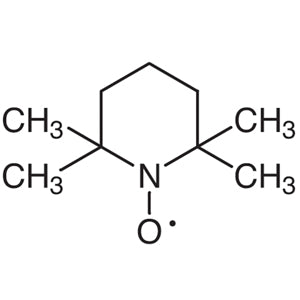
2,2,6,6-Tetramethylpiperidine1-OxylFreeRadical TCI T1560
Regular price From Rp 1.590.750,00Regular priceRp 1.111.950,00Sale price From Rp 1.590.750,00 -
GalvinoxylFreeRadical TCI G0020
Regular price From Rp 3.922.800,00Regular priceRp 2.742.600,00Sale price From Rp 3.922.800,00 -
Adamantane-1,3-diamine TCI A3265
Regular price From Rp 3.472.350,00Regular priceRp 2.443.350,00Sale price From Rp 3.472.350,00 -
Adamantane(purifiedbysublimation) TCI A3233
Regular price From Rp 1.644.300,00Regular priceRp 1.149.750,00Sale price From Rp 1.644.300,00 -
Adamantane TCI A0696
Regular price From Rp 1.035.300,00Regular priceRp 723.450,00Sale price From Rp 1.035.300,00 -
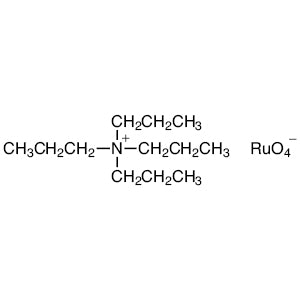
TetrapropylammoniumPerruthenate TCI T1559
Regular price From Rp 3.683.400,00Regular priceRp 2.591.400,00Sale price From Rp 3.683.400,00 -
9-(2-Biphenylyl)-10-methylacridiniumPerchlorate TCI B2897
Regular price Rp 4.293.450,00Regular priceRp 3.017.700,00Sale price Rp 4.293.450,00 -
9-Mesityl-2,7,10-trimethylacridiniumPerchlorate TCI M2072
Regular price Rp 9.116.100,00Regular priceRp 6.390.300,00Sale price Rp 9.116.100,00