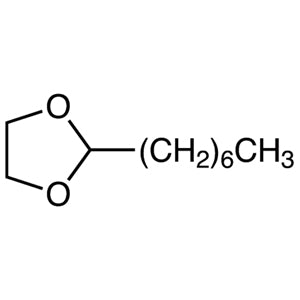
2-Heptyl-1,3-dioxolane is an organic chemical compound widely used in laboratory settings for the synthesis of complex molecules. As a building block in organic chemistry, it serves as a versatile intermediate in various chemical reactions. Its role is critical in the development of heterocyclic compounds and other complex structures, making it a fundamental component in synthetic chemistry. This compound is particularly valued for its stability and reactivity, which enable it to participate effectively in a range of chemical transformations.
The compound's unique structure, featuring two oxygen atoms in a 1,3-dioxolane ring, contributes to its reactivity and functional group compatibility. This characteristic allows it to readily form new bonds and undergo substitution reactions, making it a preferred choice for chemists. The presence of the dioxolane ring also enhances its ability to interact with various functional groups, providing flexibility in synthetic pathways. These properties make it a reliable and efficient reagent in laboratory applications.
In Indonesian laboratories, 2-Heptyl-1,3-dioxolane is extensively used in research and development projects. It is commonly found in academic and industrial laboratories, where it supports the synthesis of new compounds and the exploration of chemical reactions. Its availability and performance make it an essential tool for scientists and researchers working on organic synthesis and related fields.
Related TCI products
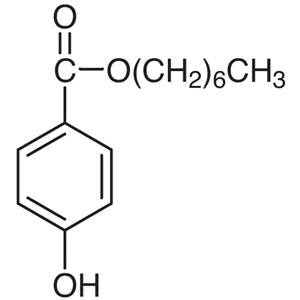
- TCI H0212 1085-12-7 Heptyl 4-Hydroxybenzoate
- TCI T2575 1193-11-9 2,2,4-Trimethyl-1,3-dioxolane
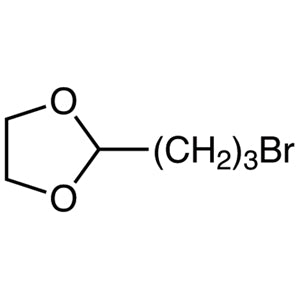
- TCI B3463 62563-07-9 2-(3-Bromopropyl)-1,3-dioxolane
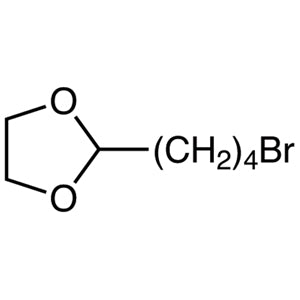
- TCI B2128 87227-41-6 2-(4-Bromobutyl)-1,3-dioxolane
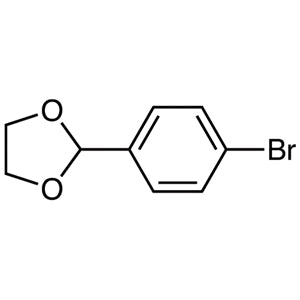
- TCI B2100 10602-01-4 2-(4-Bromophenyl)-1,3-dioxolane
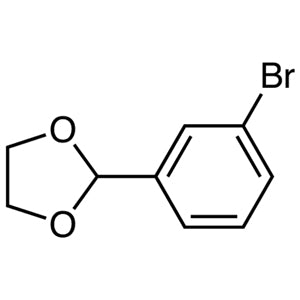
- TCI B2098 17789-14-9 2-(3-Bromophenyl)-1,3-dioxolane
- Organic synthesis is a primary application where this compound is used to build complex molecular structures through various chemical reactions.
- Heterocyclic compound development benefits from its reactivity and ability to form stable intermediates during synthesis processes.
- Functional group modification is enhanced by its compatibility with a wide range of reagents and its ability to participate in substitution reactions.
- Research and development in pharmaceutical and chemical industries rely on its versatility in creating new compounds with desired properties.
- Academic and industrial laboratories use it as a key building block for teaching and practical experimentation in organic chemistry courses.
| Brand | TCI |
|---|---|
| CAS number | 4359-57-3 |
| Molecular formula | — |
| Purity | — |
| Category | Chemistry > Building Blocks > Non-Heterocyclic Building Blocks |
| Pack sizes | Available in various quantities as per standard laboratory supply formats |
| Physical form | Liquid |
| Storage | Store in a cool, dry place away from direct sunlight |
This compound should be stored in a cool, dry environment, away from direct sunlight and sources of heat. It is recommended to use airtight containers to prevent moisture absorption and contamination. Due to its chemical nature, it should be handled with appropriate personal protective equipment, including gloves and safety goggles. Storage should be in a well-ventilated area to minimize exposure to vapors. Avoid contact with incompatible substances such as strong oxidizers or acids. Proper labeling of containers is essential for safe handling and to ensure compliance with laboratory safety protocols.
—
Produk Terkait
-
Heptyl4-Hydroxybenzoate TCI H0212
Regular price From Rp 1.246.350,00Regular price -
2,2,4-Trimethyl-1,3-dioxolane TCI T2575
Regular price Rp 1.803.900,00Regular price -
2-(3-Bromopropyl)-1,3-dioxolane TCI B3463
Regular price From Rp 1.856.400,00Regular price -
2-(4-Bromobutyl)-1,3-dioxolane TCI B2128
Regular price From Rp 4.373.250,00Regular price -
2-(4-Bromophenyl)-1,3-dioxolane TCI B2100
Regular price From Rp 5.407.500,00Regular price -
2-(3-Bromophenyl)-1,3-dioxolane TCI B2098
Regular price From Rp 1.035.300,00Regular price -
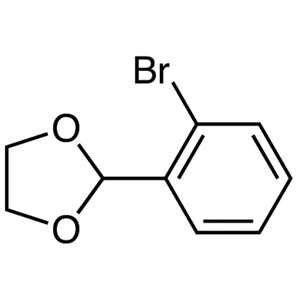
2-(2-Bromophenyl)-1,3-dioxolane TCI B2084
Regular price From Rp 1.087.800,00Regular price -
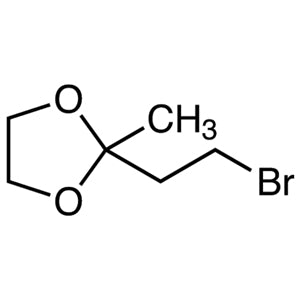
2-(2-Bromoethyl)-2-methyl-1,3-dioxolane TCI B1598
Regular price From Rp 5.407.500,00Regular price