(3 paragraphs. Paragraph 1 AT LEAST 70 words: what this material/instrument is and its role in the laboratory. Paragraph 2 AT LEAST 70 words: the properties that make it a preferred choice. Paragraph 3 AT LEAST 60 words: typical use context in Indonesian laboratories.)
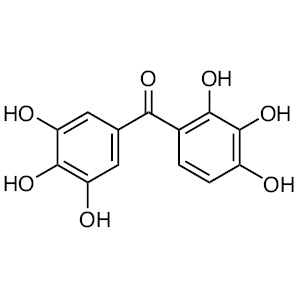
The TCI H1783, with the CAS number 52479-85-3, is a chemical compound known as (2,3,4-Trihydroxyphenyl)(3,4,5-trihydroxyphenyl)methanone. This compound is widely used in laboratory settings for its versatile applications in organic chemistry. It serves as a building block for the synthesis of complex molecules, particularly those with multiple hydroxyl groups. Its role is critical in research areas such as pharmacology and biochemistry, where the development of new compounds is essential. This compound is often employed in the creation of derivatives with specific functional groups, enabling scientists to explore novel chemical structures and their biological activities.
One of the key features that make this compound a preferred choice is its chemical structure, which contains multiple hydroxyl groups. These functional groups allow for a variety of chemical reactions, including oxidation, reduction, and conjugation, making it highly adaptable for different synthetic pathways. The compound’s stability under controlled conditions also contributes to its reliability in laboratory experiments. Its ability to participate in covalent bonding reactions further enhances its utility in the synthesis of new compounds. These characteristics make it an essential reagent for researchers working on complex molecular structures.
In Indonesian laboratories, this compound is commonly used in academic and industrial research settings. It is particularly valuable in pharmaceutical and biochemical research, where the development of new drugs and bioactive compounds is a priority. Its availability through trusted suppliers like AMI Scientific ensures that researchers have access to high-quality materials necessary for their experiments. This compound is often used in the synthesis of antioxidants and other bioactive molecules, supporting both basic and applied research in the region.
Related TCI products
- TCI T0887 2295-58-1 2',4',6'-Trihydroxypropiophenone
- TCI T1888 480-66-0 2',4',6'-Trihydroxyacetophenone Monohydrate
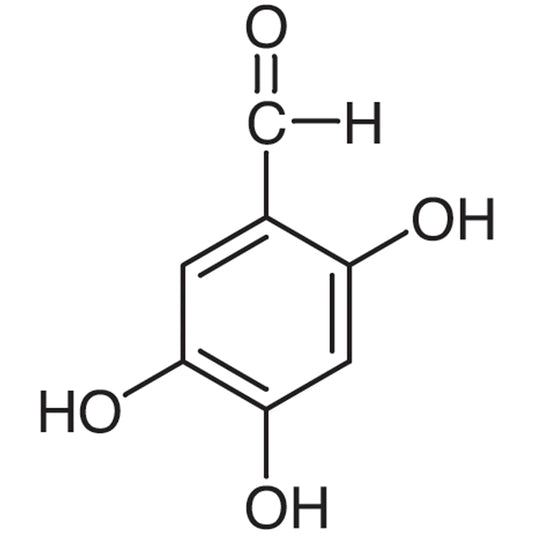
- TCI T1766 35094-87-2 2,4,5-Trihydroxybenzaldehyde
- TCI T1744 487-70-7 2,4,6-Trihydroxybenzaldehyde
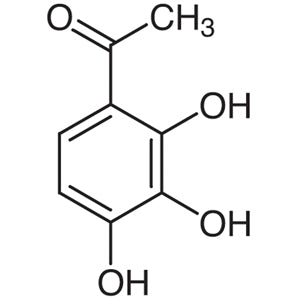
- TCI T1198 528-21-2 2',3',4'-Trihydroxyacetophenone
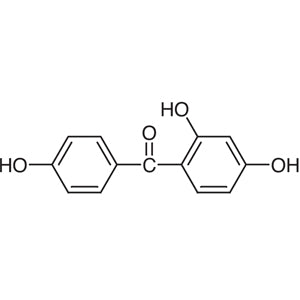
- TCI T0584 1470-79-7 2,4,4'-Trihydroxybenzophenone
- Pharmacological research utilizes this compound for the synthesis of bioactive molecules due to its multiple hydroxyl groups, enabling the creation of complex structures with potential therapeutic applications.
- Organic chemistry laboratories rely on this compound as a building block for synthesizing derivatives with specific functional groups, enhancing the diversity of compounds available for study.
- Biochemical studies benefit from its use in the development of antioxidants, as its hydroxyl groups can participate in redox reactions, making it suitable for free radical scavenging experiments.
- Synthetic chemistry applications leverage its reactivity in covalent bonding reactions, allowing for the formation of new compounds with tailored properties for various industrial uses.
- Environmental research may incorporate this compound in the study of natural products, as its structural similarity to plant-derived compounds makes it a useful model for ecological and toxicological investigations.
| Brand | TCI |
|---|---|
| CAS number | 52479-85-3 |
| Molecular formula | — |
| Purity | — |
| Category | Chemistry > Building Blocks > Non-Heterocyclic Building Blocks |
| Pack sizes | Available in various quantities as per supplier specifications |
| Physical form | Solid, typically in crystalline or powder form |
| Storage | Store in a cool, dry place away from direct sunlight and moisture |
This compound should be stored in a cool, dry environment to maintain its chemical integrity and prevent degradation. It is recommended to use airtight containers made of glass or high-density polyethylene to protect it from moisture and contaminants. Due to its hydroxyl groups, it may be sensitive to oxidation, so it should be kept away from strong oxidizing agents. Laboratory personnel should handle it with appropriate personal protective equipment, such as gloves and safety goggles, to ensure safe handling. Regular inspection of storage conditions is advised to maintain optimal quality and safety standards.
—
Produk Terkait
-
2',4',6'-Trihydroxypropiophenone TCI T0887
Regular price Rp 3.419.850,00Regular price -
2',4',6'-TrihydroxyacetophenoneMonohydrate TCI T1888
Regular price From Rp 1.193.850,00Regular price -
2,4,5-Trihydroxybenzaldehyde TCI T1766
Regular price From Rp 2.942.100,00Regular price -
2,4,6-Trihydroxybenzaldehyde TCI T1744
Regular price Rp 2.889.600,00Regular price -
2',3',4'-Trihydroxyacetophenone TCI T1198
Regular price From Rp 1.167.600,00Regular price -
2,4,4'-Trihydroxybenzophenone TCI T0584
Regular price Rp 6.070.050,00Regular price -
2,4,6-TrihydroxybenzoicAcidMonohydrate TCI P0601
Regular price From Rp 1.087.800,00Regular price -
2,3,4-TrihydroxybenzoicAcid TCI P0571
Regular price From Rp 1.035.300,00Regular price