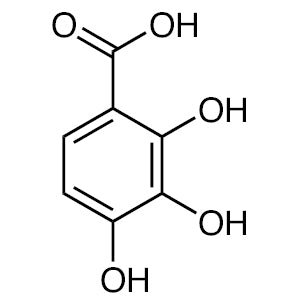
2,3,4-Trihydroxybenzoic Acid is a chemical compound widely used in laboratory settings for various synthetic reactions. It belongs to the category of non-heterocyclic building blocks and is characterized by its aromatic structure with three hydroxyl groups attached to a benzoic acid ring. This compound plays a crucial role in organic chemistry due to its reactivity and versatility in chemical transformations. Its ability to participate in multiple types of reactions makes it an essential reagent in both academic and industrial research environments.
The compound's reactivity stems from its multiple hydroxyl groups, which are highly active and capable of engaging in a wide range of chemical interactions. These functional groups allow it to react with various reagents, making it ideal for substitution, esterification, and oxidation reactions. Its solubility in organic solvents such as ethyl acetate and ethanol further enhances its usability in laboratory procedures. These properties make it a preferred choice for chemists seeking to synthesize complex molecules with high efficiency and reliability.
In Indonesian laboratories, 2,3,4-Trihydroxybenzoic Acid is commonly used in organic chemistry research, pharmaceutical synthesis, and the development of new chemical materials. It is also frequently employed in studies involving bioactive compounds, where its chemical structure can be modified to produce compounds with specific biological activities. Its widespread application across multiple scientific fields underscores its importance in modern chemical research.
Related TCI products
- TCI P0601 71989-93-0 2,4,6-Trihydroxybenzoic Acid Monohydrate
- TCI T1888 480-66-0 2',4',6'-Trihydroxyacetophenone Monohydrate
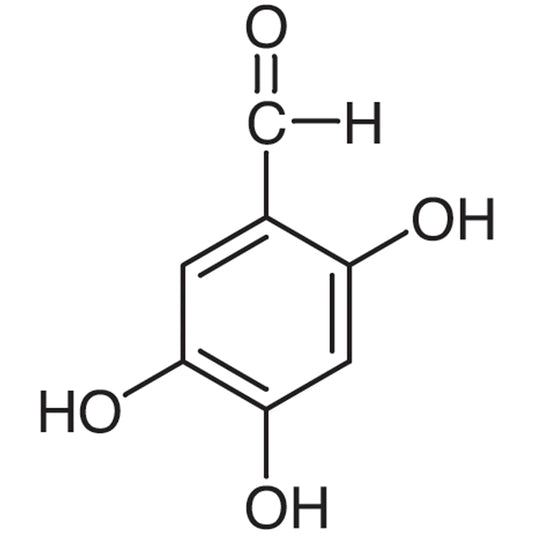
- TCI T1766 35094-87-2 2,4,5-Trihydroxybenzaldehyde
- TCI T1744 487-70-7 2,4,6-Trihydroxybenzaldehyde
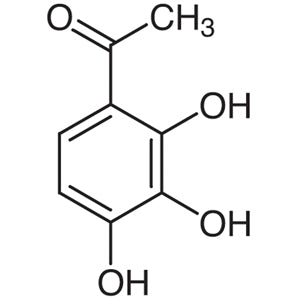
- TCI T1198 528-21-2 2',3',4'-Trihydroxyacetophenone
- TCI T0887 2295-58-1 2',4',6'-Trihydroxypropiophenone
- Organic chemistry research utilizes this compound for the synthesis of complex molecules due to its reactivity and structural versatility.
- Pharmaceutical synthesis benefits from its ability to participate in esterification and oxidation reactions, aiding in drug development.
- Industrial chemical development relies on its solubility and reactivity to create new materials and compounds with desired properties.
- Bioactive compound research employs it as a building block for modifying molecular structures to achieve specific biological functions.
- Environmental chemistry studies use it to analyze and synthesize compounds that may have ecological impacts or biodegradation properties.
| Brand | TCI |
|---|---|
| CAS number | 610-02-6 |
| Molecular formula | — |
| Purity | — |
| Category | Chemistry > Building Blocks > Non-Heterocyclic Building Blocks |
| Pack sizes | Available in various quantities as per standard laboratory supply |
| Physical form | Solid |
| Storage | Store in a cool, dry place away from direct sunlight |
This compound should be stored in a cool, dry environment, away from direct sunlight and sources of heat. It is recommended to use airtight containers to prevent moisture absorption and contamination. Due to its reactive nature, it should be handled with care, using appropriate personal protective equipment such as gloves and safety goggles. It is important to ensure that the storage area is well-ventilated to minimize exposure to vapors. Proper labeling of containers is essential for safety and identification purposes. Regular inspection of storage conditions ensures the compound remains stable and suitable for use in laboratory applications.
—
Produk Terkait
-
2,4,6-TrihydroxybenzoicAcidMonohydrate TCI P0601
Regular price From Rp 1.087.800,00Regular price -
2',4',6'-TrihydroxyacetophenoneMonohydrate TCI T1888
Regular price From Rp 1.193.850,00Regular price -
2,4,5-Trihydroxybenzaldehyde TCI T1766
Regular price From Rp 2.942.100,00Regular price -
2,4,6-Trihydroxybenzaldehyde TCI T1744
Regular price Rp 2.889.600,00Regular price -
2',3',4'-Trihydroxyacetophenone TCI T1198
Regular price From Rp 1.167.600,00Regular price -
2',4',6'-Trihydroxypropiophenone TCI T0887
Regular price Rp 3.419.850,00Regular price -
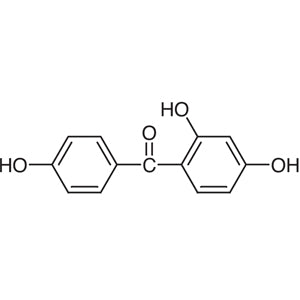
2,4,4'-Trihydroxybenzophenone TCI T0584
Regular price Rp 6.070.050,00Regular price -
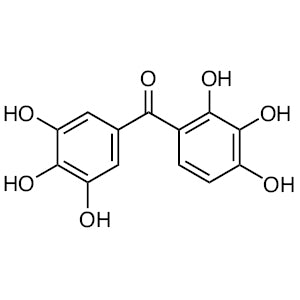
(2,3,4-Trihydroxyphenyl)(3,4,5-trihydroxyphenyl)methanone TCI H1783
Regular price From Rp 3.232.950,00Regular price