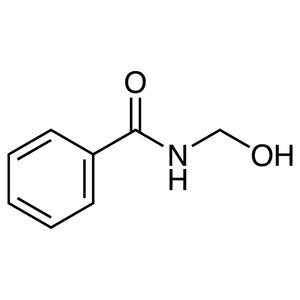
N-(Hydroxymethyl)benzamide is a chemical compound widely used in organic synthesis within laboratory settings. It serves as a fundamental building block in the creation of more complex molecules, particularly in substitution and condensation reactions. This compound is derived from benzamide, with a hydroxymethyl group attached to the nitrogen atom, making it versatile for various synthetic pathways. Its role in research and development is significant, especially in the fields of organic chemistry and pharmaceutical sciences.
The compound's stability and controlled reactivity make it a preferred choice for researchers. It exhibits good chemical properties under specific reaction conditions, remaining stable without rapid degradation. Its solubility in organic solvents such as ethyl acetate and acetone enhances its usability in a wide range of chemical reactions. These characteristics contribute to its reliability in laboratory applications, ensuring consistent results and ease of handling.
In Indonesian laboratories, N-(Hydroxymethyl)benzamide is commonly used in scientific research, particularly in organic chemistry and pharmaceutical studies. It is a key component in the development of new compounds and the refinement of synthesis processes. Its availability and performance make it a valuable resource for educational and research institutions in Indonesia.
Related TCI products
- TCI B0012 55-21-0 Benzamide
- TCI P3113 1464-98-8 N-(Prop-2-yn-1-yl)benzamide
- TCI H1930 18838-10-3 N-(2-Hydroxyethyl)benzamide
- TCI C2309 41859-57-8 4-Chloro-N-[2-(4-hydroxyphenyl)ethyl]benzamide
- TCI T3297 5395-50-6 1,3,4,6-Tetrakis(hydroxymethyl)tetrahydroimidazo[4,5-d]imidazole-2,5(1H,3H)-dione
- TCI B1492 20605-01-0 Diethyl 2,2-Bis(hydroxymethyl)malonate
- Organic synthesis applications benefit from this compound’s role in substitution and condensation reactions, offering reliable intermediates for complex molecule creation.
- Pharmaceutical research utilizes its structure to develop new drug compounds, leveraging its stability and reactivity in synthetic pathways.
- Educational institutions use it to teach fundamental organic chemistry concepts, providing students with hands-on experience in synthetic techniques.
- Industrial chemical processes incorporate it as a building block for the production of specialty chemicals, ensuring consistent quality and performance.
- Analytical laboratories use it as a reference standard for quality control and method validation, ensuring accurate and reproducible results.
| Brand | TCI |
|---|---|
| CAS number | 6282-02-6 |
| Molecular formula | — |
| Purity | — |
| Category | Chemistry > Building Blocks > Non-Heterocyclic Building Blocks |
| Pack sizes | Available in various quantities as per supplier specifications |
| Physical form | Solid (as per standard product description) |
| Storage | Store in a cool, dry place away from direct sunlight |
This compound should be stored in a cool, dry environment to maintain its chemical integrity and prevent degradation. It is recommended to use airtight containers to minimize exposure to moisture and air, which could affect its stability. Proper labeling of containers is essential for safe handling and identification. Laboratory personnel should wear appropriate personal protective equipment, such as gloves and safety goggles, when handling the compound. It should be kept away from incompatible materials to ensure safety. Regular inspection of storage conditions is advised to ensure optimal preservation and usability of the compound.
—
Produk Terkait
-
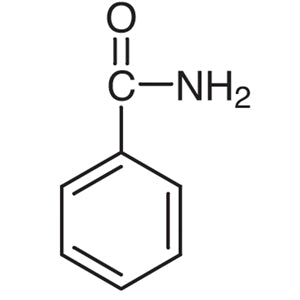
Benzamide TCI B0012
Regular price From Rp 584.850,00Regular price -
N-(Prop-2-yn-1-yl)benzamide TCI P3113
Regular price From Rp 2.094.750,00Regular price -
N-(2-Hydroxyethyl)benzamide TCI H1930
Regular price From Rp 2.730.000,00Regular price -
4-Chloro-N-[2-(4-hydroxyphenyl)ethyl]benzamide TCI C2309
Regular price From Rp 1.008.000,00Regular price -
1,3,4,6-Tetrakis(hydroxymethyl)tetrahydroimidazo[4,5-d]imidazole-2,5(1H,3H)-dione TCI T3297
Regular price From Rp 1.035.300,00Regular price -
Diethyl2,2-Bis(hydroxymethyl)malonate TCI B1492
Regular price From Rp 3.021.900,00Regular price -
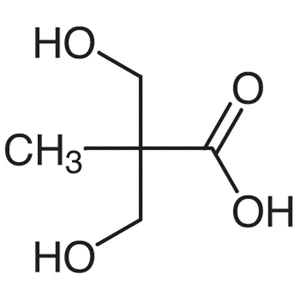
2,2-Bis(hydroxymethyl)propionicAcid TCI B1192
Regular price From Rp 530.250,00Regular price -
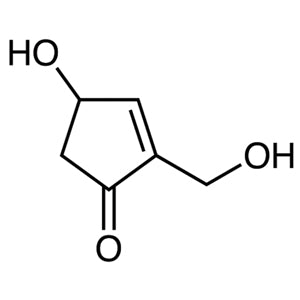
4-Hydroxy-2-(hydroxymethyl)-2-cyclopenten-1-one TCI H1723
Regular price Rp 1.936.200,00Regular price


![4-Chloro-N-[2-(4-hydroxyphenyl)ethyl]benzamide (CAS 41859-57-8) - TCI C2309 - AMI Scientific](http://amiscientific.com/cdn/shop/files/TCI2510C2309.jpg?v=1767098116&width=533)
![5395-50-6 1,3,4,6-Tetrakis(hydroxymethyl)tetrahydroimidazo[4,5-d]imidazole-2,5(1H,3H)-dione - AMI Scientific](http://amiscientific.com/cdn/shop/files/TCI2510T3297.jpg?v=1769181342&width=533)