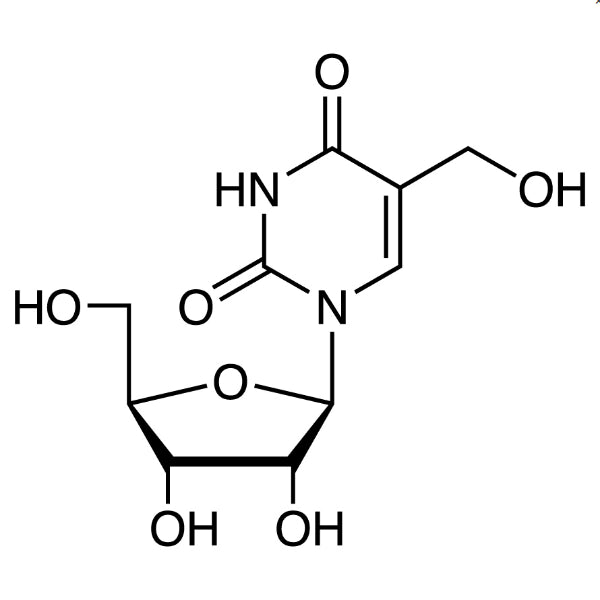
5-(Hydroxymethyl)uridine is a chemical compound widely used in chemical biology and nucleic acid chemistry. This compound serves as a key reagent in laboratory settings, particularly in research involving DNA and RNA structure and function. It is derived from uridine, a fundamental nucleotide, and plays a crucial role in the synthesis of complex molecules and the development of analytical methods. Its presence in scientific studies highlights its importance in understanding molecular interactions and biological processes.
The compound is valued for its stable chemical structure and controlled reactivity, making it a reliable choice for various chemical reactions. It exhibits solubility in specific organic solvents, which facilitates its use in purification and experimental procedures. These properties ensure consistent performance in laboratory applications, contributing to the accuracy and reproducibility of research outcomes. Its versatility supports a wide range of experimental designs, from nucleotide modifications to biochemical assays.
In Indonesian laboratories, 5-(Hydroxymethyl)uridine is commonly used in scientific research, especially in the fields of chemical biology and biotechnology. Local researchers frequently employ this compound in studies related to nucleotide chemistry and molecular mechanisms. Its availability through AMI Scientific ensures that Indonesian scientists have access to high-quality reagents for their experiments, supporting both academic and industrial research initiatives.
TCI brochures (PDF)
- Methylated Nucleoside in the 5’-Terminal Structure of Eukaryotic mRNA 2025-04-14 · p. 1
- Base Modified Nucleosides and Nucleotides for Epigenetic Research 2025-04-14 · p. 1
- Epigenetics Research Reagents 2024-11-22 · p. 2
- Nucleosides, Nucleotides, Nucleic Acids and Related Reagents 2026-03-23 · p. 2
- Nucleotide Modification Studies: This compound is ideal for investigating structural changes in nucleotides, aiding in the understanding of genetic material.
- DNA and RNA Synthesis: It serves as a building block in the synthesis of nucleic acids, supporting research in molecular biology and genetic engineering.
- Chemical Reaction Mechanism Analysis: Its controlled reactivity makes it suitable for studying reaction pathways in biochemical systems.
- Organic Synthesis Reagents: It is used in the preparation of complex organic molecules, contributing to pharmaceutical and chemical research.
- Analytical Chemistry Development: It supports the creation of new analytical methods for detecting and quantifying nucleic acid derivatives.
| Brand | TCI |
|---|---|
| CAS number | 30414-00-7 |
| Molecular formula | — |
| Purity | — |
| Category | Chemistry > Chemical Biology > Nucleic Acid Chemistry |
| Pack sizes | Available in various quantities as per supplier specifications |
| Physical form | Solid or powder, depending on the packaging |
| Storage | Store in a cool, dry place away from light and moisture |
This compound should be stored in a cool, dry environment, away from direct light and moisture to maintain its stability and purity. It is recommended to use airtight containers made of glass or high-density polyethylene to prevent contamination and degradation. In laboratory settings, it should be handled with appropriate personal protective equipment, including gloves and safety goggles, to ensure safe handling. Due to its chemical nature, it should be kept away from incompatible substances such as strong oxidizers. Regular monitoring of storage conditions is advised to ensure the integrity of the compound throughout its shelf life. Proper labeling and storage practices help maintain the quality and usability of the material for scientific research.
—
Product Categories
- Chemical BiologyNucleic Acid ChemistryMethylated Nucleosides
- Chemical BiologyNucleic Acid ChemistryBase Modified Nucleosides and Nucleotides
- Pharmaceutical Development and Drug Discovery Research ReagentsNucleic Acid ChemistryMethylated Nucleosides
- Pharmaceutical Development and Drug Discovery Research ReagentsNucleic Acid ChemistryBase Modified Nucleosides and Nucleotides
- Biochemicals and ReagentsNucleosides, Nucleotides, OligonucleotidesNucleoside Analogs
- Molecular BiologyEpigeneticsBioactive Small Molecules for Epigenetic Research
- Molecular BiologyEpigeneticsMethylated Nucleosides
- Molecular BiologyEpigeneticsBase Modified Nucleosides and Nucleotides
- Pharmaceutical Development and Drug Discovery ResearchNucleic Acid ChemistryMethylated Nucleosides
- Pharmaceutical Development and Drug Discovery ResearchNucleic Acid ChemistryBase Modified Nucleosides and Nucleotides
Produk Terkait
-
2'-Deoxy-5-(hydroxymethyl)uridine TCI D6190
Regular price From Rp 3.445.050,00Regular priceRp 2.424.450,00Sale price From Rp 3.445.050,00 -
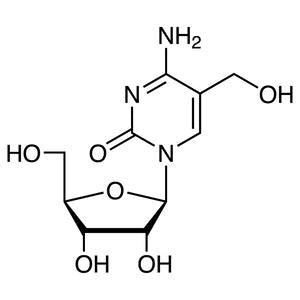
5-(Hydroxymethyl)cytidine TCI H1863
Regular price From Rp 6.333.600,00Regular priceRp 4.444.650,00Sale price From Rp 6.333.600,00 -
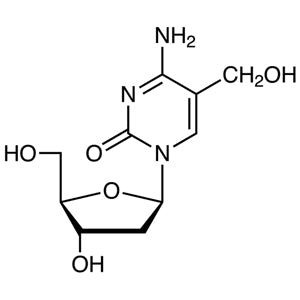
2'-Deoxy-5-(hydroxymethyl)cytidine TCI D4220
Regular price From Rp 4.266.150,00Regular priceRp 2.998.800,00Sale price From Rp 4.266.150,00 -
N2-Methylguanosine TCI M3745
Regular price From Rp 3.683.400,00Regular priceRp 2.591.400,00Sale price From Rp 3.683.400,00 -
7-Methylguanosine TCI M3465
Regular price From Rp 3.922.800,00Regular priceRp 2.758.350,00Sale price From Rp 3.922.800,00 -
5-Methylcytidine TCI M1931
Regular price Rp 4.266.150,00Regular priceRp 2.998.800,00Sale price Rp 4.266.150,00 -
6-(gamma,gamma-Dimethylallylamino)purineRiboside TCI I1221
Regular price Rp 4.636.800,00Regular priceRp 3.258.150,00Sale price Rp 4.636.800,00 -
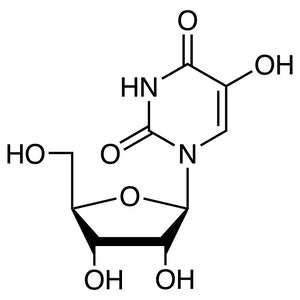
5-Hydroxyuridine TCI H1865
Regular price Rp 12.109.650,00Regular priceRp 8.484.000,00Sale price Rp 12.109.650,00