7-Methylguanosine is a chemical compound classified under nucleotides, widely used in biochemical and molecular biology experiments. It is a key component in RNA synthesis and modification processes, particularly in the creation of synthetic RNA or modified RNA molecules. This compound plays a crucial role in laboratory research by serving as a substrate or building block for various biochemical reactions. Its unique chemical structure, with a methyl group attached to the seventh nitrogen of guanosine, makes it essential for studying RNA-related processes such as gene expression, translation, and RNA modification.
The chemical properties of 7-Methylguanosine, including its solubility in organic solvents like acetone and ethyl acetate, contribute to its versatility in laboratory applications. Its stability under certain conditions ensures reliable performance during experiments, making it a preferred choice for researchers. The predictable chemical behavior and high purity of this compound allow for consistent results in experimental setups, which is vital for scientific accuracy and reproducibility.
In Indonesian laboratories, 7-Methylguanosine is commonly used in biochemical and molecular biology research, especially by academic institutions and research centers. Its application spans various experimental protocols, including RNA synthesis, modification studies, and gene expression analysis. The compound's reliability and chemical specificity make it an essential reagent for advancing scientific understanding in these fields.
Advantages (TCI brochure)
- Closely resembles the 5'-terminal cap structure present on eukaryotic mRNA
- Cannot be re-phosphorylated and reused for de novo synthesis, so it is excreted by cells
- Can be detected in serum and urine and has been used as a biomarker for some types of cancer
TCI brochures (PDF)
- Methylated Nucleoside in the 5’-Terminal Structure of Eukaryotic mRNA 2025-04-14 · p. 1
- Base Modified Nucleosides and Nucleotides for Epigenetic Research 2025-04-14 · p. 2
- Epigenetics Research Reagents 2024-11-22 · p. 2
- RNA synthesis and modification studies benefit from 7-Methylguanosine as a building block for creating synthetic RNA molecules.
- Gene expression research utilizes this compound to study how RNA modifications affect gene activity and protein production.
- Molecular biology experiments rely on 7-Methylguanosine for investigating RNA structure and function in cellular processes.
- RNA-based therapeutics development incorporates this compound to design modified RNA sequences for targeted biological effects.
- Biochemical assays use 7-Methylguanosine as a substrate to study enzymatic reactions and RNA processing mechanisms.
From the TCI brochure
- Studies of efficient mRNA capping enzymatic processes
- Biomarker for some types of cancer
| Brand | TCI |
|---|---|
| CAS number | 20244-86-4 |
| Molecular formula | — |
| Purity | — |
| Category | Chemistry > Chemical Biology > Nucleic Acid Chemistry |
| Pack sizes | — |
| Physical form | — |
| Storage | Store in a cool, dry place away from light |
7-Methylguanosine should be stored in a cool, dry place away from direct light to maintain its chemical stability and prevent degradation. It is recommended to use airtight containers to minimize exposure to moisture and contaminants. Due to its chemical nature, it should be handled with care, using appropriate personal protective equipment such as gloves and safety goggles. Avoid contact with incompatible substances and ensure proper ventilation in the workspace. Proper storage conditions help preserve the compound's integrity, ensuring consistent performance in laboratory experiments. Always follow standard laboratory safety protocols when handling and storing this chemical.
References cited in the TCI brochure
- Stewart Shuman. What messenger RNA capping tells us about eukaryotic evolution Nature Reviews Molecular Cell Biology, 2002. doi:10.1038/nrm880
- Yasuhiro Furuichi. Viral and cellular mRNA capping: Past and prospects Advances in Virus Research, 2000. doi:10.1016/s0065-3527(00)55003-9
- Sandra Schulz. LRRK2 Kinase Inhibitors as New Drugs for Parkinson’s Disease? Emerging Drugs and Targets for Parkinson’s Disease, 2013. doi:10.1039/9781849737357-00266
- Renata Kasprzyk. Enzymatic Assays to Explore Viral mRNA Capping Machinery ChemBioChem, 2021. doi:10.1002/cbic.202100291
- Emilia Raćkowska. Development and validation of a rapid LC–MS/MS method for determination of methylated nucleosides and nucleobases in urine Journal of Chromatography B, 2019. doi:10.1016/j.jchromb.2019.121775
- Dawei Rong. Epigenetics: Roles and therapeutic implications of non-coding RNA modifications in human cancers Molecular Therapy - Nucleic Acids, 2021. doi:10.1016/j.omtn.2021.04.021
Product Categories
- Chemical BiologyNucleic Acid ChemistryMethylated Nucleosides
- Chemical BiologyNucleic Acid ChemistryBase Modified Nucleosides and Nucleotides
- Pharmaceutical Development and Drug Discovery Research ReagentsNucleic Acid ChemistryMethylated Nucleosides
- Pharmaceutical Development and Drug Discovery Research ReagentsNucleic Acid ChemistryBase Modified Nucleosides and Nucleotides
- Biochemicals and ReagentsNucleosides, Nucleotides, OligonucleotidesNucleoside Analogs
- Molecular BiologyEpigeneticsBioactive Small Molecules for Epigenetic Research
- Molecular BiologyEpigeneticsMethylated Nucleosides
- Molecular BiologyEpigeneticsBase Modified Nucleosides and Nucleotides
- Pharmaceutical Development and Drug Discovery ResearchNucleic Acid ChemistryMethylated Nucleosides
- Pharmaceutical Development and Drug Discovery ResearchNucleic Acid ChemistryBase Modified Nucleosides and Nucleotides
Produk Terkait
-
N2-Methylguanosine TCI M3745
Regular price From Rp 3.683.400,00Regular priceRp 2.591.400,00Sale price From Rp 3.683.400,00 -
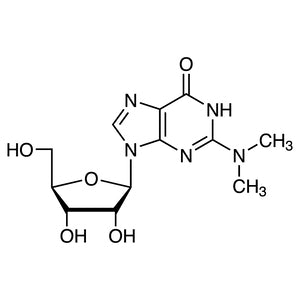
N,N-Dimethylguanosine TCI D6076
Regular price Rp 4.636.800,00Regular priceRp 3.258.150,00Sale price Rp 4.636.800,00 -
5-Methylcytidine TCI M1931
Regular price Rp 4.266.150,00Regular priceRp 2.998.800,00Sale price Rp 4.266.150,00 -
6-(gamma,gamma-Dimethylallylamino)purineRiboside TCI I1221
Regular price Rp 4.636.800,00Regular priceRp 3.258.150,00Sale price Rp 4.636.800,00 -
5-(Hydroxymethyl)uridine TCI H1866
Regular price From Rp 3.445.050,00Regular priceRp 2.424.450,00Sale price From Rp 3.445.050,00 -
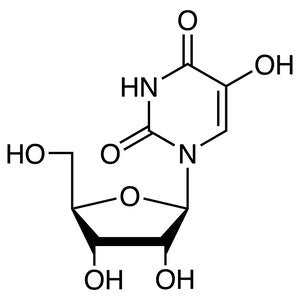
5-Hydroxyuridine TCI H1865
Regular price Rp 12.109.650,00Regular priceRp 8.484.000,00Sale price Rp 12.109.650,00 -
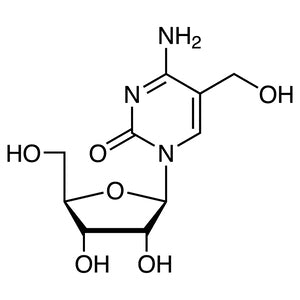
5-(Hydroxymethyl)cytidine TCI H1863
Regular price From Rp 6.333.600,00Regular priceRp 4.444.650,00Sale price From Rp 6.333.600,00 -
2'-Deoxy-5-(hydroxymethyl)uridine TCI D6190
Regular price From Rp 3.445.050,00Regular priceRp 2.424.450,00Sale price From Rp 3.445.050,00