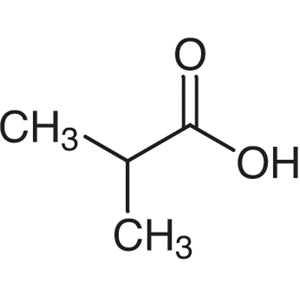
Isobutyric Acid (TCI I0103, CAS 79-31-2) is a fundamental organic compound widely used in laboratory settings for its versatility in chemical synthesis. As a key building block in organic chemistry, it serves as a precursor for the production of esters, amides, and heterocyclic compounds. Its simple molecular structure allows for easy modification through various chemical reactions, making it an essential reagent in both academic and industrial research. This compound is commonly employed in esterification reactions and the synthesis of more complex organic molecules, contributing to the development of pharmaceuticals and specialty chemicals.
Isobutyric Acid is valued for its chemical stability and reactivity, which make it a preferred choice in synthetic processes. It is a clear, volatile liquid with a sharp, pungent odor and a relatively low boiling point. These physical properties allow it to participate in a wide range of reactions under controlled laboratory conditions. Its ability to react with various functional groups enhances its utility in creating diverse chemical structures. Additionally, its availability and cost-effectiveness make it a practical option for routine laboratory use.
In Indonesian laboratories, Isobutyric Acid is extensively used in educational and research environments. It is commonly found in chemistry, pharmaceutical, and industrial laboratories where it supports the development of new compounds and the testing of chemical processes. Its reliability and ease of handling make it a staple in both teaching and research applications, ensuring consistent results across a variety of experimental setups.
- Esterification Reactions: Isobutyric Acid is ideal for producing esters due to its reactivity with alcohols in the presence of an acid catalyst, facilitating the synthesis of various ester derivatives.
- Organic Synthesis: It serves as a versatile building block in the creation of complex organic molecules, enabling the formation of amides and other functional groups through nucleophilic substitution reactions.
- Pharmaceutical Development: Its use in the synthesis of drug compounds allows for the production of intermediates that are essential in the development of new therapeutic agents.
- Heterocyclic Compound Synthesis: Isobutyric Acid contributes to the formation of heterocyclic structures, which are common in pharmaceutical and agrochemical compounds.
- Teaching and Research Labs: It is widely used in educational settings to demonstrate fundamental chemical reactions and to support research in organic chemistry.
| Brand | TCI |
|---|---|
| CAS number | 79-31-2 |
| Molecular formula | — |
| Purity | — |
| Category | Chemistry > Building Blocks > Non-Heterocyclic Building Blocks |
| Pack sizes | Available in various quantities as per standard laboratory supply |
| Physical form | Liquid |
| Storage | Store in a cool, dry place away from direct sunlight and incompatible materials |
Isobutyric Acid should be stored in a cool, dry location, away from direct sunlight and sources of heat. It is recommended to use tightly sealed containers made of materials compatible with organic solvents, such as glass or high-density polyethylene. Due to its volatility and pungent odor, it should be handled in a well-ventilated area or fume hood to minimize exposure. Avoid contact with incompatible substances such as strong oxidizing agents. Always wear appropriate personal protective equipment, including gloves, goggles, and a lab coat, when handling this compound. Proper storage and handling practices ensure safety and maintain the compound’s chemical integrity during laboratory use.
—
Produk Terkait
-
IsobutyricAcidHydrazide TCI I1105
Regular price From Rp 2.306.850,00Regular price -
IsobutyricAnhydride TCI I0111
Regular price From Rp 610.050,00Regular price -
2-(4-Chlorophenoxy)isobutyricAcid TCI C0940
Regular price Rp 664.650,00Regular price -
3-BromoisobutyricAcid TCI B2571
Regular price From Rp 2.174.550,00Regular price -
2-BromoisobutyricAcid TCI B0605
Regular price From Rp 823.200,00Regular price -
2-PhenylisobutyricAcid TCI P1409
Regular price From Rp 1.829.100,00Regular price -
2-HydroxyisobutyricAcid TCI M0360
Regular price From Rp 1.273.650,00Regular price -
ValericAcid TCI V0003
Regular price From Rp 610.050,00Regular price