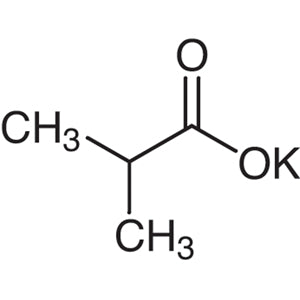
Potassium Isobutyrate (KIs) is a chemical compound widely used in laboratory settings for its versatility in organic synthesis. As a key building block in chemical reactions, it plays a crucial role in the development of complex organic molecules. Its simple yet essential chemical structure makes it a valuable reagent in various synthetic pathways. In the laboratory, KIs is particularly useful for its ability to participate in esterification reactions and the synthesis of aromatic compounds. Its stability and compatibility with multiple functional groups further enhance its utility in diverse chemical applications.
The properties of potassium isobutyrate make it a preferred choice for chemists. It exhibits good solubility in organic solvents, which simplifies mixing and reaction processes. Its chemical stability ensures consistent performance across different experimental conditions. Additionally, KIs is non-toxic and free from harmful substances, making it a safe option for laboratory use. These characteristics contribute to its reliability and ease of handling, which are essential for both academic and industrial research environments.
In Indonesian laboratories, potassium isobutyrate is commonly used in chemical research, especially in organic synthesis and pharmaceutical development. It supports a wide range of applications, including the production of carbon-based compounds and the creation of new chemical products. Its availability in the local market ensures that researchers have access to this essential reagent for their experiments and projects.
TCI brochures (PDF)
- Lipids 2025-12-17 · p. 6
Related TCI products
- Organic synthesis where potassium isobutyrate acts as a nucleophile in esterification reactions, facilitating the formation of ester compounds.
- Aromatic compound synthesis due to its ability to stabilize reactive intermediates during the formation of aromatic rings.
- Industrial chemical production where its stability and solubility make it suitable for large-scale reactions and processing.
- Pharmaceutical research for the development of new drug compounds, as it contributes to the synthesis of complex organic molecules.
- Academic research in chemistry departments, where it is used to teach and demonstrate fundamental chemical reaction mechanisms.
| Brand | TCI |
|---|---|
| CAS number | 19455-20-0 |
| Molecular formula | — |
| Purity | — |
| Category | Chemistry > Building Blocks > Non-Heterocyclic Building Blocks |
| Pack sizes | Available in various quantities to suit different laboratory needs |
| Physical form | Solid powder |
| Storage | Store in a cool, dry place away from moisture and direct sunlight |
Potassium isobutyrate should be stored in a cool, dry environment to maintain its chemical stability. It is recommended to keep it in airtight containers to prevent moisture absorption, which could affect its performance. The compound is non-hazardous and does not require special handling beyond standard laboratory safety protocols. It is advisable to store it away from incompatible materials to ensure long-term usability. Proper labeling of storage containers is essential for safe handling and easy identification. Regular inspection of storage conditions helps maintain the integrity of the product for laboratory use.
—
Produk Terkait
-
TrimethylOrthoisobutyrate TCI T2208
Regular price Rp 2.411.850,00Regular price -
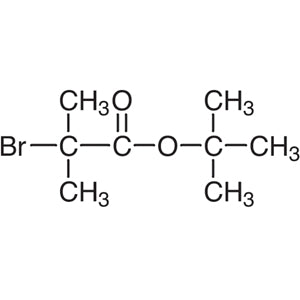
tert-Butyl2-Bromoisobutyrate TCI B3500
Regular price From Rp 584.850,00Regular price -
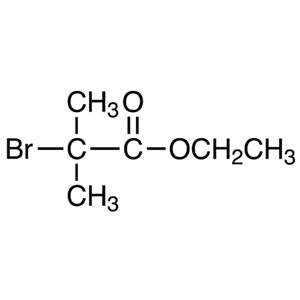
Ethyl2-Bromoisobutyrate TCI B0606
Regular price Rp 717.150,00Regular price -
2,2,4-Trimethyl-1,3-pentanediolDiisobutyrate TCI T0997
Regular price From Rp 477.750,00Regular price -
2-PhenylethylIsobutyrate TCI P2008
Regular price From Rp 795.900,00Regular price -
2-PhenoxyethylIsobutyrate TCI P1822
Regular price From Rp 477.750,00Regular price -
2-MethylbutylIsobutyrate TCI M3483
Regular price Rp 1.749.300,00Regular price -
Methyl3-Methoxyisobutyrate TCI M1191
Regular price From Rp 875.700,00Regular price