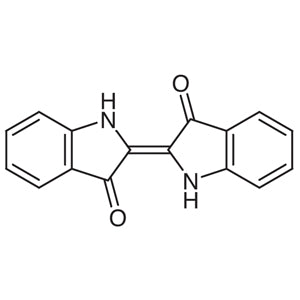
Indigo (synthetic) TCI I0212 is a chemical compound widely used as a dye in various laboratory experiments. It belongs to the category of vat dyes, commonly employed in research and experimental settings. This synthetic indigo serves as a versatile coloring agent, particularly in chemical and environmental studies. Its ability to bind effectively with organic materials makes it a valuable tool for testing chemical reactivity and adsorption processes. In laboratory environments, it is frequently used as an indicator in specific chemical reactions, helping researchers observe and analyze changes in solution properties.
The chemical properties of indigo (synthetic) make it a preferred choice for laboratory applications. It exhibits stability under normal conditions and can dissolve in certain organic solvents, ensuring consistent performance in experiments. Its strong bonding capability with substrates allows for effective and long-lasting coloration, which is essential in research requiring reliable results. Additionally, its resistance to degradation under typical storage conditions ensures that it remains effective for extended periods, making it a dependable material for repeated use in scientific investigations.
In Indonesian laboratories, indigo (synthetic) is commonly used in fields such as chemistry, environmental science, and engineering. It plays a crucial role in chemical processing studies, material testing, and environmental analysis. Its widespread application in these areas highlights its importance as a fundamental reagent in both academic and industrial research settings. The compound's reliability and versatility make it an essential component in many laboratory workflows.
Related TCI products
- TCI B3581 1871-22-3 Blue Tetrazolium [for Biochemical Research]
- TCI A5105 61-73-4 Methylene Blue [Ion association reagent for spectrophotometric analysis]
- TCI A5100 2437-29-8 Malachite Green, Oxalate [Sensitive spectrophotometric reagent for PO4]
- TCI A2412 28718-90-3 DAPI 2HCl [for Biochemical Research]
- TCI A0579 1718-34-9 Mordant Orange 1 Monosodium Salt
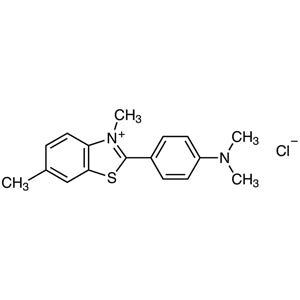
- TCI T0558 2390-54-7 Basic Yellow 1
- Chemical analysis uses indigo (synthetic) to test the reactivity of organic compounds and to observe color changes in chemical reactions.
- Environmental research employs this dye to study adsorption processes and the behavior of pollutants in different media.
- Material testing benefits from indigo’s strong binding properties, making it ideal for evaluating dye uptake in textiles and other substrates.
- Educational institutions use indigo (synthetic) in teaching experiments to demonstrate colorimetric analysis and chemical interactions.
- Industrial laboratories incorporate it into dyeing processes to evaluate the efficiency and stability of synthetic dyes in various applications.
| Brand | TCI |
|---|---|
| CAS number | 482-89-3 |
| Molecular formula | — |
| Purity | — |
| Category | Chemistry > Stains and Dyes (for Research and Experimental Use) > Vat Dyes (for Research and Experimental Use) |
| Pack sizes | — |
| Physical form | — |
| Storage | Store in a cool, dry place away from direct sunlight and moisture |
Indigo (synthetic) should be stored in a cool, dry place, away from direct sunlight and moisture to maintain its chemical stability. It is recommended to use airtight containers to prevent exposure to air and humidity, which could affect its performance. In laboratory settings, it should be handled with care, using appropriate personal protective equipment such as gloves and safety goggles to avoid skin or eye contact. While it is generally non-toxic, prolonged exposure should be avoided. The compound is stable under normal storage conditions, making it suitable for long-term use in research environments. Proper storage ensures that its properties remain consistent and reliable for experimental applications.
—
Produk Terkait
-
BlueTetrazolium[forBiochemicalResearch] TCI B3581
Regular price From Rp 1.246.350,00Regular price -
MethyleneBlue[Ionassociationreagentforspectrophotometricanalysis] TCI A5105
Regular price Rp 955.500,00Regular price -
MalachiteGreen,Oxalate[SensitivespectrophotometricreagentforPO4] TCI A5100
Regular price Rp 2.332.050,00Regular price -
DAPI2HCl[forBiochemicalResearch] TCI A2412
Regular price Rp 1.590.750,00Regular price -
MordantOrange1MonosodiumSalt TCI A0579
Regular price Rp 1.829.100,00Regular price -
BasicYellow1 TCI T0558
Regular price Rp 2.094.750,00Regular price -
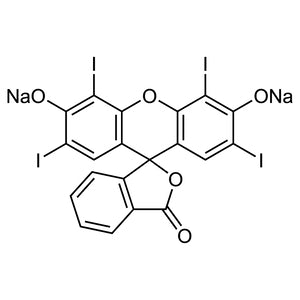
ErythrosineB TCI T0557
Regular price Rp 1.008.000,00Regular price -
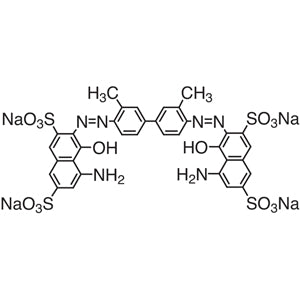
DirectBlue14 TCI T0556
Regular price Rp 1.087.800,00Regular price
![1871-22-3 Blue Tetrazolium [for Biochemical Research] - AMI Scientific](http://amiscientific.com/cdn/shop/files/TCI2510B3581_25792e25-dbc5-4e62-a711-c5f5176b1b02.jpg?v=1767433226&width=533)
![61-73-4 Methylene Blue [Ion association reagent for spectrophotometric analysis] - AMI Scientific](http://amiscientific.com/cdn/shop/files/TCI2510A5105.jpg?v=1767084859&width=533)
![2437-29-8 Malachite Green, Oxalate [Sensitive spectrophotometric reagent for PO4] - AMI Scientific](http://amiscientific.com/cdn/shop/files/TCI2510A5100.jpg?v=1767084843&width=533)
![28718-90-3 DAPI 2HCl [for Biochemical Research] - AMI Scientific](http://amiscientific.com/cdn/shop/files/TCI2510A2412.jpg?v=1767082817&width=533)