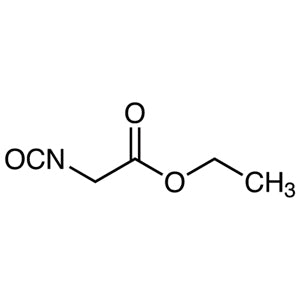
Ethyl Isocyanatoacetate is a chemical compound widely used in laboratory settings for its versatile reactivity and utility in organic synthesis. As a key building block in chemical reactions, it plays a crucial role in the development of various organic compounds, including heterocyclic structures, esters, and other functional derivatives. Its unique molecular structure, containing both an isocyanate group and an ethyl group, makes it highly reactive and suitable for a range of chemical transformations. This compound is particularly valuable in synthetic chemistry due to its ability to participate in both electrophilic and nucleophilic reactions, enhancing its applicability in complex chemical processes.
The compound's high reactivity and solubility in common organic solvents such as ethyl acetate and methanol make it a preferred choice for laboratory use. These properties allow for efficient mixing and reaction processes, reducing the complexity of experimental procedures. Additionally, its chemical stability under controlled conditions ensures consistent performance in various synthetic applications. The combination of reactivity and solubility makes Ethyl Isocyanatoacetate an essential reagent in both academic and industrial research environments.
In Indonesian laboratories, Ethyl Isocyanatoacetate is commonly used in organic chemistry research, particularly in higher education institutions and research centers. Its availability and reliable chemical properties make it a go-to reagent for students and researchers alike. It is frequently employed in the synthesis of complex organic molecules, contributing to the advancement of chemical knowledge and innovation in the field.
Related TCI products
- TCI I0358 17046-22-9 Butyl Isocyanatoacetate
- TCI B1442 2778-42-9 1,3-Bis(2-isocyanato-2-propyl)benzene
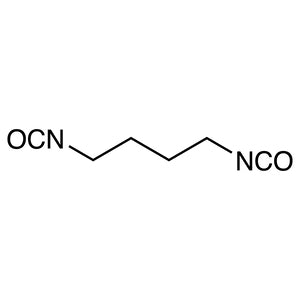
- TCI T4313 4538-37-8 1,4-Diisocyanatobutane
- TCI N0875 61312-84-3 4-Nitrobenzyl Acetoacetate
- TCI I1111 30674-80-7 2-Isocyanatoethyl Methacrylate (stabilized with BHT)
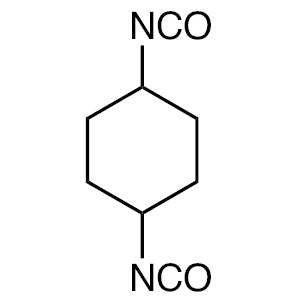
- TCI D5635 2556-36-7 1,4-Diisocyanatocyclohexane (cis- and trans- mixture)
- Organic synthesis applications benefit from Ethyl Isocyanatoacetate due to its reactivity and ability to participate in various chemical reactions, making it ideal for creating complex organic compounds.
- It is well-suited for electrophilic and nucleophilic reactions, which are fundamental in the development of heterocyclic and functionalized molecules in research settings.
- The compound's solubility in organic solvents like ethyl acetate and methanol facilitates efficient mixing and reaction processes, enhancing experimental reproducibility.
- In academic research, Ethyl Isocyanatoacetate supports the synthesis of esters and other derivatives, contributing to the study of chemical reactivity and functional group transformations.
- Its use in Indonesian laboratories is widespread in both educational and research contexts, where it is essential for advancing organic chemistry studies and practical experimentation.
| Brand | TCI |
|---|---|
| CAS number | 2949-22-6 |
| Molecular formula | — |
| Purity | — |
| Category | Chemistry > Building Blocks > Non-Heterocyclic Building Blocks |
| Pack sizes | Available in various quantities as per supplier specifications |
| Physical form | Liquid |
| Storage | Requires storage in a cool, dry place away from direct sunlight and incompatible materials |
Ethyl Isocyanatoacetate should be stored in a cool, dry environment to maintain its chemical integrity and prevent degradation. It is recommended to use sealed containers made of materials compatible with organic solvents to avoid contamination and evaporation. Due to its reactivity, it should be kept away from strong acids, bases, and reactive metals to ensure safety. Proper ventilation is essential when handling the compound to minimize exposure to vapors. Laboratory personnel should wear appropriate personal protective equipment, such as gloves and safety goggles, to protect against potential skin or eye contact. Careful handling and adherence to standard safety protocols are necessary to ensure safe and effective use in laboratory settings.
—
Produk Terkait
-
ButylIsocyanatoacetate TCI I0358
Regular price Rp 2.782.500,00Regular price -
1,3-Bis(2-isocyanato-2-propyl)benzene TCI B1442
Regular price From Rp 1.298.850,00Regular price -
1,4-Diisocyanatobutane TCI T4313
Regular price From Rp 1.829.100,00Regular price -
4-NitrobenzylAcetoacetate TCI N0875
Regular price From Rp 584.850,00Regular price -
2-IsocyanatoethylMethacrylate(stabilizedwithBHT) TCI I1111
Regular price From Rp 2.359.350,00Regular price -
1,4-Diisocyanatocyclohexane(cis-andtrans-mixture) TCI D5635
Regular price From Rp 2.411.850,00Regular price