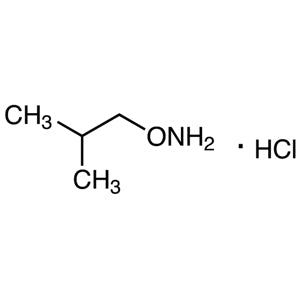
O-Isobutylhydroxylamine Hydrochloride is a chemical compound widely used as a building block in organic synthesis. It serves as a versatile reagent in various laboratory applications, particularly in substitution and replacement reactions. Its chemical structure, while simple, plays a crucial role in the formation of compounds with specific functional properties. Due to its stability and reactivity, it is a key component in many scientific research projects. This compound is especially valued for its ability to form bonds with a variety of functional groups, making it an essential tool in synthetic chemistry.
The compound's chemical properties make it a preferred choice in laboratory settings. It exhibits good solubility in organic solvents, which facilitates separation and purification processes. This solubility, combined with its reactivity, allows for efficient participation in chemical reactions under controlled conditions. Its stability ensures that it remains effective throughout the reaction process, reducing the risk of unwanted side reactions. These characteristics make it an ideal candidate for use in high-precision chemical synthesis.
In Indonesian laboratories, O-Isobutylhydroxylamine Hydrochloride is commonly used in research related to organic chemistry, pharmaceutical development, and material science. It is frequently employed in academic and industrial settings to create new compounds with specific properties. Its reliability and effectiveness have made it a staple in both research institutions and university laboratories across Indonesia.
Related TCI products
- TCI B4780 85006-25-3 N,O-Bis(tert-butoxycarbonyl)hydroxylamine
- TCI B4589 39684-28-1 O-(tert-Butyl)hydroxylamine Hydrochloride
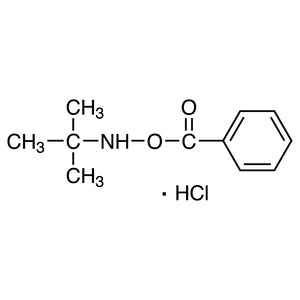
- TCI B3238 66809-86-7 O-Benzoyl-N-tert-butylhydroxylamine Hydrochloride
- TCI B1700 57497-39-9 N-(tert-Butyl)hydroxylamine Hydrochloride
- TCI H1581 5470-11-1 Hydroxylamine Hydrochloride
- TCI H0196 10039-54-0 Hydroxylamine Sulfate
- Organic synthesis applications benefit from its reactivity and ability to form functional groups, enabling the creation of complex molecules.
- Pharmaceutical research utilizes it for the development of new drug compounds, as it can participate in key synthetic steps.
- Material science studies rely on its chemical versatility to synthesize polymers and other advanced materials.
- Analytical chemistry uses it as a reagent in various qualitative and quantitative tests due to its predictable chemical behavior.
- Environmental research incorporates it in the study of chemical degradation processes and pollutant transformation mechanisms.
| Brand | TCI |
|---|---|
| CAS number | 6084-58-8 |
| Molecular formula | — |
| Purity | — |
| Category | Chemistry > Building Blocks > Non-Heterocyclic Building Blocks |
| Pack sizes | Available in various quantities as per standard laboratory requirements |
| Physical form | White crystalline solid |
| Storage | Store in a cool, dry place away from moisture and direct sunlight |
O-Isobutylhydroxylamine Hydrochloride should be stored in a cool, dry environment to maintain its chemical integrity. It is recommended to keep it in a tightly sealed container to prevent exposure to moisture, which could affect its stability. The compound should be stored away from direct sunlight and sources of heat to avoid any potential degradation. In laboratory settings, it is important to handle the compound with appropriate personal protective equipment, such as gloves and safety goggles, to ensure safety during use. Proper ventilation should be maintained when working with this compound to minimize inhalation risks. Its reactivity should be considered when handling, and it should be kept away from incompatible substances to prevent unwanted chemical reactions.
—
Produk Terkait
-
N,O-Bis(tert-butoxycarbonyl)hydroxylamine TCI B4780
Regular price From Rp 1.378.650,00Regular price -
O-(tert-Butyl)hydroxylamineHydrochloride TCI B4589
Regular price From Rp 2.597.700,00Regular price -
O-Benzoyl-N-tert-butylhydroxylamineHydrochloride TCI B3238
Regular price Rp 1.458.450,00Regular price -
N-(tert-Butyl)hydroxylamineHydrochloride TCI B1700
Regular price From Rp 1.326.150,00Regular price -
HydroxylamineHydrochloride TCI H1581
Regular price From Rp 477.750,00Regular price -
HydroxylamineSulfate TCI H0196
Regular price From Rp 477.750,00Regular price -
O-ButylhydroxylamineHydrochloride TCI B5686
Regular price From Rp 1.485.750,00Regular price -
O-(4-Nitrobenzoyl)hydroxylamine TCI N1013
Regular price From Rp 1.220.100,00Regular price