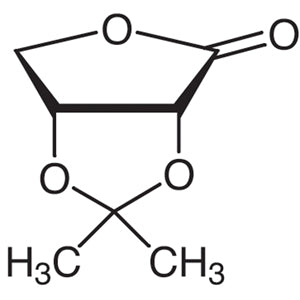
2,3-O-Isopropylidene-D-erythronolactone is a chemical compound widely used in chemical and biochemical experiments, particularly in glycoscience research. It is a stable lactone ring structure that serves as a key intermediate in the synthesis of complex glycosidic compounds. This compound is essential in laboratory settings where precise chemical reactivity and stability are required. Its unique molecular structure enables it to act as a substrate or intermediate in various organic synthesis reactions, making it a versatile tool for researchers.
The compound’s chemical properties, including its isopropylidene group, provide both stability and reactivity, making it a preferred choice for controlled chemical reactions. Its resistance to degradation ensures consistent performance in experimental conditions, which is critical for reliable results. The molecular complexity of 2,3-O-Isopropylidene-D-erythronolactone allows it to participate in a wide range of synthetic pathways, supporting the development of bioactive compounds and pharmaceuticals. Its specificity and reliability make it a valuable asset in laboratory workflows.
In Indonesian laboratories, 2,3-O-Isopropylidene-D-erythronolactone is commonly used in biochemical, pharmacological, and organic chemistry research. Researchers rely on this compound for the synthesis of glycosidic compounds, drug development, and studies on biological activities. Its role in these applications underscores its importance in advancing scientific understanding and innovation in the field of chemistry.
TCI brochures (PDF)
Related TCI products
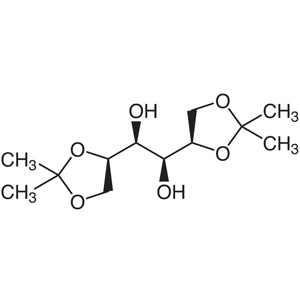
- TCI I0489 3969-84-4 3,4-O-Isopropylidene-D-mannitol
- TCI E0021 149-32-6 meso-Erythritol
- TCI D2191 68539-16-2 (-)-2,3:4,6-Di-O-isopropylidene-2-keto-L-gulonic Acid Monohydrate
- TCI D2024 1707-77-3 1,2:5,6-Di-O-isopropylidene-D-mannitol
- TCI M3445 13199-25-2 2,3-O-Isopropylidene-D-ribose
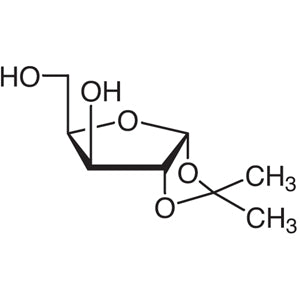
- TCI I0721 20031-21-4 1,2-O-Isopropylidene-alpha-D-xylofuranose
- Biochemical research utilizes this compound for the synthesis of glycosidic structures due to its stable lactone ring and reactivity.
- Pharmacological studies benefit from its role in the development of bioactive compounds through controlled chemical reactions.
- Organic chemistry experiments leverage its molecular complexity to create new synthetic pathways and functional derivatives.
- Drug development projects use it as a precursor for the synthesis of complex glycosidic molecules with therapeutic potential.
- Glycoscience research employs it to study carbohydrate-based interactions and their biological functions in cellular processes.
| Brand | TCI |
|---|---|
| CAS number | 25581-41-3 |
| Molecular formula | — |
| Purity | — |
| Category | Chemistry > Chemical Biology > Glycoscience |
| Pack sizes | Available in various quantities as per standard laboratory supply |
| Physical form | Solid |
| Storage | Store in a cool, dry place away from light and moisture |
This compound should be stored in a cool, dry environment, away from direct light and moisture to maintain its stability and prevent degradation. It is recommended to use airtight containers to minimize exposure to air and humidity. Proper labeling of storage containers is essential for safe handling and identification. Laboratory personnel should wear appropriate personal protective equipment, such as gloves and safety goggles, when handling the compound. It should be kept in a well-ventilated area to ensure safe working conditions. Regular monitoring of storage conditions is advised to ensure the compound remains in optimal condition for use in experiments.
—
Produk Terkait
-
3,4-O-Isopropylidene-D-mannitol TCI I0489
Regular price Rp 1.405.950,00Regular price -
meso-Erythritol TCI E0021
Regular price From Rp 1.590.750,00Regular price -
(-)-2,3:4,6-Di-O-isopropylidene-2-keto-L-gulonicAcidMonohydrate TCI D2191
Regular price Rp 875.700,00Regular price -
1,2:5,6-Di-O-isopropylidene-D-mannitol TCI D2024
Regular price From Rp 980.700,00Regular price -
2,3-O-Isopropylidene-D-ribose TCI M3445
Regular price From Rp 2.411.850,00Regular price -
1,2-O-Isopropylidene-alpha-D-xylofuranose TCI I0721
Regular price From Rp 2.094.750,00Regular price -
1,2-O-Isopropylidene-alpha-D-glucofuranose TCI I0400
Regular price Rp 2.068.500,00Regular price -
2,3:4,5-Di-O-isopropylidene-beta-D-fructopyranose TCI D3758
Regular price From Rp 452.550,00Regular price