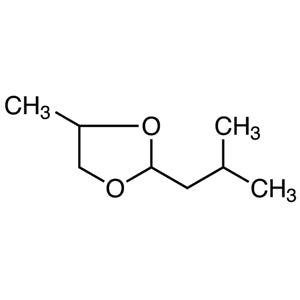
2-Isobutyl-4-methyl-1,3-dioxolane is an organic compound widely used in chemical reactions, particularly in the synthesis of complex molecules. This compound plays a crucial role in laboratory settings where the development of new chemical structures is required. Its unique structure provides a versatile platform for various synthetic transformations, making it an essential tool for chemists working in both academic and industrial environments. Due to its chemical stability and reactivity, it is frequently employed in research aimed at creating novel pharmaceuticals and specialty chemicals.
The compound’s heterocyclic structure, consisting of two oxygen atoms in a 1,3-dioxolane ring, contributes to its high polarity and reactivity. This characteristic allows it to interact effectively with a wide range of reagents, making it ideal for substitution, oxidation, and reduction reactions. The presence of oxygen atoms enhances its solubility in polar solvents, further supporting its utility in diverse chemical processes. These properties make it a preferred choice for chemists seeking reliable and efficient building blocks for synthetic applications.
In Indonesian laboratories, 2-Isobutyl-4-methyl-1,3-dioxolane is commonly used in organic chemistry research, especially in the synthesis of new compounds. It is a key reagent in experiments requiring high reactivity and structural versatility. Many educational and research institutions in Indonesia rely on this compound for experiments that demand precise chemical reactions and stable intermediates. Its widespread use underscores its importance in advancing chemical research and development in the region.
- Organic synthesis is a primary application where this compound serves as a versatile building block for creating complex molecules due to its reactivity and structural flexibility.
- Pharmaceutical research benefits from its use in the development of new drug compounds, as it can participate in various synthetic pathways that lead to bioactive molecules.
- Industrial chemical production utilizes this compound as a precursor for manufacturing specialty chemicals that require high reactivity and stability.
- Academic research in chemical engineering often incorporates this material to explore new synthetic methods and reaction mechanisms.
- Analytical chemistry applications may involve this compound as a standard or reagent for testing the efficiency of chemical processes and reaction conditions.
| Brand | TCI |
|---|---|
| CAS number | 18433-93-7 |
| Molecular formula | — |
| Purity | — |
| Category | Chemistry > Building Blocks > Non-Heterocyclic Building Blocks |
| Pack sizes | Available in various quantities as per supplier specifications |
| Physical form | Liquid |
| Storage | Store in a cool, dry place away from direct sunlight |
This compound should be stored in a cool, dry environment, away from direct sunlight and sources of heat. It is recommended to use sealed containers made of glass or polyethylene to prevent evaporation and contamination. Due to its polar nature, it is advisable to handle it in a well-ventilated area to minimize exposure. Always wear appropriate personal protective equipment, including gloves and safety goggles, when handling this material. Proper labeling of containers is essential to ensure safe storage and easy identification. Regular inspection of storage conditions is necessary to maintain the integrity and safety of the compound in the laboratory.
—
Produk Terkait
-
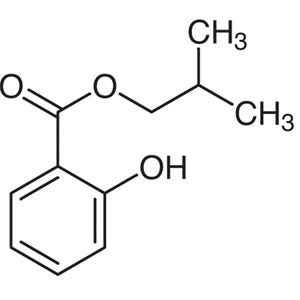
IsobutylSalicylate TCI S0013
Regular price From Rp 505.050,00Regular price -
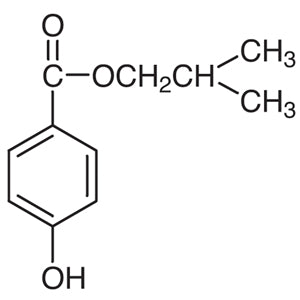
Isobutyl4-Hydroxybenzoate TCI H0493
Regular price From Rp 505.050,00Regular price -
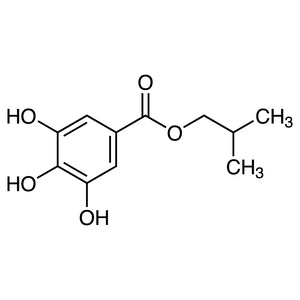
IsobutylGallate TCI G0205
Regular price Rp 1.538.250,00Regular price -
2,2,4-Trimethyl-1,3-dioxolane TCI T2575
Regular price Rp 1.803.900,00Regular price -
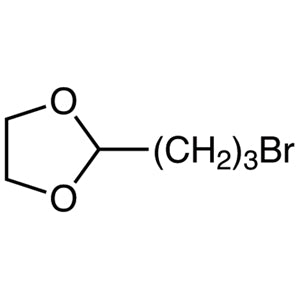
2-(3-Bromopropyl)-1,3-dioxolane TCI B3463
Regular price From Rp 1.856.400,00Regular price -
2-(4-Bromobutyl)-1,3-dioxolane TCI B2128
Regular price From Rp 4.373.250,00Regular price -
2-(4-Bromophenyl)-1,3-dioxolane TCI B2100
Regular price From Rp 5.407.500,00Regular price -
2-(3-Bromophenyl)-1,3-dioxolane TCI B2098
Regular price From Rp 1.035.300,00Regular price