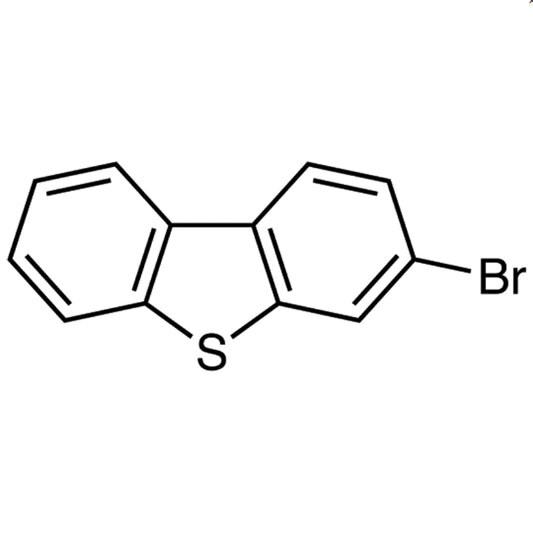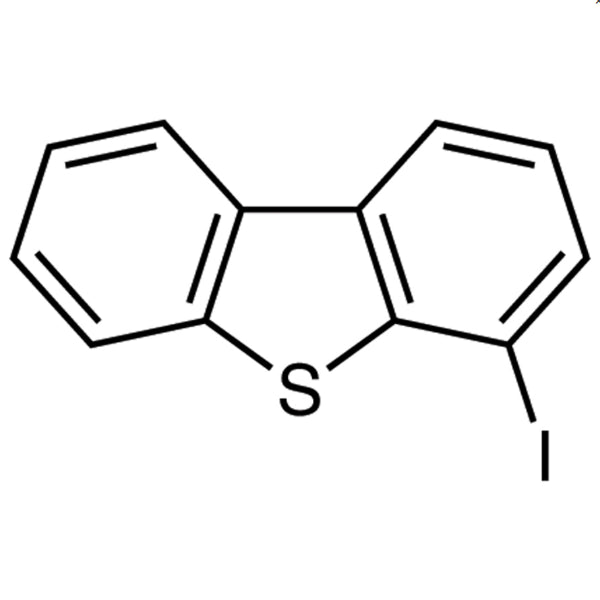
4-Iododibenzothiophene is an organic compound widely utilized in scientific research, particularly in the fields of material chemistry and semiconductor technology. This compound is a key building block in the development of advanced materials due to its unique molecular structure, which includes two benzene rings and one thiophene ring. The iodine atom attached to a specific position enhances its reactivity and makes it a valuable reagent for synthetic processes. In laboratory settings, it plays a crucial role in the synthesis of complex organic molecules, especially those used in the fabrication of organic semiconductors. Its presence in research is essential for creating materials with tailored electronic properties.
The compound is preferred for its stable chemical properties and controlled reactivity, which allow it to participate in various substitution and chemical reactions with different reagents. Its molecular structure provides a high degree of specificity, making it suitable for precise chemical transformations. This stability ensures that it maintains its integrity under laboratory conditions, which is vital for reproducible results. Additionally, its chemical uniqueness enables it to be used in a wide range of synthetic pathways, contributing to the development of new materials with specific functional properties.
In Indonesian laboratories, 4-Iododibenzothiophene is commonly used in semiconductor material research and organic chemistry studies. Its role is critical in the synthesis of organic semiconductors, which are essential for applications in optoelectronics and energy conversion. Researchers in Indonesia rely on this compound for its reliability and consistency, making it a staple in both academic and industrial research environments.
TCI brochures (PDF)
- Thiophenes 2026-06-29 · p. 11
- Building Blocks for Organic Semiconductor 2026-03-24 · p. 28
Related TCI products
- TCI B4904 1206544-88-8 2-Bromo-8-iododibenzothiophene
- TCI I0973 177586-41-3 2-Iododibenzothiophene
- TCI T3236 912824-84-1 4-(4,4,5,5-Tetramethyl-1,3,2-dioxaborolan-2-yl)dibenzothiophene
- TCI B5384 530402-77-8 4-(4-Bromophenyl)dibenzothiophene
- TCI D4153 1016-05-3 Dibenzothiophene 5,5-Dioxide
- TCI D4057 108847-20-7 Dibenzothiophene-4-boronic Acid (contains varying amounts of Anhydride)
- Organic Semiconductor Synthesis: This compound is ideal for synthesizing organic semiconductors due to its reactive iodine group and complex molecular structure, enabling the creation of materials with tailored electronic properties.
- Material Chemistry Research: Its unique structure makes it a valuable tool in material chemistry for developing new compounds with specific chemical and physical characteristics.
- Chemical Reagent for Substitution Reactions: The iodine atom allows for controlled substitution reactions, making it a preferred reagent in synthetic pathways requiring precise chemical modifications.
- Semiconductor Device Development: It is used in the development of semiconductor devices, where its chemical stability and reactivity contribute to the fabrication of high-performance electronic components.
- Advanced Material Innovation: Its versatility supports the innovation of advanced materials, particularly in fields requiring high precision and controlled chemical behavior.
| Brand | TCI |
|---|---|
| CAS number | 132034-89-0 |
| Molecular formula | — |
| Purity | — |
| Category | Materials Science > Material Building Blocks > Small Molecule Semiconductor Building Blocks |
| Pack sizes | Available in various quantities as per standard laboratory supply |
| Physical form | Solid, crystalline appearance |
| Storage | Store in a cool, dry place away from light and moisture |
This compound should be stored in a cool, dry environment, away from direct light and moisture to maintain its chemical integrity. It is recommended to use airtight containers made of materials such as glass or polyethylene to prevent contamination and degradation. Due to its reactivity, it should be handled with care, using appropriate personal protective equipment like gloves and safety goggles. In laboratory settings, it should be stored separately from incompatible substances to avoid any potential chemical interactions. Regular monitoring of storage conditions ensures that the compound remains stable and suitable for use in research applications. Proper handling and storage practices are essential to ensure safety and maintain the quality of the material for scientific use.
—
Produk Terkait
-
2-Bromo-8-iododibenzothiophene TCI B4904
Regular price From Rp 3.155.250,00Regular price -
2-Iododibenzothiophene TCI I0973
Regular price From Rp 1.378.650,00Regular price -
4-(4,4,5,5-Tetramethyl-1,3,2-dioxaborolan-2-yl)dibenzothiophene TCI T3236
Regular price From Rp 1.220.100,00Regular price -
4-(4-Bromophenyl)dibenzothiophene TCI B5384
Regular price From Rp 1.326.150,00Regular price -
Dibenzothiophene5,5-Dioxide TCI D4153
Regular price From Rp 1.378.650,00Regular price -
Dibenzothiophene-4-boronicAcid(containsvaryingamountsofAnhydride) TCI D4057
Regular price From Rp 1.565.550,00Regular price -
Dibenzothiophene TCI D0148
Regular price From Rp 664.650,00Regular price -
3-Bromodibenzothiophene TCI B5452
Regular price From Rp 3.100.650,00Regular price