

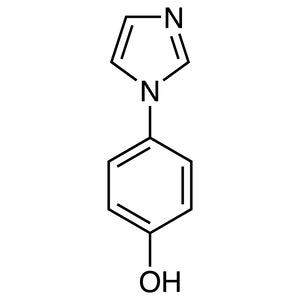
4-(1H-Imidazol-1-yl)phenol is a chemical compound widely used in organic synthesis reactions within laboratory settings. This compound is a key building block in the development of heterocyclic structures, playing a vital role in the synthesis of pharmaceuticals, industrial chemicals, and other specialized compounds. Its unique molecular structure, combining an imidazole ring with a phenol group, allows it to participate in various chemical transformations. Due to its versatility, it is frequently employed in research that requires precise molecular modifications and functional group manipulations.
The compound's chemical properties make it a preferred choice for synthetic chemists. It exhibits stability under controlled conditions, though it is sensitive to moisture and air exposure. This sensitivity necessitates careful handling and storage. Its ability to react with a variety of functional groups enhances its utility in complex synthetic pathways. The compound’s reactivity and structural flexibility make it a valuable tool for researchers aiming to design and synthesize new compounds with specific properties.
In Indonesian laboratories, 4-(1H-Imidazol-1-yl)phenol is commonly used in organic chemistry research, particularly in the study of heterocyclic compound synthesis. It is also relevant in pharmaceutical development and industrial chemical applications. Its role in molecular modification and structural reactivity makes it an essential component in various research projects, supporting innovation and discovery in chemical sciences.
Related TCI products
- TCI H1875 6504-13-8 4-(1H-Benzo[d]imidazol-2-yl)phenol
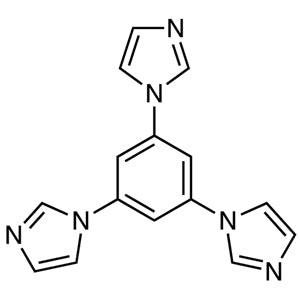
- TCI T3903 528543-96-6 1,3,5-Tri(1H-imidazol-1-yl)benzene
- TCI T3479 147951-02-8 1,3,5-Tris[(1H-imidazol-1-yl)methyl]benzene
- TCI M3886 31349-48-1 4-(1-Methyl-5-nitro-1H-benzo[d]imidazol-2-yl)butanoic Acid
- TCI I1294 1074-59-5 3-(1H-Imidazol-5-yl)propanoic Acid
- TCI I1288 2221-00-3 4-(1H-Imidazol-1-yl)aniline
- Organic synthesis reactions benefit from this compound's ability to participate in substitution and coupling reactions, enabling the creation of complex heterocyclic structures.
- Pharmaceutical research utilizes it as a building block for the development of new drugs, due to its structural versatility and reactivity in functional group modifications.
- Industrial chemical applications rely on its role in the synthesis of specialized compounds, contributing to the production of various chemical products.
- Molecular modification studies use it to explore reactivity and structural changes, supporting advancements in chemical research and innovation.
- Academic research in Indonesian laboratories employs it to investigate the synthesis and properties of heterocyclic compounds, enhancing scientific understanding and development.
| Brand | TCI |
|---|---|
| CAS number | 10041-02-8 |
| Molecular formula | — |
| Purity | — |
| Category | Chemistry > Building Blocks > Heterocyclic Building Blocks |
| Pack sizes | — |
| Physical form | — |
| Storage | Requires protection from moisture and air exposure |
This compound should be stored in a cool, dry place away from moisture and air exposure to maintain its chemical stability. It is recommended to use airtight containers to prevent degradation due to environmental factors. Handling should be done with appropriate personal protective equipment to ensure safety. The compound is sensitive to humidity, so storage conditions must be carefully controlled. It is advisable to keep it in a sealed container to minimize exposure to atmospheric moisture. Proper storage is essential to preserve its reactivity and structural integrity for laboratory use.
—
Produk Terkait
-
4-(1H-Benzo[d]imidazol-2-yl)phenol TCI H1875
Regular price From Rp 2.121.000,00Regular price -
1,3,5-Tri(1H-imidazol-1-yl)benzene TCI T3903
Regular price Rp 3.155.250,00Regular price -
1,3,5-Tris[(1H-imidazol-1-yl)methyl]benzene TCI T3479
Regular price From Rp 2.545.200,00Regular price -
4-(1-Methyl-5-nitro-1H-benzo[d]imidazol-2-yl)butanoicAcid TCI M3886
Regular price Rp 3.976.350,00Regular price -
3-(1H-Imidazol-5-yl)propanoicAcid TCI I1294
Regular price Rp 3.498.600,00Regular price -
4-(1H-Imidazol-1-yl)aniline TCI I1288
Regular price From Rp 848.400,00Regular price -
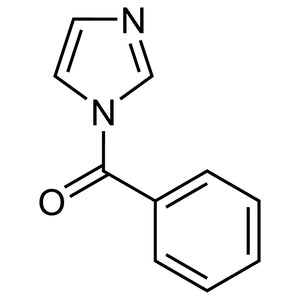
(1H-Imidazol-1-yl)(phenyl)methanone TCI I1276
Regular price From Rp 2.386.650,00Regular price -
1-[4-(1H-Imidazol-1-yl)phenyl]ethan-1-one TCI I1252
Regular price Rp 2.306.850,00Regular price
![6504-13-8 4-(1H-Benzo[d]imidazol-2-yl)phenol - AMI Scientific](http://amiscientific.com/cdn/shop/files/TCI2510H1875.jpg?v=1768360853&width=533)
![147951-02-8 1,3,5-Tris[(1H-imidazol-1-yl)methyl]benzene - AMI Scientific](http://amiscientific.com/cdn/shop/files/TCI2510T3479.jpg?v=1767144149&width=533)
![31349-48-1 4-(1-Methyl-5-nitro-1H-benzo[d]imidazol-2-yl)butanoic Acid - AMI Scientific](http://amiscientific.com/cdn/shop/files/TCI2510M3886.jpg?v=1769181080&width=533)


![10041-06-2 1-[4-(1H-Imidazol-1-yl)phenyl]ethan-1-one - AMI Scientific](http://amiscientific.com/cdn/shop/files/TCI2510I1252.jpg?v=1767120996&width=533)