

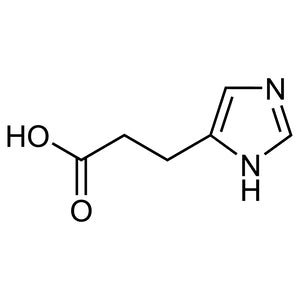
3-(1H-Imidazol-5-yl)propanoic Acid is a versatile organic compound widely utilized in laboratory settings for its role in synthetic chemistry. This building block is essential for the development of heterocyclic compounds, which are fundamental in pharmaceutical and material science research. Its ability to participate in various chemical reactions makes it a valuable tool for chemists seeking to construct complex molecular structures. As a key intermediate, it supports the synthesis of a wide range of compounds, contributing to innovation in both academic and industrial research environments.
The compound is prized for its stable molecular structure and moderate reactivity, which allow it to engage in substitution, addition, and cyclization reactions with high efficiency. These properties make it a preferred choice for researchers aiming to achieve precise and reproducible results in their experiments. Its compatibility with a variety of functional groups further enhances its utility, enabling the design of diverse molecular architectures. This flexibility is particularly beneficial in the development of new drugs and advanced materials.
In Indonesian laboratories, 3-(1H-Imidazol-5-yl)propanoic Acid is commonly used in pharmaceutical and organic chemistry research. Its availability in the local market ensures that scientists have reliable access to this essential reagent. Researchers in Indonesia rely on this compound to support their work in drug discovery, material synthesis, and other scientific investigations. Its consistent performance and reliability make it a trusted component in the laboratory toolkit.
Related TCI products
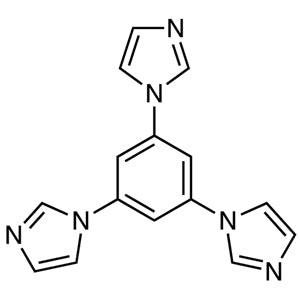
- TCI T3903 528543-96-6 1,3,5-Tri(1H-imidazol-1-yl)benzene
- TCI T3479 147951-02-8 1,3,5-Tris[(1H-imidazol-1-yl)methyl]benzene
- TCI M3886 31349-48-1 4-(1-Methyl-5-nitro-1H-benzo[d]imidazol-2-yl)butanoic Acid
- TCI I1288 2221-00-3 4-(1H-Imidazol-1-yl)aniline
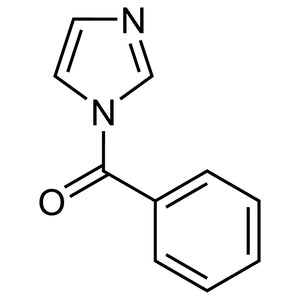
- TCI I1276 10364-94-0 (1H-Imidazol-1-yl)(phenyl)methanone
- TCI I1252 10041-06-2 1-[4-(1H-Imidazol-1-yl)phenyl]ethan-1-one
- Pharmaceutical research utilizes this compound for the synthesis of drug molecules due to its ability to form stable heterocyclic structures.
- Organic chemistry experiments benefit from its reactivity in substitution and cyclization reactions, enabling the creation of complex molecules.
- Material science studies employ it to develop new polymers and functional materials through controlled chemical modifications.
- Academic research uses it as a building block for the design of novel compounds in both synthetic and analytical studies.
- Industrial applications leverage its versatility in the production of specialty chemicals and intermediates for various commercial products.
| Brand | TCI |
|---|---|
| CAS number | 1074-59-5 |
| Molecular formula | — |
| Purity | — |
| Category | Chemistry > Building Blocks > Heterocyclic Building Blocks |
| Pack sizes | Available in various quantities as per supplier specifications |
| Physical form | Solid (as per standard product description) |
| Storage | Store in a cool, dry place away from light and moisture |
This compound should be stored in a cool, dry environment, away from direct light and moisture to maintain its stability and reactivity. It is recommended to use airtight containers to prevent exposure to humidity and air contaminants. Due to its chemical nature, it should be handled with appropriate personal protective equipment, such as gloves and safety goggles, to ensure laboratory safety. Proper ventilation is also essential when working with this material to minimize inhalation risks. Regular monitoring of storage conditions will help preserve its quality and effectiveness for research purposes. Always follow standard laboratory safety protocols to ensure safe handling and use.
—
Produk Terkait
-
1,3,5-Tri(1H-imidazol-1-yl)benzene TCI T3903
Regular price Rp 3.155.250,00Regular price -
1,3,5-Tris[(1H-imidazol-1-yl)methyl]benzene TCI T3479
Regular price From Rp 2.545.200,00Regular price -
4-(1-Methyl-5-nitro-1H-benzo[d]imidazol-2-yl)butanoicAcid TCI M3886
Regular price Rp 3.976.350,00Regular price -
4-(1H-Imidazol-1-yl)aniline TCI I1288
Regular price From Rp 848.400,00Regular price -
(1H-Imidazol-1-yl)(phenyl)methanone TCI I1276
Regular price From Rp 2.386.650,00Regular price -
1-[4-(1H-Imidazol-1-yl)phenyl]ethan-1-one TCI I1252
Regular price Rp 2.306.850,00Regular price -
2-(1H-Imidazol-1-yl)ethanol TCI I1193
Regular price From Rp 743.400,00Regular price -
4-(1H-Imidazol-1-yl)phenol TCI I1143
Regular price From Rp 2.227.050,00Regular price
![147951-02-8 1,3,5-Tris[(1H-imidazol-1-yl)methyl]benzene - AMI Scientific](http://amiscientific.com/cdn/shop/files/TCI2510T3479.jpg?v=1767144149&width=533)
![31349-48-1 4-(1-Methyl-5-nitro-1H-benzo[d]imidazol-2-yl)butanoic Acid - AMI Scientific](http://amiscientific.com/cdn/shop/files/TCI2510M3886.jpg?v=1769181080&width=533)

![10041-06-2 1-[4-(1H-Imidazol-1-yl)phenyl]ethan-1-one - AMI Scientific](http://amiscientific.com/cdn/shop/files/TCI2510I1252.jpg?v=1767120996&width=533)

