

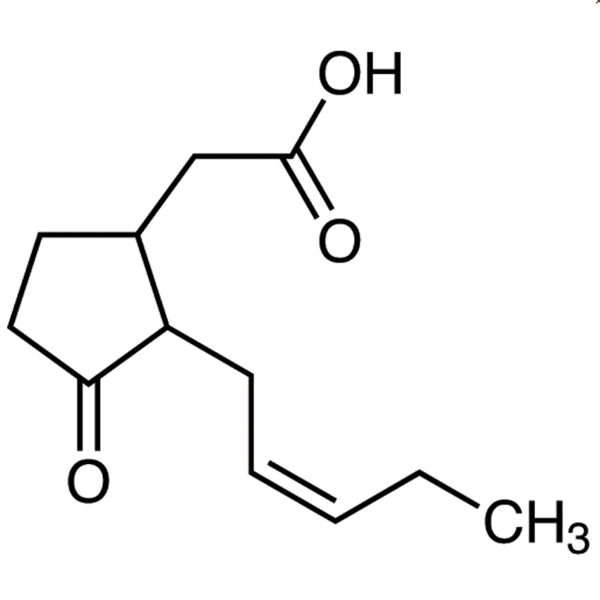
Jasmonic Acid (mixture of isomers), with CAS number 221682-41-3, is an organic compound widely used in plant biotechnology research. It belongs to the class of phytohormones, which play a crucial role in regulating plant growth, development, and responses to environmental stimuli. In the laboratory, this compound is essential for studying how plants react to various abiotic stresses, including drought, salinity, and heavy metal toxicity. Its chemical properties make it a valuable tool for understanding plant signaling pathways and stress response mechanisms.
This compound is preferred due to its chemical stability under controlled conditions and its ability to dissolve in organic solvents, making it versatile for a wide range of experimental protocols. As a mixture of isomers, it offers diverse structural variations that enhance its applicability in biotechnological research. Its solid form and solubility characteristics simplify handling and integration into various laboratory procedures, ensuring consistent and reliable results.
In Indonesian laboratories, jasmonic acid is commonly used in agricultural and environmental research, particularly in studies focused on plant tolerance to suboptimal environmental conditions. It plays a key role in developing plant varieties that are more resilient to climate change and environmental stressors. Its use extends to both academic and applied research, contributing to advancements in sustainable agriculture and ecological studies.
Related TCI products
- TCI M1068 1101843-02-0 Methyl Jasmonate (mixture of isomers)
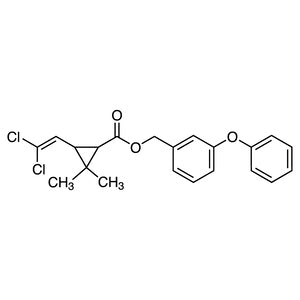
- TCI P2945 52645-53-1 Permethrin (mixture of isomers)
- TCI M3472 40596-69-8 Methoprene (mixture of isomers)
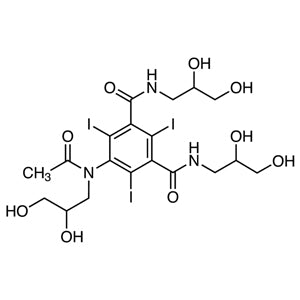
- TCI I0903 66108-95-0 Iohexol (mixture of isomers)
- TCI A0240 569-58-4 Aluminon (mixture of isomers)
- TCI V0195 106-87-6 3-(Oxiran-2-yl)-7-oxabicyclo[410]heptane (mixture of isomers)
- Plant Stress Response Studies - Jasmonic Acid is ideal for investigating how plants respond to abiotic stresses like drought and salinity, aiding in the development of stress-resistant crops.
- Environmental Toxicology Research - It is used to study the effects of heavy metals and pollutants on plant physiology, helping assess environmental contamination levels.
- Hormonal Signaling Pathway Analysis - Its role in plant hormone signaling makes it a key component in experiments exploring growth regulation and developmental processes.
- Agricultural Biotechnology - It supports research into improving crop resilience and yield under adverse conditions, contributing to food security initiatives.
- Ecological Impact Studies - Jasmonic Acid is used to evaluate how environmental changes affect plant survival and adaptation, supporting conservation and restoration efforts.
| Brand | TCI |
|---|---|
| CAS number | 221682-41-3 |
| Molecular formula | — |
| Purity | — |
| Category | Life Science > Molecular Biology > Plant Biotechnology |
| Pack sizes | Available in various quantities as per supplier specifications |
| Physical form | Solid |
| Storage | Store in a cool, dark place away from moisture and direct light |
Jasmonic Acid should be stored in a cool, dark environment to maintain its chemical stability and prevent degradation. It is recommended to keep it in a sealed container to avoid exposure to moisture and air, which can affect its integrity. Due to its sensitivity to temperature and light, it is best stored in a refrigerator at 4°C when not in use. Laboratory personnel should handle the compound with care, using appropriate personal protective equipment such as gloves and safety goggles. The compound is non-toxic in small quantities but should be handled as per standard laboratory safety protocols to ensure safe and effective use.
—
Product Categories
Produk Terkait
-
MethylJasmonate(mixtureofisomers) TCI M1068
Regular price From Rp 3.578.400,00Regular price -
Permethrin(mixtureofisomers) TCI P2945
Regular price From Rp 1.670.550,00Regular price -
Methoprene(mixtureofisomers) TCI M3472
Regular price Rp 8.560.650,00Regular price -
Iohexol(mixtureofisomers) TCI I0903
Regular price From Rp 1.353.450,00Regular price -
Aluminon(mixtureofisomers) TCI A0240
Regular price From Rp 1.776.600,00Regular price -
3-(Oxiran-2-yl)-7-oxabicyclo[410]heptane(mixtureofisomers) TCI V0195
Regular price From Rp 3.870.300,00Regular price -
1,3,5-Undecatriene(mixtureofisomers) TCI U0062
Regular price From Rp 3.155.250,00Regular price -
1,4,4a,5,8,8a-Hexahydro-1,4:5,8-dimethanonaphthalene(mixtureofisomers)(stabilizedwithBHT) TCI T4428
Regular price From Rp 4.056.150,00Regular price



![106-87-6 3-(Oxiran-2-yl)-7-oxabicyclo[4.1.0]heptane (mixture of isomers) - AMI Scientific](http://amiscientific.com/cdn/shop/files/TCI2510V0195.jpg?v=1767145750&width=533)

