

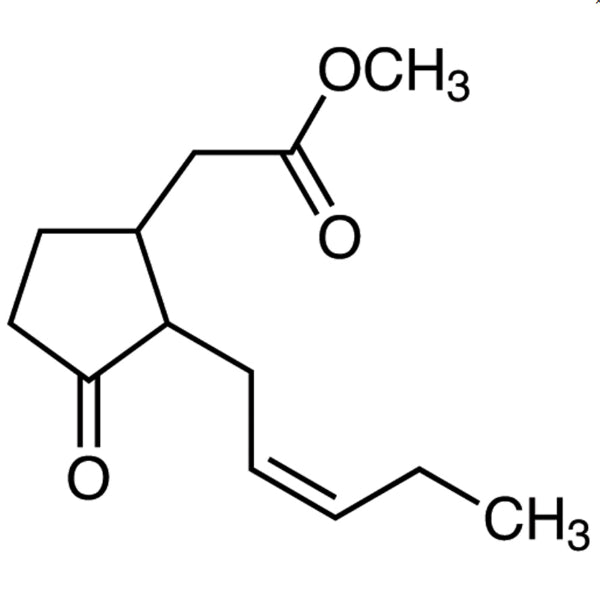
TCI M1068 is Methyl Jasmonate (mixture of isomers), the methyl ester of jasmonic acid and one of the most widely recognised signalling compounds in plants. It belongs to the jasmonate family of plant hormones, which govern how a plant responds to wounding, herbivore attack, pathogen infection, and a broad range of environmental stresses. In the plant biotechnology laboratory, methyl jasmonate is used principally as an elicitor: a compound deliberately introduced into a culture or applied to living tissue in order to activate the plant's defence pathways, so that secondary metabolite production increases and the underlying molecular mechanisms can be studied under controlled conditions.
Several properties explain why this compound is so frequently selected over alternatives. It is biologically active at low concentrations, which means small quantities are sufficient to produce a measurable physiological response, and it is volatile, so it can be delivered through the culture medium, applied as a foliar spray, or supplied as vapour within a closed chamber depending on the design of the experiment. Because it is an ester, methyl jasmonate is more lipophilic than free jasmonic acid, and this improves its penetration through plant tissue. The material is supplied as a mixture of isomers, the form conventionally used in plant physiology and biotechnology work, since it still delivers a strong and consistent biological response.
In Indonesian laboratories this material is typically found in university plant biotechnology groups, agricultural and plantation research institutes, and tissue culture facilities working on secondary metabolite production. It is used in cell suspension and callus culture work, in hairy root systems, and in whole-plant stress physiology studies. Its flexibility of application, whether added to medium, sprayed, or applied as vapour, makes it suitable for laboratories with varied levels of equipment and differing experimental scales.
TCI brochures (PDF)
- Plant Hormones 2025-01-30 · p. 1
- Agrochemical Ingredients for Research and Experimental Use 2026-01-08 · p. 8
- Plant Research Reagents 2026-02-24 · p. 13
- Reagents for Biological Research 2025-03-11 · p. 55
Related TCI products
- TCI J0004 221682-41-3 Jasmonic Acid (mixture of isomers)
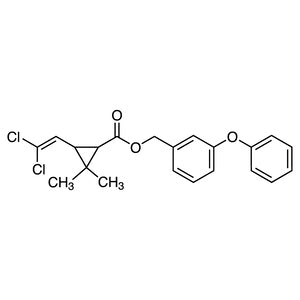
- TCI P2945 52645-53-1 Permethrin (mixture of isomers)
- TCI M3472 40596-69-8 Methoprene (mixture of isomers)
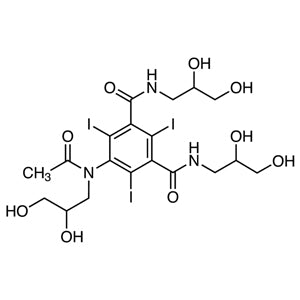
- TCI I0903 66108-95-0 Iohexol (mixture of isomers)
- TCI A0240 569-58-4 Aluminon (mixture of isomers)
- TCI V0195 106-87-6 3-(Oxiran-2-yl)-7-oxabicyclo[410]heptane (mixture of isomers)
- Elicitation of secondary metabolites in plant cell suspension culture, where methyl jasmonate is added to the medium at low concentration to activate defence pathways and raise the yield of target compounds under fully controlled conditions.
- Studies of plant defence signalling, where the compound is used to trigger the jasmonate pathway deliberately so that downstream gene expression and defence responses can be observed without needing an actual herbivore or pathogen.
- Wounding and herbivore response research, in which methyl jasmonate reproduces the hormonal signal generated by physical damage or insect feeding, allowing the response to be studied reproducibly in the laboratory.
- Hairy root and callus culture work, where the improved tissue penetration conferred by the ester form helps the compound reach target cells efficiently and produce a consistent elicitation response across replicates.
- Vapour-phase treatment experiments in closed chambers, exploiting the volatility of methyl jasmonate to expose whole plants or cultures uniformly without direct contact between the compound and the growth medium.
| Brand | TCI |
|---|---|
| CAS number | 1101843-02-0 |
| Molecular formula | — |
| Purity | — |
| Category | Life Science > Molecular Biology > Plant Biotechnology |
| Pack sizes | please refer to the packaging options listed for this catalogue item |
| Physical form | — |
| Storage | store according to the conditions stated on the manufacturer's label and product documentation |
- Chemical description: methyl ester of jasmonic acid, supplied as a mixture of isomers
Store the container tightly closed in a cool, dark place and follow the storage conditions given on the manufacturer's label and safety data sheet. Because methyl jasmonate is volatile, keep the container sealed when not in use to limit loss of material and to prevent unintended exposure of nearby plant cultures, which can respond to trace vapour. Amber glass vials or the original supplier container are appropriate, and screw caps should be closed firmly after each use. Handle the material in a fume hood, wear gloves, a laboratory coat, and eye protection, and avoid contact with skin and eyes. Allow refrigerated containers to reach room temperature before opening to reduce condensation, and dispose of residues and contaminated consumables in accordance with the applicable institutional chemical waste procedures.
—
Product Categories
Produk Terkait
-
JasmonicAcid(mixtureofisomers) TCI J0004
Regular price From Rp 5.485.200,00Regular price -
Permethrin(mixtureofisomers) TCI P2945
Regular price From Rp 1.670.550,00Regular price -
Methoprene(mixtureofisomers) TCI M3472
Regular price Rp 8.560.650,00Regular price -
Iohexol(mixtureofisomers) TCI I0903
Regular price From Rp 1.353.450,00Regular price -
Aluminon(mixtureofisomers) TCI A0240
Regular price From Rp 1.776.600,00Regular price -
3-(Oxiran-2-yl)-7-oxabicyclo[410]heptane(mixtureofisomers) TCI V0195
Regular price From Rp 3.870.300,00Regular price -
1,3,5-Undecatriene(mixtureofisomers) TCI U0062
Regular price From Rp 3.155.250,00Regular price -
1,4,4a,5,8,8a-Hexahydro-1,4:5,8-dimethanonaphthalene(mixtureofisomers)(stabilizedwithBHT) TCI T4428
Regular price From Rp 4.056.150,00Regular price



![106-87-6 3-(Oxiran-2-yl)-7-oxabicyclo[4.1.0]heptane (mixture of isomers) - AMI Scientific](http://amiscientific.com/cdn/shop/files/TCI2510V0195.jpg?v=1767145750&width=533)

