


Permethrin (mixture of isomers) from TCI is a synthetic insecticide of the pyrethroid class, supplied as a mixture of cis and trans isomers. It was designed to mimic the natural pyrethrins found in chrysanthemum flowers, but it is more stable under light. Permethrin is widely used in agriculture, public health and vector control. In the laboratory, the pure compound serves as an analytical standard for pesticide residue testing, a test material for toxicology studies, and a reference compound in entomology and insect resistance research.
Researchers choose permethrin because its mode of action is well understood. The compound acts on voltage-gated sodium channels in insect nerve cells and keeps them open for longer than normal, which leads to paralysis. This well-characterised mechanism makes it a dependable positive control and benchmark compound. Permethrin is also lipophilic, so it tends to accumulate in fatty matrices. That makes it relevant to residue studies in food and to nutrition research. Because the product is a mixture of isomers, separating and quantifying the cis and trans forms is an analytical topic in its own right, and it gives method development work a practical focus.
As a tropical country, Indonesia faces ongoing challenges from vector-borne diseases. Pyrethroids are also used heavily in its agricultural sector. Indonesian university laboratories, public health research centres, food testing laboratories and agricultural research institutes use permethrin standards to monitor residues, study insect resistance and assess toxicological effects. The 200 mg and 1 g pack sizes are enough to prepare standard solutions and run laboratory-scale biological experiments without buying excess material.
Related TCI products
- TCI M3472 40596-69-8 Methoprene (mixture of isomers)
- TCI A0851 122-40-7 alpha-Amylcinnamaldehyde (mixture of isomers)
- TCI T0608 4602-84-0 Farnesol (mixture of isomers)
- TCI M1068 1101843-02-0 Methyl Jasmonate (mixture of isomers)
- TCI J0004 221682-41-3 Jasmonic Acid (mixture of isomers)
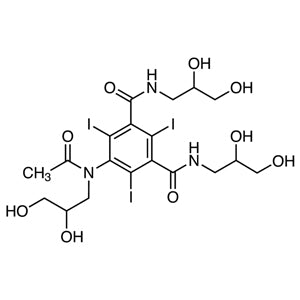
- TCI I0903 66108-95-0 Iohexol (mixture of isomers)
- Pesticide residue analysis: permethrin serves as an analytical reference standard for identifying and quantifying pyrethroid residues in agricultural produce, food and environmental samples.
- Toxicology testing: its well-documented mechanism of action on voltage-gated sodium channels makes it a suitable test substance for evaluating toxic effects in biological models.
- Entomology and insect resistance research: permethrin is an established reference compound for comparing susceptibility between insect populations and for tracking resistance to pyrethroid insecticides.
- Food and nutrition research: its lipophilic nature leads it to accumulate in fatty matrices, making it relevant to studies of residue behaviour in fat-rich foods and dietary exposure.
- Isomer separation method development: because it is supplied as a cis/trans isomer mixture, it is a practical material for developing and validating chromatographic methods that separate and quantify individual isomers.
| Brand | TCI (product code P2945) |
|---|---|
| CAS number | 52645-53-1 |
| Molecular formula | — |
| Purity | — |
| Category | Life Science > Cell Biology > Nutrition Research |
| Pack sizes | 200mg and 1g |
| Physical form | — |
| Storage | keep tightly closed and protected from light; follow the TCI label and safety data sheet |
- Composition: mixture of cis and trans isomers
Store permethrin in its original, tightly sealed container in a cool, dry, well-ventilated area, away from direct sunlight, heat sources and incompatible materials. Always follow the storage conditions on the TCI label and safety data sheet. Use clean glass or chemically compatible containers for standard solutions, and label them clearly with the concentration, solvent and preparation date. Because permethrin is an insecticide, wear gloves, safety glasses and a lab coat, and avoid inhaling dust or vapour or letting it touch your skin. Prepare samples in a fume hood where possible. Do not store it near food. Dispose of waste and contaminated materials according to local chemical waste regulations.
—
Produk Terkait
-
Methoprene(mixtureofisomers) TCI M3472
Regular price Rp 8.560.650,00Regular price -
alpha-Amylcinnamaldehyde(mixtureofisomers) TCI A0851
Regular price From Rp 637.350,00Regular price -
Farnesol(mixtureofisomers) TCI T0608
Regular price From Rp 557.550,00Regular price -
MethylJasmonate(mixtureofisomers) TCI M1068
Regular price From Rp 3.578.400,00Regular price -
JasmonicAcid(mixtureofisomers) TCI J0004
Regular price From Rp 5.485.200,00Regular price -
Iohexol(mixtureofisomers) TCI I0903
Regular price From Rp 1.353.450,00Regular price -
Aluminon(mixtureofisomers) TCI A0240
Regular price From Rp 1.776.600,00Regular price -
3-(Oxiran-2-yl)-7-oxabicyclo[410]heptane(mixtureofisomers) TCI V0195
Regular price From Rp 3.870.300,00Regular price



![106-87-6 3-(Oxiran-2-yl)-7-oxabicyclo[4.1.0]heptane (mixture of isomers) - AMI Scientific](http://amiscientific.com/cdn/shop/files/TCI2510V0195.jpg?v=1767145750&width=533)