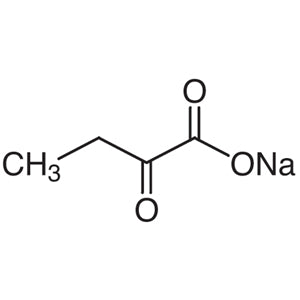
Sodium 2-Oxobutyrate is a chemical compound widely used in laboratory settings for its versatility in chemical reactions and molecular synthesis. As a sodium salt of 2-oxobutanoic acid, it plays a crucial role in organic and pharmaceutical research, serving as a building block for the creation of more complex molecules. This compound is commonly found in chemical laboratories, where it is utilized as a reagent to facilitate various synthetic processes and improve the efficiency of chemical reactions. Its presence in the lab ensures that researchers have access to a reliable and stable starting material for their experiments.
One of the key attributes that make Sodium 2-Oxobutyrate a preferred choice is its chemical stability and solubility in both organic solvents and water. These properties make it highly compatible with a wide range of reagents and reaction conditions, allowing for greater flexibility in experimental design. Additionally, its relatively simple molecular structure contributes to its ease of handling and integration into various synthetic pathways. The compound's ability to participate in multiple reaction types further enhances its value in both academic and industrial research environments.
In Indonesian laboratories, Sodium 2-Oxobutyrate is frequently used in organic synthesis and pharmaceutical development. Its availability and reliability make it a go-to reagent for researchers working on drug discovery and chemical innovation. The compound’s compatibility with standard laboratory procedures and its non-corrosive nature also make it a safe and practical choice for routine use in chemical experimentation. Its role in supporting scientific research in Indonesia underscores its importance as a fundamental chemical reagent.
Related TCI products
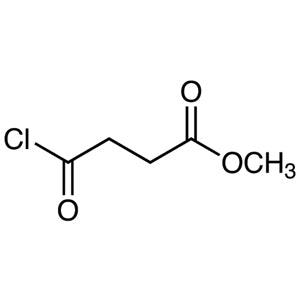
- TCI M2850 1490-25-1 Methyl 4-Chloro-4-oxobutyrate
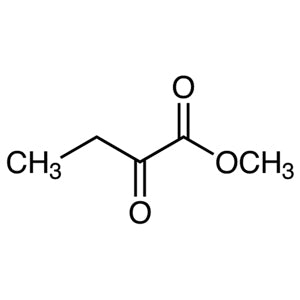
- TCI M2369 3952-66-7 Methyl 2-Oxobutyrate
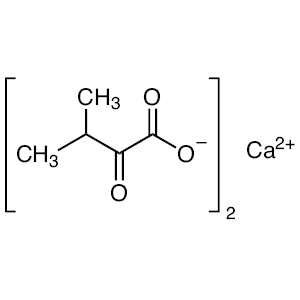
- TCI K0021 51828-94-5 Calcium 3-Methyl-2-oxobutyrate
- TCI S0808 948995-62-8 Succinimidyl 4-[3,5-Dimethyl-4-(4-nitrobenzyloxy)phenyl]-4-oxobutyrate
- TCI E1087 571-55-1 Ethyl 2-(Ethoxymethylene)-4,4,4-trifluoro-3-oxobutyrate
- TCI T2208 52698-46-1 Trimethyl Orthoisobutyrate
- Organic synthesis where Sodium 2-Oxobutyrate acts as a versatile building block for the creation of complex organic molecules.
- Pharmaceutical research due to its role in the synthesis of compounds relevant to drug development and medicinal chemistry.
- Analytical chemistry applications where it serves as a standard or reagent in qualitative and quantitative analysis procedures.
- Teaching laboratories for demonstrating fundamental chemical reactions and molecular synthesis techniques.
- Industrial chemical processes requiring a stable and reactive reagent for the production of specialty chemicals.
| Brand | TCI |
|---|---|
| CAS number | 2013-26-5 |
| Molecular formula | — |
| Purity | — |
| Category | Chemistry > Building Blocks > Non-Heterocyclic Building Blocks |
| Pack sizes | Available in various quantities as per supplier specifications |
| Physical form | Solid powder |
| Storage | Store in a cool, dry place away from moisture and direct sunlight |
Sodium 2-Oxobutyrate should be stored in a cool, dry environment to maintain its chemical stability and prevent degradation. It is recommended to keep the compound in airtight containers to avoid exposure to moisture, which can affect its solubility and reactivity. While it is generally non-corrosive, it is advisable to handle it with standard laboratory precautions, such as wearing gloves and safety goggles to ensure personal protection. The compound is suitable for storage in standard chemical storage cabinets, provided it is kept away from incompatible substances. Its stable nature allows for long-term storage without significant changes in its chemical properties, making it a reliable reagent for laboratory use.
—
Produk Terkait
-
Methyl4-Chloro-4-oxobutyrate TCI M2850
Regular price From Rp 1.829.100,00Regular price -
Methyl2-Oxobutyrate TCI M2369
Regular price Rp 4.188.450,00Regular price -
Calcium3-Methyl-2-oxobutyrate TCI K0021
Regular price Rp 3.870.300,00Regular price -
Succinimidyl4-[3,5-Dimethyl-4-(4-nitrobenzyloxy)phenyl]-4-oxobutyrate TCI S0808
Regular price Rp 5.062.050,00Regular price -
Ethyl2-(Ethoxymethylene)-4,4,4-trifluoro-3-oxobutyrate TCI E1087
Regular price From Rp 1.326.150,00Regular price -
TrimethylOrthoisobutyrate TCI T2208
Regular price Rp 2.411.850,00Regular price -
tert-Butyl2-Bromoisobutyrate TCI B3500
Regular price From Rp 584.850,00Regular price -
Methyl4-Bromobutyrate TCI B2308
Regular price From Rp 2.094.750,00Regular price
![948995-62-8 Succinimidyl 4-[3,5-Dimethyl-4-(4-nitrobenzyloxy)phenyl]-4-oxobutyrate - AMI Scientific](http://amiscientific.com/cdn/shop/files/TCI2510S0808.jpg?v=1769057698&width=533)