TCI K0081 K2Cu(BPPO)25(DMSO) is a chemical compound widely used in catalytic reactions and studies involving transition metals. As a copper-based catalyst, it plays a crucial role in accelerating chemical reactions without undergoing chemical changes itself. This compound is particularly valuable in both organic and inorganic chemistry research, where it is employed to enhance reaction efficiency and control reaction pathways. Its versatility makes it an essential tool for researchers working in catalysis and transition metal chemistry.
The compound is known for its stability under specific conditions and its solubility in organic solvents such as DMSO, which contributes to its effectiveness in various experimental setups. These properties make it a preferred choice for applications requiring high reactivity and chemical stability. Its ability to remain chemically inert during reactions while facilitating desired chemical transformations is a key factor in its widespread use. The compound’s performance in laboratory settings is further enhanced by its compatibility with a range of reaction conditions and its ease of handling.
In Indonesian laboratories, TCI K0081 is commonly used in chemical research, especially in academic institutions and research centers. Its relevance in catalysis and transition metal studies makes it a staple in both teaching and experimental environments. Researchers rely on its consistent performance and reliability to achieve accurate and reproducible results in their experiments.
Advantages (TCI brochure)
- Applicable to Ullmann-type C(sp2)-O/N cross-coupling reactions
- Stable copper(II) complex enabling reactions open to air without degassing
- Achieves high turnover numbers (TON)
- Pre-formed complex; no need to weigh a copper salt and ligand separately
TCI brochures (PDF)
- Copper(II) Complex Catalyst for Ullmann-type C(sp2)-O/N Cross-Coupling Reactions without Degassing 2025-09-12 · p. 1
- Transition Metal Catalysts 2026-04-10 · p. 16
Related TCI products
- TCI T3905 58452-28-1 Tetrakis(acetonitrile)copper(I) Trifluoromethanesulfonate
- TCI T1442 42152-46-5 Copper(I) Trifluoromethanesulfonate Benzene Complex
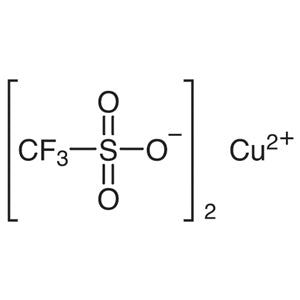
- TCI T1292 34946-82-2 Copper(II) Trifluoromethanesulfonate
- TCI B1513 32270-93-2 Bis(1,3-propanediamine) Copper(II) Dichloride
- TCI A1540 598-54-9 Copper(I) Acetate
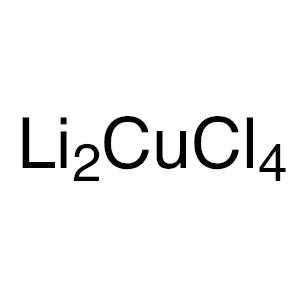
- TCI D4395 15489-27-7 Dilithium Tetrachlorocopper(II) (ca. 2.5% in Tetrahydrofuran, ca. 0.1mol/L)
- Catalytic Reaction Optimization – This compound is ideal for accelerating complex reactions in organic and inorganic chemistry, providing consistent results in controlled environments.
- Transition Metal Study – Its copper-based structure makes it a valuable tool for investigating the behavior and reactivity of transition metals in various chemical processes.
- Organic Synthesis – The compound’s solubility in DMSO and its catalytic properties make it suitable for synthesizing a wide range of organic compounds efficiently.
- Analytical Chemistry – It is used in analytical procedures to facilitate the detection and quantification of specific chemical species in solution.
- Industrial Process Development – Its stability and reactivity make it a preferred choice for developing and testing new chemical processes in industrial settings.
From the TCI brochure
- C(sp2)-O cross-coupling reaction: aryl bromide with a phenol, K0081 (1 mol%), K3PO4, DMSO, 100°C, open to air
- C(sp2)-N cross-coupling reaction: aryl bromide with a primary amine, K0081 (0.1 mol%), K3PO4, DMSO, 100°C, open to air
| Brand | TCI |
|---|---|
| CAS number | — |
| Molecular formula | — |
| Purity | — |
| Category | Chemistry > Catalysis and Inorganic Chemistry > Transition Elements |
| Pack sizes | — |
| Physical form | — |
| Storage | Store in a cool, dry place away from moisture and direct sunlight |
Data from the TCI brochure
| Catalyst loading (C(sp2)-O cross-coupling) | 1 mol% (K3PO4, DMSO, 100°C, open to air) |
|---|---|
| Catalyst loading (C(sp2)-N cross-coupling) | 0.1 mol% (K3PO4, DMSO, 100°C, open to air) |
Source: TCI brochure RR225 (2025-09-12)
This compound should be stored in a cool, dry place, away from moisture and direct sunlight to maintain its chemical stability and effectiveness. It is recommended to use airtight containers to prevent exposure to air and potential degradation. Due to its solubility in organic solvents, it should be handled with care to avoid contamination. Laboratory personnel should wear appropriate personal protective equipment, such as gloves and safety goggles, when handling the compound. It is important to ensure that the compound is stored separately from incompatible substances to prevent any unwanted reactions. Proper labeling and storage practices are essential to maintain the integrity and safety of the material in the laboratory environment.
References cited in the TCI brochure
- Connor P. Delaney. Cross-coupling by a noncanonical mechanism involving the addition of aryl halide to Cu(II) Science, 2023. doi:10.1126/science.adi9226
- Christina N. Pierson. Efficient Aminations of Aryl Halides by a Cu(II) Catalyst Journal of the American Chemical Society, 2025. doi:10.1021/jacs.5c05210
Product Categories
- Catalysis and Inorganic ChemistryTransition Elements [Catalysis and Inorganic Chemistry]Copper [Catalysis and Inorganic Chemistry]
- Catalysis and Inorganic ChemistryCross-coupling Reaction using Transition Metal Catalysts [C-C Bond Formation]Copper Catalysts [Cross-coupling Reaction using Transition Metal Catalysts]
- Synthetic ReagentsC-C Bond Formation [Synthetic Reagents]Cross-coupling Reaction using Transition Metal Catalysts [C-C Bond Formation]
Produk Terkait
-
Tetrakis(acetonitrile)copper(I)Trifluoromethanesulfonate TCI T3905
Regular price From Rp 2.252.250,00Regular priceRp 1.590.750,00Sale price From Rp 2.252.250,00 -
Copper(I)TrifluoromethanesulfonateBenzeneComplex TCI T1442
Regular price From Rp 2.041.200,00Regular priceRp 1.426.950,00Sale price From Rp 2.041.200,00 -
Copper(II)Trifluoromethanesulfonate TCI T1292
Regular price From Rp 1.510.950,00Regular priceRp 1.056.300,00Sale price From Rp 1.510.950,00 -
Bis(1,3-propanediamine)Copper(II)Dichloride TCI B1513
Regular price From Rp 1.326.150,00Regular priceRp 927.150,00Sale price From Rp 1.326.150,00 -
Copper(I)Acetate TCI A1540
Regular price From Rp 1.565.550,00Regular priceRp 1.094.100,00Sale price From Rp 1.565.550,00 -
DilithiumTetrachlorocopper(II)(ca.2.5%inTetrahydrofuran,ca.0.1mol/L) TCI D4395
Regular price From Rp 1.829.100,00Regular priceRp 1.278.900,00Sale price From Rp 1.829.100,00 -
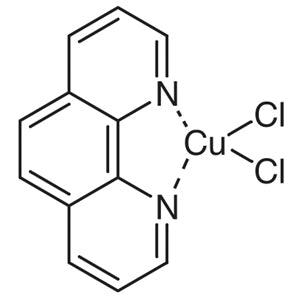
Dichloro(1,10-phenanthroline)copper(II) TCI D3891
Regular price From Rp 1.140.300,00Regular priceRp 812.700,00Sale price From Rp 1.140.300,00 -
Di-mu-hydroxo-bis[(N,N,N',N'-tetramethylethylenediamine)copper(II)]Chloride TCI D2542
Regular price From Rp 2.306.850,00Regular priceRp 1.612.800,00Sale price From Rp 2.306.850,00