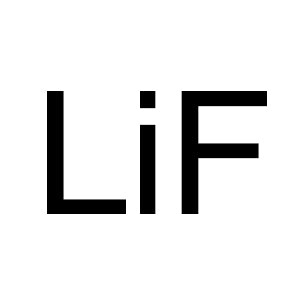
TCI L0211 Lithium Fluoride is an inorganic salt formed from lithium and fluoride ions, and it behaves quite differently from most other lithium salts encountered in the laboratory. Where lithium bromide and lithium iodide dissolve very readily, this compound instead shows low solubility in water. That contrast arises from the high lattice energy of its crystal, a consequence of both ions being small in size. In laboratory settings, the material is used in materials research, optics, electrochemistry, and as a component of molten salt mixtures at high temperature.
The property most valued in this compound is its wide optical transparency, which extends from the far ultraviolet region through to the infrared. Because of this broad window, crystals of the material are widely employed as windows and prisms in spectroscopic instruments, where transmission across an unusually large spectral range is essential. Another important characteristic is its high thermal stability together with a high melting point, which makes it a constituent of molten salt mixtures used in high-temperature electrochemical research. In electronics, thin films of the material have been investigated as an electron-injection layer in organic light-emitting devices.
In Indonesian laboratories, this material is typically used within university research groups, materials and optics laboratories, and electrochemistry facilities that work with high-temperature salt systems. Its low solubility is also put to practical use in precipitation experiments and in studies of ionic equilibrium, where a sparingly soluble salt is required as the working system. Laboratories generally order it in defined pack sizes suited to research-scale rather than production-scale consumption.
TCI brochures (PDF)
- Lithium Compounds for Research and Experimental Use 2026-02-10 · p. 1
- Metallic Salts 2025-11-06 · p. 2
- Optical component fabrication: the wide transparency range from the far ultraviolet to the infrared makes its crystals suitable for windows and prisms in spectroscopic instruments.
- Spectroscopy instrumentation: because transmission is maintained across an unusually broad spectral span, it serves where conventional optical materials would absorb strongly at the extremes.
- High-temperature electrochemistry: the combination of high thermal stability and a high melting point allows it to function as a constituent of molten salt mixtures under demanding conditions.
- Organic light-emitting device research: thin films of this material have been studied as an electron-injection layer, making it relevant to work on organic electronic device architectures.
- Precipitation and ionic equilibrium studies: its comparatively low solubility in water provides a sparingly soluble system useful for examining precipitation behaviour and equilibrium between dissolved ions.
| Brand | TCI |
|---|---|
| CAS number | 7789-24-4 |
| Molecular formula | — |
| Purity | — |
| Category | Chemistry > Catalysis and Inorganic Chemistry > Metallic Salts [Catalysis and Inorganic Chemistry] |
| Pack sizes | available in the standard research pack sizes listed for this catalogue item |
| Physical form | crystalline inorganic salt |
| Storage | keep in a tightly closed container in a dry location, following the manufacturer's stated conditions |
Store the material in a tightly closed original container, kept in a dry and well-ventilated area away from moisture and from incompatible substances. Containers of chemically resistant material with secure closures are appropriate, and labels should remain legible for the life of the stock. Handle the solid inside a fume hood where dust may be generated, and wear a laboratory coat, safety goggles, and suitable gloves throughout. Avoid inhaling dust and avoid contact with skin and eyes. Transfer only the quantity required for the work in hand, close the container promptly afterwards, and consult the manufacturer's safety data sheet before first use and before any unfamiliar procedure. Dispose of residues and contaminated materials in accordance with the applicable institutional and local regulations for fluoride-containing chemical waste.
—
Produk Terkait
-
MagnesiumFluoride TCI M3395
Regular price From Rp 1.565.550,00Regular price -
Lead(II)Fluoride TCI L0424
Regular price From Rp 557.550,00Regular price -
CalciumFluoride TCI C3745
Regular price From Rp 689.850,00Regular price -
CesiumFluoride TCI C2204
Regular price From Rp 1.803.900,00Regular price -
Zinc(II)Fluoride TCI Z0050
Regular price From Rp 903.000,00Regular price -
Ytterbium(III)Fluoride TCI Y0027
Regular price Rp 2.332.050,00Regular price -
Yttrium(III)Fluoride TCI Y0026
Regular price From Rp 1.776.600,00Regular price -
StrontiumFluoride TCI T4027
Regular price From Rp 743.400,00Regular price