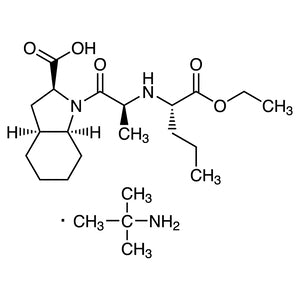
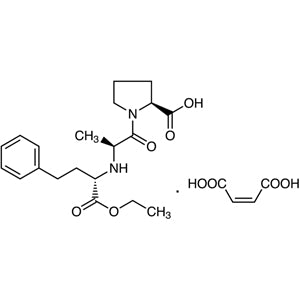
Lisinopril Dihydrate is a chemical compound widely used in laboratory experiments, particularly in the fields of bio-pharmaceuticals and biochemistry. As an inhibitor of the angiotensin-converting enzyme (ACE), it plays a crucial role in research related to blood pressure regulation and metabolic processes. This compound is essential for scientists studying the physiological and pharmacological effects of ACE inhibitors, making it a vital tool in both academic and industrial research settings. Its presence in laboratory workflows supports the development of new therapeutic agents and the understanding of hypertension mechanisms.
Lisinopril Dihydrate is known for its stable molecular structure and solubility in organic solvents, which simplifies its handling and integration into various experimental protocols. Its high purity and chemical stability make it a preferred choice for experiments requiring precision and accuracy. Additionally, its reactive nature enables it to participate in specific chemical reactions, such as the synthesis of derivatives or the testing of biological activities. These properties ensure its reliability in diverse laboratory applications, from basic research to advanced drug development.
In Indonesian laboratories, Lisinopril Dihydrate is commonly used in scientific research and educational institutions. It supports studies on pharmacological effects, drug development, and the mechanisms of action of antihypertensive medications. Its application extends to the production of reagents and other chemical compounds that require high-quality and chemically stable materials. This compound is a key component in the pursuit of scientific knowledge and innovation in the region.
TCI brochures (PDF)
- Pharmaceutical Ingredients for Research and Experimental Use 2026-03-09 · p. 21
- Pharmacological research on antihypertensive drugs due to its ACE inhibitory properties.
- Development of new therapeutic agents through biochemical synthesis and testing.
- Educational use in teaching pharmacology and biochemistry to students and researchers.
- Investigation of enzyme inhibition mechanisms in metabolic pathway studies.
- Preparation of reagents and chemical compounds requiring high purity and stability.
| Brand | TCI |
|---|---|
| CAS number | 83915-83-7 |
| Molecular formula | — |
| Purity | — |
| Category | Life Science > Biochemicals and Reagents > Enzymes, Enzyme Inhibitors, Enzyme Substrates |
| Pack sizes | Available in standard laboratory quantities as per supplier specifications. |
| Physical form | Crystalline solid, as commonly supplied for biochemical applications. |
| Storage | Store in a cool, dry place away from moisture and direct sunlight. |
Lisinopril Dihydrate should be stored in a cool, dry environment to maintain its chemical stability and prevent degradation. It is recommended to use airtight containers to protect it from moisture and contaminants. Since it is a reactive compound, it should be handled with care, using appropriate personal protective equipment such as gloves and safety goggles. It is important to avoid exposure to heat and direct light, which may affect its integrity. In laboratory settings, it should be stored separately from incompatible substances to ensure safety. Regular monitoring of storage conditions is advised to maintain the quality and effectiveness of the compound for research purposes.
—
Product Categories
- Biochemicals and ReagentsEnzymes, Enzyme Inhibitors, Enzyme SubstratesEnzyme Inhibitors [Biochemicals and Reagents]
- Biochemicals and ReagentsPharmaceutical Research Reagents (for Experimental Use)Antihypertensive Ingredients (for Research and Experimental Use)
- Pharmaceutical Development and Drug Discovery ResearchPharmaceutical Research Reagents (for Experimental Use)Antihypertensive Ingredients (for Research and Experimental Use)
Produk Terkait
-
FosinoprilSodium TCI F1242
Regular price Rp 4.213.650,00Regular price -
ImidaprilHydrochloride TCI I0901
Regular price From Rp 4.108.650,00Regular price -
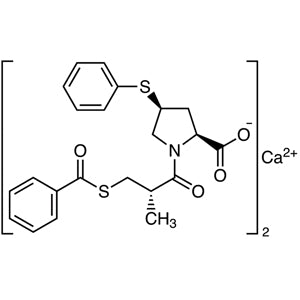
ZofenoprilCalcium TCI Z0041
Regular price From Rp 2.837.100,00Regular price -
BenazeprilHydrochloride TCI B3611
Regular price Rp 2.439.150,00Regular price -
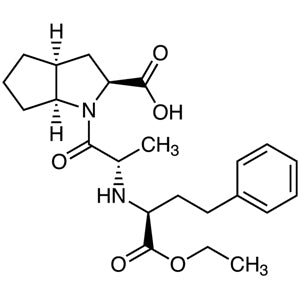
Ramipril TCI R0219
Regular price From Rp 3.180.450,00Regular price -
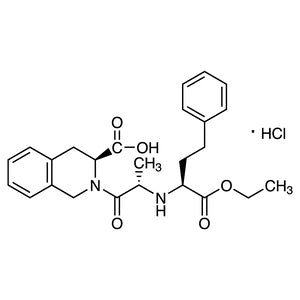
QuinaprilHydrochloride TCI Q0082
Regular price Rp 3.021.900,00Regular price -
PerindoprilErbumine TCI P2968
Regular price From Rp 2.121.000,00Regular price -
EnalaprilMaleate TCI E1010
Regular price From Rp 1.298.850,00Regular price