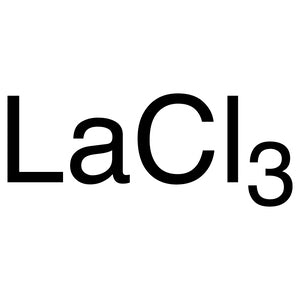
Lanthanum(III) Chloride (LaCl₃) is a chemical compound belonging to the rare earth elements group, widely used in laboratory settings for its unique chemical properties. As a key component in catalytic and inorganic chemistry, LaCl₃ plays a vital role in various chemical reactions, particularly in the field of catalysis. Its reactivity and ability to act as a catalyst make it an essential reagent in both research and industrial applications. In the laboratory, it is frequently employed in the development of new materials and compounds, contributing to advancements in chemical science.
LaCl₃ is known for its stable crystalline structure and excellent solubility in water, which facilitates its use in a wide range of chemical processes. Its high melting point ensures stability under elevated temperatures, making it suitable for high-temperature reactions. These properties make LaCl₃ a preferred choice for applications requiring both chemical reactivity and thermal stability. The compound’s versatility allows it to be used in multiple experimental setups, enhancing the efficiency and accuracy of chemical research.
In Indonesian laboratories, LaCl₃ is commonly used in scientific research and technological development. It is a key material in the study of catalytic processes and the synthesis of advanced materials. Many research institutions and universities in Indonesia rely on LaCl₃ for experiments in chemistry and material science, particularly in the fields of catalysis and semiconductor research. Its availability and reliability make it a valuable resource for academic and industrial laboratories alike.
TCI brochures (PDF)
- Metallic Salts 2025-11-06 · p. 3
Related TCI products
- TCI L0437 14507-19-8 Lanthanum(III) Hydroxide
- TCI L0294 168106-26-1 Lanthanum(III) Bis(trifluoromethanesulfonyl)imide
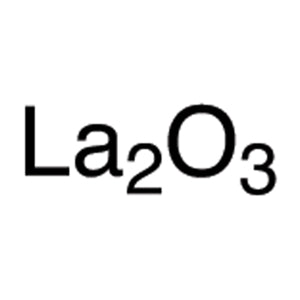
- TCI L0235 1312-81-8 Lanthanum(III) Oxide
- TCI T4230 14319-13-2 Tris(dipivaloylmethanato)lanthanum
- TCI T1293 52093-26-2 Lanthanum(III) Trifluoromethanesulfonate
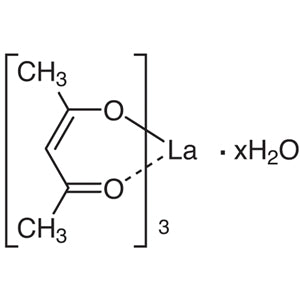
- TCI L0148 64424-12-0 Tris(2,4-pentanedionato)lanthanum(III) Hydrate
- Catalytic Reactions: Lanthanum(III) Chloride is used in catalytic reactions to accelerate chemical processes and improve reaction efficiency.
- Material Synthesis: It plays a crucial role in the synthesis of advanced materials, including semiconductors and electronic components.
- Inorganic Chemistry Research: LaCl₃ is extensively used in inorganic chemistry experiments to study the behavior of rare earth elements.
- Semiconductor Manufacturing: The compound is employed in the production of semiconductor materials due to its unique chemical properties.
- Electronic Component Development: LaCl₃ contributes to the development of electronic components by acting as a precursor in material fabrication.
| Brand | TCI |
|---|---|
| CAS number | 10099-58-8 |
| Molecular formula | — |
| Purity | — |
| Category | Chemistry > Catalysis and Inorganic Chemistry > Rare Earth Elements |
| Pack sizes | Available in various quantities as per standard laboratory requirements |
| Physical form | Solid powder |
| Storage | Store in a cool, dry place away from moisture and direct sunlight |
Lanthanum(III) Chloride should be stored in a cool, dry environment to maintain its chemical stability. It is recommended to keep the compound in a sealed container to prevent exposure to moisture, which can affect its properties. Due to its reactivity, it should be handled with care, using appropriate personal protective equipment such as gloves and safety goggles. The compound should be stored away from incompatible materials to ensure safety. In laboratory settings, it is important to follow standard chemical handling procedures to minimize risks and ensure safe usage. Proper storage and handling practices are essential to preserve the integrity and effectiveness of LaCl₃ in experimental applications.
—
Produk Terkait
-
Lanthanum(III)Hydroxide TCI L0437
Regular price From Rp 2.093.700,00Regular priceRp 1.479.450,00Sale price From Rp 2.093.700,00 -
Lanthanum(III)Bis(trifluoromethanesulfonyl)imide TCI L0294
Regular price From Rp 2.384.550,00Regular priceRp 1.683.150,00Sale price From Rp 2.384.550,00 -
Lanthanum(III)Oxide TCI L0235
Regular price From Rp 689.850,00Regular priceRp 497.700,00Sale price From Rp 689.850,00 -
Tris(dipivaloylmethanato)lanthanum TCI T4230
Regular price From Rp 1.856.400,00Regular priceRp 1.313.550,00Sale price From Rp 1.856.400,00 -
Lanthanum(III)Trifluoromethanesulfonate TCI T1293
Regular price From Rp 2.359.350,00Regular priceRp 1.665.300,00Sale price From Rp 2.359.350,00 -
Tris(2,4-pentanedionato)lanthanum(III)Hydrate TCI L0148
Regular price Rp 3.207.750,00Regular priceRp 2.258.550,00Sale price Rp 3.207.750,00 -
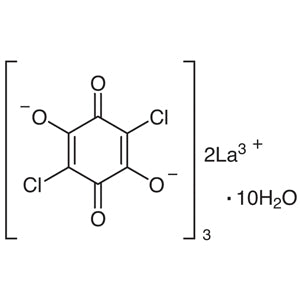
ChloranilicAcidLanthanum(III)SaltDecahydrate TCI C0079
Regular price From Rp 689.850,00Regular priceRp 497.700,00Sale price From Rp 689.850,00 -
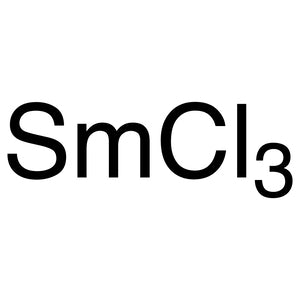
Samarium(III)Chloride TCI A3511
Regular price From Rp 1.988.700,00Regular priceRp 1.405.950,00Sale price From Rp 1.988.700,00