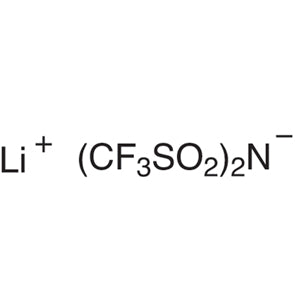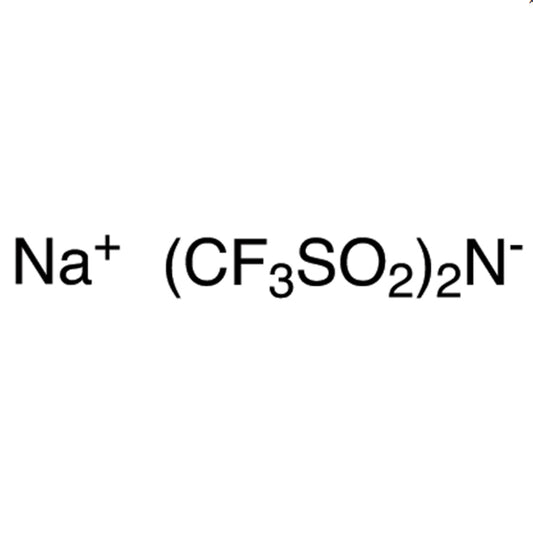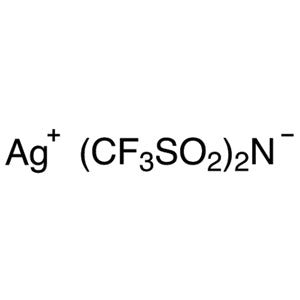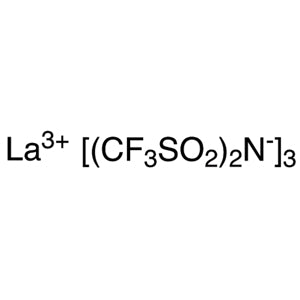
Lanthanum(III) Bis(trifluoromethanesulfonyl)imide is a chemical compound classified as an ionic salt, known for its complex structure and unique chemical properties. This compound plays a crucial role in laboratory settings, particularly in catalysis and inorganic chemistry. It is widely used in reactions involving rare earth elements such as lanthanum, where it serves as a catalyst or reagent. Its versatility makes it an essential component in various chemical processes, supporting both research and industrial applications. Due to its stability and solubility in organic solvents, it is a valuable tool for chemists seeking to optimize reaction conditions and enhance the efficiency of chemical synthesis.
One of the key reasons this compound is preferred in laboratory settings is its chemical stability and solubility in organic solvents. These properties allow it to function effectively under a variety of reaction conditions, making it suitable for both routine and specialized experiments. Additionally, its thermal stability enables its use in extreme reaction environments, expanding its applicability across different research fields. The compound’s ability to maintain its integrity under various conditions ensures consistent results, which is vital for scientific accuracy and reproducibility in laboratory work.
In Indonesian laboratories, Lanthanum(III) Bis(trifluoromethanesulfonyl)imide is commonly used in research related to catalysis, inorganic chemistry, and rare earth element studies. Its application is particularly relevant in academic and industrial research where precise chemical reactions and stable reagents are required. The compound's properties make it an ideal choice for experiments that demand high chemical stability and reliability, supporting both basic and applied research in the chemical sciences.
TCI brochures (PDF)
- Metallic Salts 2025-11-06 · p. 13
Related TCI products
- TCI C3516 1046099-39-1 Cerium(III) Bis(trifluoromethanesulfonyl)imide
- TCI Z0027 168106-25-0 Zinc(II) Bis(trifluoromethanesulfonyl)imide
- TCI B5171 168106-22-7 Barium(II) Bis(trifluoromethanesulfonyl)imide
- TCI B2543 90076-67-8 Potassium Bis(trifluoromethanesulfonyl)imide
- TCI B2542 90076-65-6 Lithium Bis(trifluoromethanesulfonyl)imide
- TCI S0989 91742-21-1 Sodium Bis(trifluoromethanesulfonyl)imide
- Catalytic reactions involving rare earth elements benefit from this compound's ability to enhance reaction efficiency and selectivity.
- Inorganic chemistry experiments often utilize it as a reagent due to its stability and compatibility with various reaction conditions.
- Synthesis of complex organic compounds may leverage its unique ionic structure to facilitate desired chemical transformations.
- Research on lanthanum-based materials can incorporate it to study the behavior of rare earth elements in different chemical environments.
- Industrial chemical processes may use it to improve the performance of catalysts in large-scale production settings.
| Brand | TCI |
|---|---|
| CAS number | 168106-26-1 |
| Molecular formula | — |
| Purity | — |
| Category | Chemistry > Catalysis and Inorganic Chemistry > Rare Earth Elements |
| Pack sizes | 25g, 100g, 500g |
| Physical form | Solid powder |
| Storage | Store in a cool, dry place away from moisture and direct sunlight |
This compound should be stored in a cool, dry environment to maintain its chemical stability and prevent degradation. It is recommended to use airtight containers to protect it from moisture and humidity, which can affect its performance in chemical reactions. Due to its ionic nature, it is important to handle it with care to avoid contamination. Laboratory personnel should wear appropriate personal protective equipment, such as gloves and safety goggles, when handling the compound. It should be kept away from incompatible substances to ensure safe storage and usage. Regular monitoring of storage conditions is advised to ensure the compound remains in optimal condition for laboratory applications.
—
Produk Terkait
-
Cerium(III)Bis(trifluoromethanesulfonyl)imide TCI C3516
Regular price From Rp 2.121.000,00Regular priceRp 1.482.600,00Sale price From Rp 2.121.000,00 -
Zinc(II)Bis(trifluoromethanesulfonyl)imide TCI Z0027
Regular price From Rp 1.618.050,00Regular priceRp 1.146.600,00Sale price From Rp 1.618.050,00 -
Barium(II)Bis(trifluoromethanesulfonyl)imide TCI B5171
Regular price From Rp 1.961.400,00Regular priceRp 1.387.050,00Sale price From Rp 1.961.400,00 -
PotassiumBis(trifluoromethanesulfonyl)imide TCI B2543
Regular price From Rp 717.150,00Regular priceRp 516.600,00Sale price From Rp 717.150,00 -
LithiumBis(trifluoromethanesulfonyl)imide TCI B2542
Regular price From Rp 1.483.650,00Regular priceRp 1.053.150,00Sale price From Rp 1.483.650,00 -
SodiumBis(trifluoromethanesulfonyl)imide TCI S0989
Regular price From Rp 1.405.950,00Regular priceRp 998.550,00Sale price From Rp 1.405.950,00 -
SilverBis(trifluoromethanesulfonyl)imide TCI S0898
Regular price From Rp 5.485.200,00Regular priceRp 3.835.650,00Sale price From Rp 5.485.200,00 -
Potassium(Fluorosulfonyl)(trifluoromethanesulfonyl)imide TCI P2410
Regular price From Rp 2.041.200,00Regular priceRp 1.442.700,00Sale price From Rp 2.041.200,00