

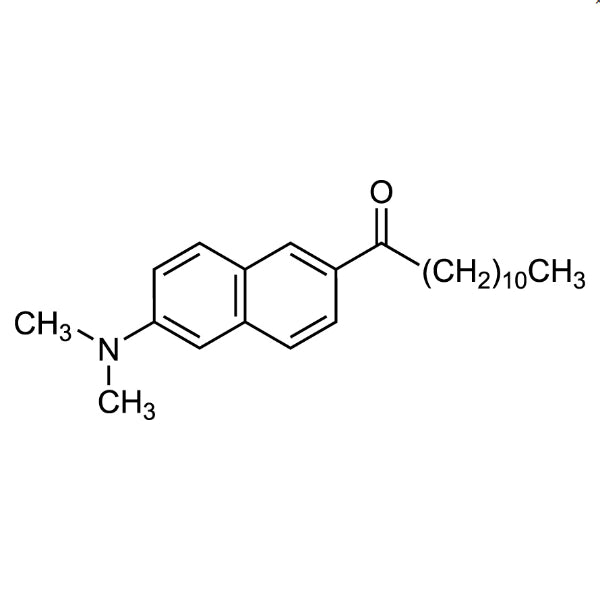
Laurdan TCI L0483, with CAS number 74515-25-6, is a fluorescent compound widely used in laboratory settings for its unique optical properties. It serves as a fluorescent probe and label, enabling researchers to visualize and track molecular interactions with high sensitivity. Its ability to emit light when exposed to specific wavelengths makes it an essential tool in biochemical and molecular biology studies. Laurdan is particularly valuable in applications where precise detection and analysis of biological structures are required.
The chemical stability and consistent fluorescence of Laurdan make it a preferred choice for various analytical techniques. It exhibits excellent solubility in organic solvents, which facilitates its use in diverse experimental protocols. Its resistance to chemical degradation ensures reliable performance under different experimental conditions. These properties contribute to its widespread use in both research and diagnostic applications. The clear and consistent fluorescence response also enhances the accuracy of data collection in fluorescence-based assays.
In Indonesian laboratories, Laurdan is commonly used in biomedical, pharmaceutical, and environmental research. It plays a key role in molecular interaction studies, biochemical process monitoring, and the development of advanced analytical techniques. Its versatility and reliability make it a trusted reagent for scientists seeking high-quality results in their experiments. The compound's ability to provide accurate and reproducible data supports its application in both academic and industrial research settings.
Related TCI products
- TCI T4347 109628-27-5 TSQ
- TCI T3608 115532-50-8 Tetramethylrhodamine Methyl Ester Perchlorate
- TCI A5351 28836-03-5 ANS-NH4 (=Ammonium 8-Anilino-1-naphthalenesulfonate) [Hydrophobic fluorescent probe]
- TCI A0484 18108-68-4 8-Anilino-1-naphthalenesulfonic Acid Magnesium(II) Salt
- TCI T0558 2390-54-7 Basic Yellow 1
- TCI R0260 74317-53-6 Rhodamine B Hydrazide
- Molecular biology research utilizes Laurdan for tracking biomolecular interactions due to its high fluorescence sensitivity and stability.
- Biochemical analysis benefits from Laurdan's consistent fluorescence response, aiding in the detection of specific molecular structures.
- Environmental studies employ Laurdan to monitor pollutant interactions and assess environmental sample composition.
- Pharmaceutical development uses Laurdan for drug-target interaction studies, enhancing the accuracy of molecular binding analysis.
- Biomedical research incorporates Laurdan in imaging techniques to visualize cellular processes with high resolution and clarity.
| Brand | TCI |
|---|---|
| CAS number | 74515-25-6 |
| Molecular formula | — |
| Purity | — |
| Category | Life Science > Biochemicals and Reagents > Fluorescent Probes, Fluorescent Labels, Fluorescent Stains |
| Pack sizes | Available in various quantities as per standard laboratory reagent packaging |
| Physical form | Solid or powder, depending on the specific formulation |
| Storage | Store in a cool, dry place away from light and moisture |
Laurdan should be stored in a cool, dry environment, away from direct light and moisture to maintain its chemical stability. It is recommended to use airtight containers to prevent exposure to air and contaminants. Due to its fluorescent nature, it is important to handle the compound in a well-ventilated area to avoid any potential health risks. Proper personal protective equipment, such as gloves and safety goggles, should be worn during handling. The compound should not be disposed of in regular waste streams but should be handled according to standard chemical waste disposal protocols. Regular inspection of storage conditions is advised to ensure the integrity of the material remains unaffected.
—
Produk Terkait
-
TSQ TCI T4347
Regular price From Rp 2.174.550,00Regular price -
TetramethylrhodamineMethylEsterPerchlorate TCI T3608
Regular price From Rp 3.446.100,00Regular price -
ANS-NH4(=Ammonium8-Anilino-1-naphthalenesulfonate)[Hydrophobicfluorescentprobe] TCI A5351
Regular price From Rp 505.050,00Regular price -
8-Anilino-1-naphthalenesulfonicAcidMagnesium(II)Salt TCI A0484
Regular price Rp 2.889.600,00Regular price -
BasicYellow1 TCI T0558
Regular price Rp 2.094.750,00Regular price -
RhodamineBHydrazide TCI R0260
Regular price From Rp 3.100.650,00Regular price -
SodiumPyrene-1-sulfonate TCI O0669
Regular price Rp 3.976.350,00Regular price -
NileRed[forBiochemicalResearch] TCI N1272
Regular price Rp 1.696.800,00Regular price


![28836-03-5 ANS-NH4 (=Ammonium 8-Anilino-1-naphthalenesulfonate) [Hydrophobic fluorescent probe] - AMI Scientific](http://amiscientific.com/cdn/shop/files/TCI2510A5351.jpg?v=1769179457&width=533)



![7385-67-3 Nile Red [for Biochemical Research] - AMI Scientific](http://amiscientific.com/cdn/shop/files/TCI2510N1272.jpg?v=1768362184&width=533)