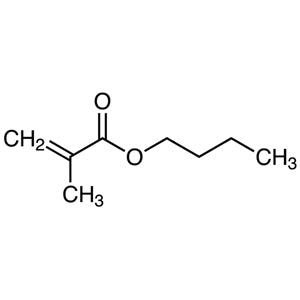
Butyl Methacrylate (BMMA), with CAS number 97-88-1, is a widely used chemical compound in laboratory settings. It serves as a key building block in organic synthesis, playing a crucial role in various chemical reactions. Its versatility makes it an essential component for researchers and chemists working in both academic and industrial environments. BMMA is commonly employed as a monomer in the production of polymers such as poly(methyl methacrylate), which are known for their excellent mechanical and chemical properties. Its chemical stability and reactivity make it a reliable choice for a wide range of synthetic applications.
The properties of BMMA that make it a preferred choice include its high reactivity and stable chemical structure. It is stabilized with HQ (hydroquinone), which enhances its shelf life and maintains its quality over time. This stabilization is particularly important for long-term storage and use in laboratory experiments. BMMA’s ability to participate in polymerization reactions and its compatibility with various reagents further contribute to its popularity. Its chemical inertness under normal conditions also ensures that it remains safe and effective for use in diverse laboratory applications.
In Indonesian laboratories, BMMA is frequently used in chemical research, material development, and pharmaceutical applications. It is a preferred choice due to its availability, reliability, and consistent performance in different experimental setups. Its role in the synthesis of composite materials and other advanced chemical products highlights its importance in the scientific community. BMMA is a fundamental reagent that supports innovation and discovery in various scientific fields.
- Polymer synthesis and polymerization reactions benefit from BMMA's ability to form stable polymers with desirable mechanical and chemical properties.
- Organic synthesis applications rely on BMMA's reactivity and compatibility with a wide range of reagents and catalysts.
- Composite material development uses BMMA as a key component in creating materials with enhanced structural and functional characteristics.
- Pharmaceutical research incorporates BMMA in the synthesis of active pharmaceutical ingredients and drug delivery systems.
- Chemical modification of organic compounds utilizes BMMA as a versatile building block for functional group introduction and structural diversification.
| Brand | TCI |
|---|---|
| CAS number | 97-88-1 |
| Molecular formula | — |
| Purity | — |
| Category | Chemistry > Building Blocks > Non-Heterocyclic Building Blocks |
| Pack sizes | Available in various sizes as per supplier specifications |
| Physical form | Liquid |
| Storage | Store in a cool, dark place away from light and incompatible materials |
Butyl Methacrylate should be stored in a cool, dark environment to prevent degradation and maintain its chemical stability. It is recommended to use sealed containers made of materials that are chemically inert, such as glass or high-density polyethylene, to avoid any potential reactions. BMMA should be kept away from strong oxidizing agents, acids, and UV light to ensure its integrity. In laboratory settings, it is important to handle BMMA with appropriate personal protective equipment, including gloves and safety goggles, to minimize exposure. Proper ventilation should be maintained when working with BMMA to ensure a safe working environment. Regular monitoring of storage conditions is essential to ensure the material remains suitable for use in chemical experiments.
—
Produk Terkait
-
TCI B5774 5,10-Bis(4,4,5,5-tetramethyl-1,3,2-dioxaborolan-2-yl)naphtho[1,2-c:5,6-c']bis([1,2,5]oxadiazole)
Regular price Rp 10.255.350,00Regular price -
Dihydroiodide TCI B6569
Regular price From Rp 1.936.200,00Regular price -
Trifluoromethanesulfonate TCI B7003
Regular price From Rp 1.936.200,00Regular price
![5,10-Bis(4,4,5,5-tetramethyl-1,3,2-dioxaborolan-2-yl)naphtho[1,2-c:5,6-c']bis([1,2,5]oxadiazole) - TCI B5774 - AMI Scientific](http://amiscientific.com/cdn/shop/files/TCI2510B5774.jpg?v=1769180228&width=533)