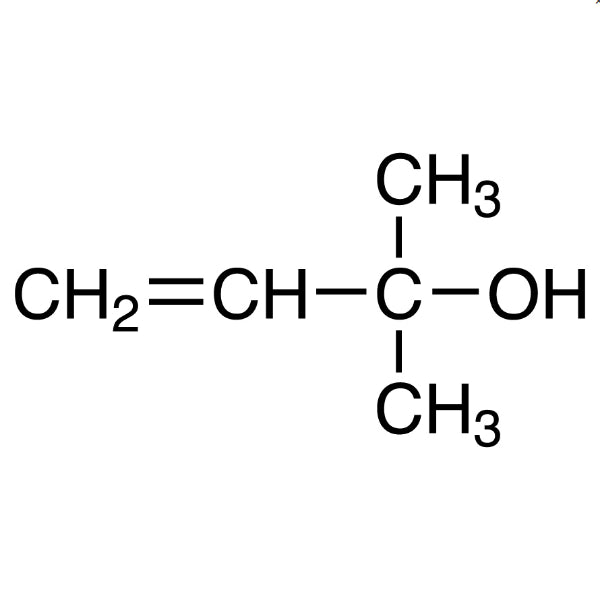
2-Methyl-3-buten-2-ol is an organic compound widely used in chemical synthesis to produce a variety of complex molecules. As a building block, it plays a crucial role in the development of new compounds across multiple scientific fields. Its versatility makes it a valuable resource for researchers aiming to create custom chemical structures. This compound is commonly found in various chemical reactions, particularly in the formation of open-chain carbon structures. Its importance in laboratory settings is underscored by its ability to participate in multiple reaction types, including hydrolysis, oxidation, and substitution.
The compound’s reactivity is a key factor in its popularity among scientists. Its molecular structure, featuring two alkyl groups and one hydroxyl group, contributes to its high reactivity and adaptability in different chemical environments. These characteristics make it ideal for a wide range of synthetic applications. Additionally, its relatively low boiling and melting points facilitate ease of handling during heating and cooling processes. This makes it a practical choice for laboratory work that requires controlled temperature conditions.
In Indonesian laboratories, 2-Methyl-3-buten-2-ol is frequently used in chemical research and the development of new materials. It is a common component in experiments aimed at creating pharmaceuticals, specialty chemicals, and other scientific products. Its availability and chemical properties make it a reliable tool for both academic and industrial research settings. Researchers in Indonesia rely on this compound to advance their work in various scientific disciplines.
TCI brochures (PDF)
- Terpenes 2025-09-22 · p. 3
- Chemical synthesis of complex organic molecules due to its reactive functional groups and structural versatility.
- Development of pharmaceutical compounds as a building block for drug molecule design and modification.
- Production of specialty chemicals in industrial research settings requiring precise molecular structures.
- Educational use in undergraduate and graduate chemistry courses for teaching organic reaction mechanisms.
- Research applications in polymer science for creating functionalized polymers with specific chemical properties.
| Brand | TCI |
|---|---|
| CAS number | 115-18-4 |
| Molecular formula | — |
| Purity | — |
| Category | Chemistry > Building Blocks > Non-Heterocyclic Building Blocks |
| Pack sizes | Available in various quantities as per supplier specifications |
| Physical form | Liquid |
| Storage | Store in a cool, dry place away from direct sunlight and incompatible materials |
This compound should be stored in a cool, dry environment, away from direct sunlight and sources of heat. It is recommended to use sealed containers made of materials compatible with organic solvents to prevent evaporation and contamination. Due to its reactivity, it should be handled with care, using appropriate personal protective equipment such as gloves and safety goggles. Avoid exposure to incompatible substances like strong oxidizing agents. Ensure proper ventilation in the laboratory to minimize inhalation risks. Regular monitoring of storage conditions is advised to maintain the integrity and safety of the compound during use.
—
Produk Terkait
-
3-Methyl-3-buten-1-ol TCI M0726
Regular price From Rp 505.050,00Regular price -
3-Methyl-2-buten-1-ol TCI M0714
Regular price From Rp 610.050,00Regular price -
1-Buten-3-ol TCI B0695
Regular price From Rp 1.538.250,00Regular price -
3-Buten-1-ol TCI B0236
Regular price From Rp 1.431.150,00Regular price -
1-Phenyl-3-buten-1-ol TCI P1329
Regular price Rp 2.995.650,00Regular price -
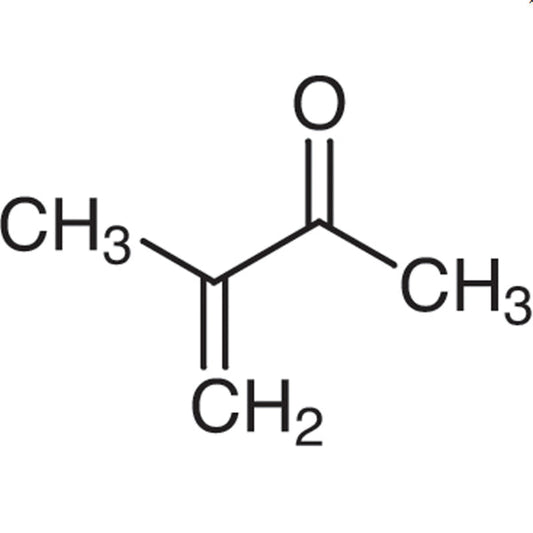
3-Methyl-3-buten-2-one(stabilizedwithHQ) TCI M0378
Regular price Rp 5.698.350,00Regular price -
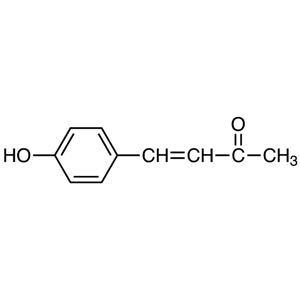
4-(4-Hydroxyphenyl)-3-buten-2-one TCI H1564
Regular price Rp 1.936.200,00Regular price -
1-Cyclohexyl-2-buten-1-ol(cis-andtrans-mixture) TCI C1567
Regular price Rp 1.353.450,00Regular price